

Over 60 percent of australian adults over forty experience changes in close-up vision as they age. Knowing the difference between standard readers and a precise prescription can be the key to comfortable reading and sharp focus. If you want clarity that matches your unique needs, learning how prescription reading glasses are designed and what sets them apart will help you make smarter choices for your vision.
Table of Contents
- Defining Prescription in Reading Glasses
- How Eye Tests Determine Your Needs
- Types of Prescription Lenses Explained
- Over-the-Counter vs. Custom Prescription Glasses
- Risks of Incorrect or Missing Prescription
Key Takeaways
| Point | Details |
|---|---|
| Customised Vision Correction | Prescription reading glasses provide tailored lens solutions specific to individual vision needs, unlike standard over-the-counter options. |
| Comprehensive Eye Tests | Proper eye examinations are essential for determining precise prescriptions, assessing various vision parameters beyond basic screening. |
| Types of Prescription Lenses | Different lens types, such as single-vision, bifocal, and progressive lenses, cater to distinct vision challenges, enhancing visual comfort. |
| Risks of Incorrect Prescription | Using incorrect or missing prescriptions can lead to serious complications, including chronic eye strain, headaches, and potential long-term vision damage. |
Defining Prescription in Reading Glasses
A prescription for reading glasses represents a precise medical measurement that determines the specific vision correction needed to improve your near visual clarity. Unlike standard over-the-counter reading glasses, prescription reading glasses are professionally tailored to address individual vision challenges with remarkable accuracy.
Prescription reading glasses differ fundamentally from generic readers by providing customised lens corrections that match your exact vision requirements. Where standard reading glasses offer a one-size-fits-all approach, prescription glasses are crafted to correct specific vision problems like presbyopia, astigmatism, and other refractive errors. These personalised lenses are designed after a comprehensive eye examination by an optometrist or ophthalmologist who measures multiple vision parameters.
The key components of a reading glasses prescription typically include:
- Sphere (SPH): Indicates the lens power required to correct nearsightedness or farsightedness
- Cylinder (CYL): Measures astigmatism correction needed
- Axis: Specifies the orientation of astigmatism correction
- Add Power: Determines the additional magnification required for reading and close-up tasks
To gain deeper insights into reading glasses terminology, check out our comprehensive guide on reading glasses terminology. Understanding these nuanced details ensures you select reading glasses that genuinely enhance your visual comfort and performance.
How Eye Tests Determine Your Needs
Eye tests for prescription reading glasses are comprehensive diagnostic procedures designed to precisely evaluate your unique visual requirements. These detailed examinations go far beyond simple vision screening, employing sophisticated techniques and specialised equipment to map out the exact corrective needs of your eyes.
The typical eye test involves multiple critical assessment stages. Refraction testing serves as the cornerstone of determining your prescription, where an optometrist uses advanced instruments like a phoropter to measure how light bends through your eye. During this process, you’ll look through a series of lens combinations while reading visual charts, allowing the eye care professional to pinpoint exact lens strengths needed for optimal near and distance vision. The professional will systematically adjust lens powers to identify which combination provides the sharpest, most comfortable visual clarity.
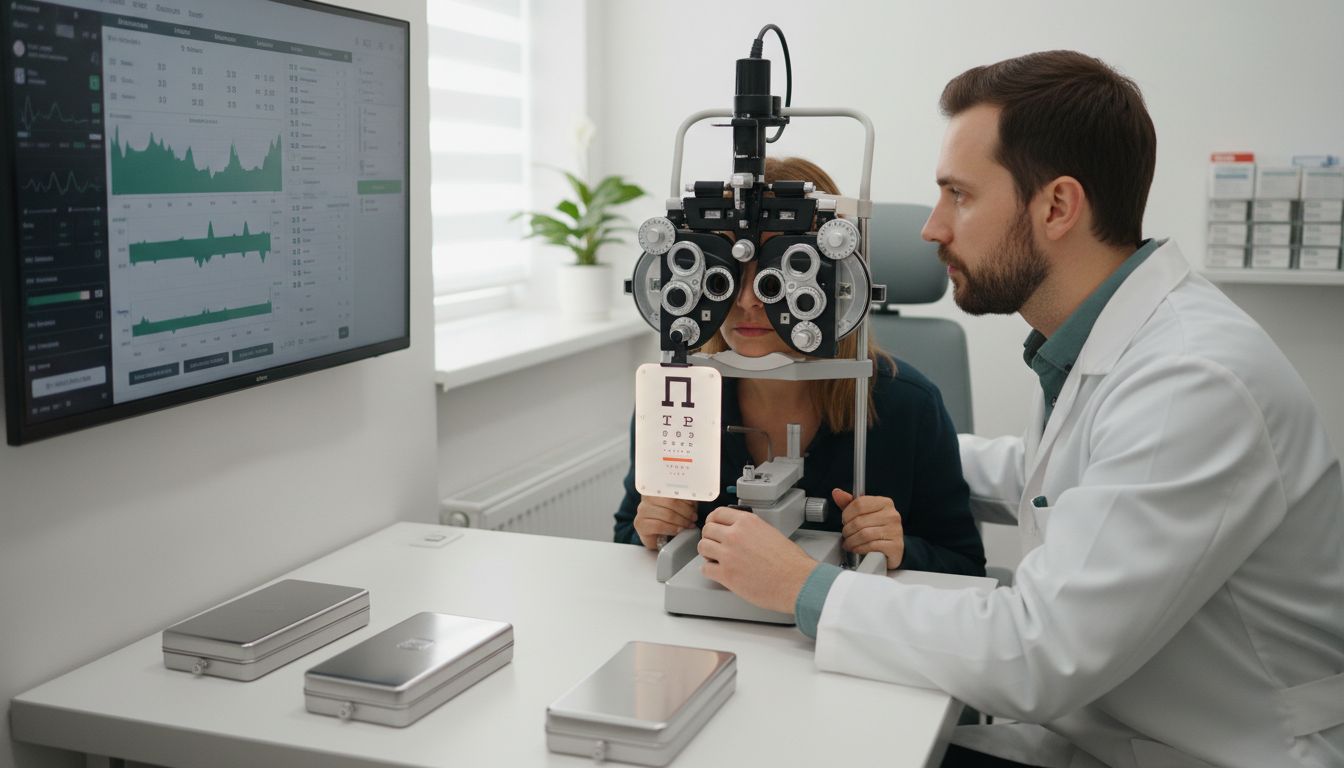
Key components assessed during a comprehensive eye test include:
- Visual Acuity: Measures the sharpness and clarity of your vision
- Refractive Errors: Identifies problems like myopia, hyperopia, or astigmatism
- Eye Muscle Coordination: Evaluates how well your eyes work together
- Focusing Ability: Determines your eyes’ capacity to adjust focus at different distances
To explore more about the intricacies of lens selection, check out our guide to understanding lens types for reading glasses. Understanding these nuanced assessment techniques ensures you receive reading glasses precisely tailored to your individual vision needs.
Types of Prescription Lenses Explained
Prescription lenses represent a sophisticated solution for addressing complex vision challenges, with each type meticulously designed to meet specific visual requirements. Understanding the nuanced differences between lens types can dramatically improve your visual comfort and clarity, ensuring you select the most appropriate option for your unique vision needs.
Single-vision lenses provide the most straightforward correction, designed to address one specific vision problem such as nearsightedness or farsightedness. These lenses feature a consistent lens power across the entire lens surface, making them ideal for individuals requiring correction at a single distance. In contrast, bifocal lenses offer a more advanced solution, featuring two distinct visual zones - typically with a visible line separating distance and near vision corrections. This design allows wearers to seamlessly shift between different visual ranges without changing glasses.
The most sophisticated lens technology emerges in progressive lenses, which provide a seamless gradient of increasing lens power. Unlike traditional bifocals, progressive lenses eliminate visible lines, creating a smooth transition between near, intermediate, and distance vision corrections. This innovative design mimics natural vision progression, offering wearers unprecedented visual flexibility.
Key lens types include:
- Single-vision Lenses: Uniform correction for one vision distance
- Bifocal Lenses: Two distinct vision zones with a visible dividing line
- Progressive Lenses: Seamless multi-distance correction without visible lines
- Multifocal Lenses: Multiple vision corrections in a single lens
To explore more about selecting the right lens for your vision needs, check out our guide to understanding types of reading glasses. Understanding these lens variations will help you make an informed decision about your visual correction strategy.
Over-the-Counter vs. Custom Prescription Glasses
Choosing between over-the-counter reading glasses and custom prescription glasses is a critical decision that directly impacts your visual health and comfort. While both options aim to improve near vision, they differ significantly in approach, precision, and long-term eye care strategy.
Over-the-counter reading glasses represent a quick, affordable solution for individuals experiencing mild age-related vision changes. These standardised glasses come in predetermined magnification strengths, typically ranging from +1.00 to +3.50 diopters, and are readily available at pharmacies and retail stores. They’re perfect for occasional use or temporary vision assistance. However, they have significant limitations - they provide uniform magnification across both eyes, which fails to address individual eye differences, astigmatism, or complex vision challenges.
Custom prescription glasses, in contrast, offer a sophisticated, personalised vision correction approach. Professionally prescribed by optometrists, these glasses are meticulously crafted to address your unique visual requirements. They account for nuanced factors like different prescription strengths between eyes, astigmatism correction, and specific vision challenges that over-the-counter glasses cannot accommodate. Custom glasses provide precise vision correction that adapts to your exact physiological needs.
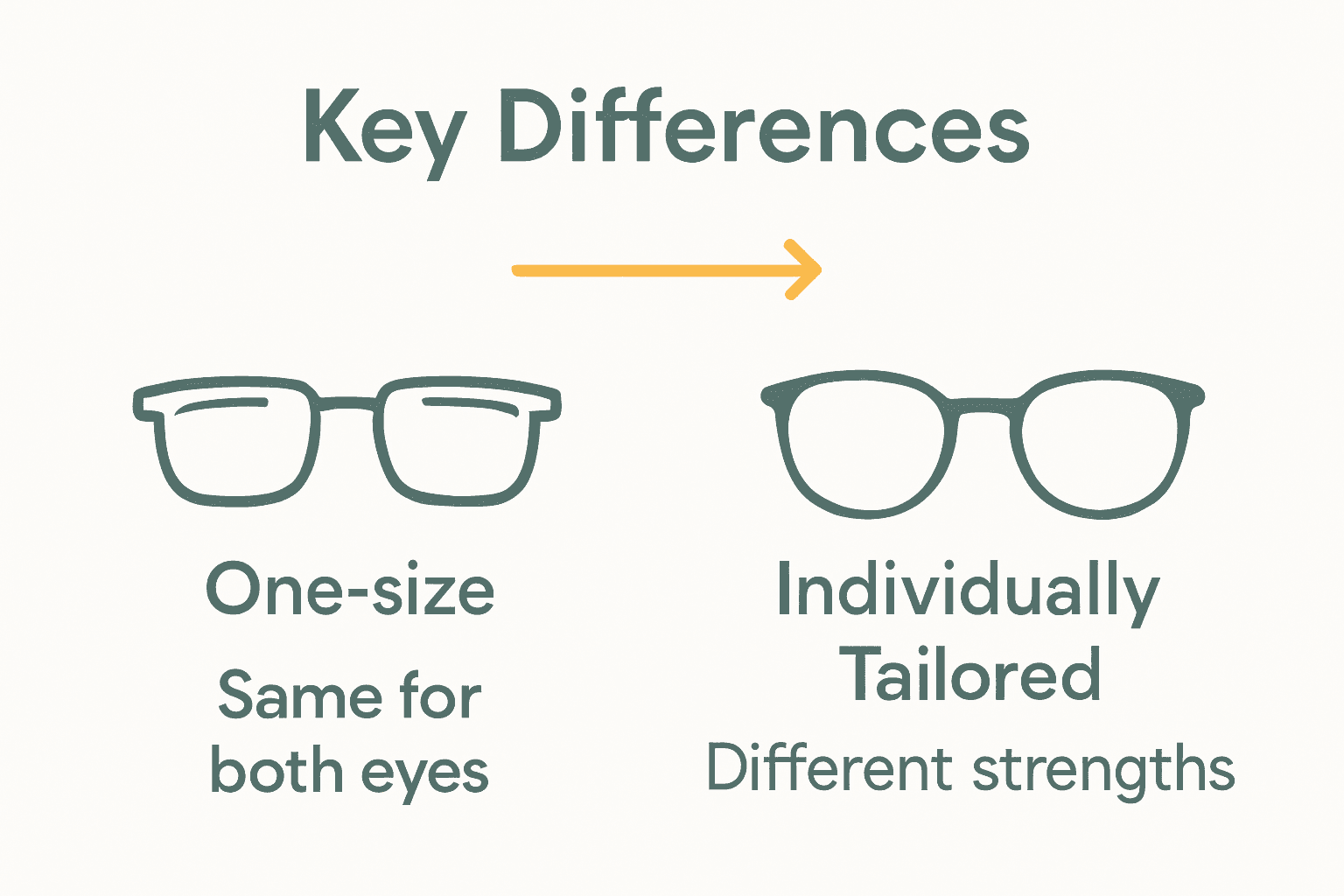
Key differences between the two include:
- Customisation Level: Generic vs. individually tailored
- Vision Correction Precision: Uniform vs. personalised
- Cost: Inexpensive vs. investment in eye health
- Suitability: Temporary relief vs. comprehensive vision management
To gain deeper insights into selecting the right reading glasses for your needs, explore our guide to understanding custom reading glasses. Understanding these distinctions will help you make an informed decision about your vision correction strategy.
Risks of Incorrect or Missing Prescription
Navigating the world of vision correction requires precision and careful attention. Using incorrect or missing prescription glasses can lead to a cascade of potential health complications that extend far beyond simple visual discomfort, potentially causing long-term damage to your visual system.
Binocular vision disorders represent one of the most significant risks associated with inappropriate prescription glasses. When your lenses fail to match your exact vision requirements, they create an imbalance between your eyes, forcing your visual muscles to work overtime. This constant strain can result in chronic eye fatigue, persistent headaches, and decreased overall visual performance. Imagine trying to read or work while your eyes are constantly struggling to focus - the mental and physical toll can be substantial.
The physiological consequences of incorrect prescription glasses extend beyond immediate discomfort. Prolonged use of improperly corrected lenses can potentially accelerate vision degradation, causing your eyes to compensate inappropriately and potentially leading to more severe vision problems. This is particularly critical for individuals experiencing age-related vision changes or those with complex vision conditions like astigmatism or presbyopia. Incorrect lens prescriptions might mask underlying vision issues, preventing timely and appropriate medical intervention.
Key risks of incorrect prescription include:
- Visual Muscle Strain: Increased eye muscle tension
- Chronic Headaches: Persistent pain from constant refocusing
- Potential Vision Degradation: Long-term visual system damage
- Reduced Cognitive Performance: Decreased concentration and mental fatigue
To understand more about protecting your vision and selecting the right prescription, explore our guide to prescription reading glasses. Your vision is too important to leave to chance or guesswork.
Discover the Perfect Prescription Reading Glasses for Your Unique Vision
Struggling with eye strain, headaches or poor focus because your reading glasses do not match your prescription? The Complete Guide to Prescription Reading Glasses highlights how vital it is to have personalised lenses that truly suit your vision needs and avoid the risks of incorrect prescriptions. Whether you need precise corrections for presbyopia, astigmatism or other vision challenges choosing the right glasses boosts your comfort and visual clarity.
Start your journey to effortless reading with our wide range of stylish and customised options at Ministry of Sight. Explore our collection of Rectangular Reading Glasses, ideal for contemporary daily use and designed with your prescription precision in mind. Don’t settle for generic; invest in glasses that protect your vision health and bring lasting satisfaction. Visit us now and experience free shipping across Australia and exclusive offers that make expert eyewear affordable and convenient.
Frequently Asked Questions
What is the difference between prescription reading glasses and over-the-counter reading glasses?
Prescription reading glasses are custom-made to address individual vision problems, while over-the-counter glasses offer a one-size-fits-all solution with predetermined strengths that may not account for personal eye differences or conditions.
How is the prescription for reading glasses determined?
The prescription for reading glasses is determined through a comprehensive eye test conducted by an optometrist, which includes refraction testing and assessments of visual acuity, refractive errors, and focusing ability.
What are the different types of prescription lenses available for reading glasses?
The main types of prescription lenses for reading glasses include single-vision lenses for one corrective distance, bifocal lenses for both distance and near vision, and progressive lenses that provide a seamless transition between multiple viewing distances without visible lines.
What are the risks of using incorrect or missing prescription glasses?
Using incorrect or missing prescription glasses can lead to visual muscle strain, chronic headaches, long-term vision degradation, and reduced cognitive performance due to inadequate visual support for your specific needs.
Recommended
- Complete Guide to Beginner’s Reading Glasses – ministry of sight
- What Are Prescription Reading Glasses: Complete Guide – ministry of sight
- Understanding the Types of Reading Glasses for Better Vision – ministry of sight
- Complete Guide to How Reading Glasses Work – ministry of sight
- Top 6 Best Blue Light Glasses for Moms – Expert Comparison 2025 - Mom on Quack


