

Over 1 in 3 adults starts to struggle with reading small print by age 45. This shift in vision can make everyday tasks like reading menus, medicine labels, or your favorite novel unexpectedly frustrating. Luckily, beginner’s reading glasses offer a simple and affordable way to bring clarity back into focus. This guide covers the essentials you need to know, from choosing the right strength and style to finding the most comfortable fit for your eyes and lifestyle.
Table of Contents
- What Are Beginner’s Reading Glasses?
- Types of Reading Glasses Explained
- How Reading Glasses Prescriptions Work
- Choosing the Right Fit and Style
- Costs, Warranties, and Buying Tips
- Care, Maintenance, and Common Mistakes
Key Takeaways
| Point | Details |
|---|---|
| Reading Glasses Function | Designed for presbyopia, they provide standard magnification for near-vision tasks without the need for a prescription. |
| Types of Reading Glasses | Options include full-frame, half-frame, bifocal, and computer glasses, catering to various visual needs and personal styles. |
| Prescription Insights | Reading glasses prescriptions indicate the necessary lens strength measured in diopters, allowing for customized vision correction. |
| Care and Maintenance | Proper handling and cleaning with suitable materials are essential to prolong the lifespan and performance of reading glasses. |
What Are Beginner’s Reading Glasses?
Reading glasses are simple, low-complexity vision correction tools designed specifically for individuals experiencing presbyopia, an age-related condition that makes focusing on close-up text and objects increasingly difficult. Unlike prescription eyewear, these glasses provide standard magnification to help people read, work on detailed tasks, and perform near-vision activities with greater comfort and clarity.
Typically, beginner’s reading glasses come with standardised magnification strengths ranging from +1.00 to +3.50 diopters, allowing users to select a power that matches their specific vision needs. These glasses are crafted with lightweight materials like plastic or lightweight metal frames, making them comfortable for extended wear during reading, computer work, or examining fine details. Learn more about how reading glasses function in our comprehensive guide.
The primary purpose of beginner’s reading glasses is to compensate for the natural aging process of eye muscles. As we age, the lens inside our eye becomes less flexible, making it challenging to focus on nearby objects - a condition medical professionals call presbyopia. These glasses essentially act as an external lens, helping to magnify text and bring close-up vision into sharper focus. They’re an affordable, non-invasive solution for people experiencing early signs of age-related vision changes.
Key characteristics of beginner’s reading glasses include:
- Standardised magnification strengths
- Lightweight and comfortable design
- No prescription required
- Affordable vision assistance
- Easy to purchase and replace
- Suitable for various near-vision tasks
Types of Reading Glasses Explained
Reading glasses come in several distinct types, each designed to cater to different vision needs and personal preferences. Full-frame reading glasses are the most traditional style, featuring a complete frame around corrective lenses that provide comprehensive magnification for near-vision tasks like reading, crafting, or detailed work. These glasses are typically recommended for individuals who spend extended periods focusing on close-up activities.
Another popular variant is half-frame reading glasses, which feature a lens frame only on the top or bottom portion of the eyewear. These lightweight options are perfect for individuals who frequently shift between near and distance vision, allowing wearers to look over the frames when needing to view objects at a distance. Learn more about different lens types in our comprehensive guide on reading glasses.
Novelty reading glasses have also gained popularity, offering both functional vision correction and personal style expression. These include rimless reading glasses for a minimalist look, bifocal reading glasses that provide multiple magnification zones, and computer reading glasses specifically designed to reduce digital eye strain. Specialized designs like these demonstrate how reading glasses have evolved from simple medical devices to versatile accessories that blend functionality with fashion.
Key variations in reading glasses include:
- Full-frame designs
- Half-frame styles
- Rimless options
- Bifocal configurations
- Computer-specific glasses
- Fashion-forward frames
When selecting reading glasses, consider factors like magnification strength, frame comfort, intended use, and personal aesthetic preferences to find the perfect pair for your vision needs.

How Reading Glasses Prescriptions Work
Reading glasses prescriptions are a precise method of determining the exact lens magnification needed to correct near vision difficulties. These prescriptions are measured in diopters, a standardised unit that indicates the lens’s corrective power. Typically, reading glass prescriptions range from +0.75 to +2.75 diopters, with each increment representing a specific level of vision correction required for comfortable near-vision tasks.
The prescription process involves understanding an individual’s unique vision challenges, particularly presbyopia, an age-related condition where the eye’s natural lens becomes less flexible. Optometrists conduct comprehensive eye examinations to assess the exact magnification needed, considering factors like reading distance, eye strain, and overall visual comfort. Learn more about prescription reading glasses in our comprehensive guide.
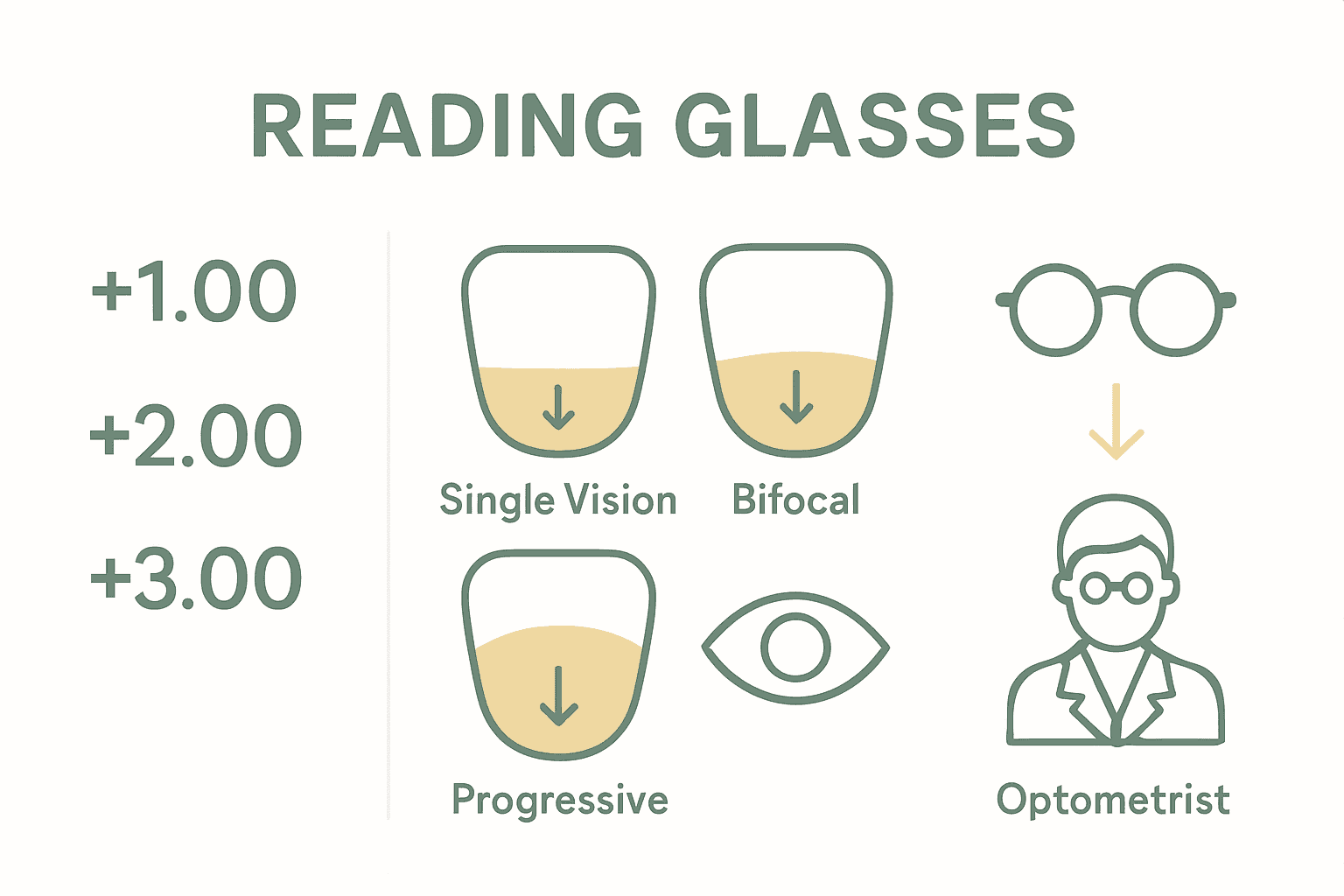
Modern reading glass prescriptions offer multiple lens configurations to suit different vision needs. Single vision lenses provide uniform magnification across the entire lens, ideal for consistent near-vision tasks. Bifocal lenses feature two distinct magnification zones, allowing wearers to switch between near and distance vision seamlessly. Progressive lenses represent the most advanced option, offering a gradual transition between different magnification levels without visible line segments.
Key aspects of reading glasses prescriptions include:
- Measurement in diopter increments
- Personalized vision correction
- Multiple lens configuration options
- Consideration of individual reading habits
- Accommodation of age-related vision changes
- Precise magnification matching
Selecting the right reading glasses prescription requires professional assessment and understanding of your unique vision requirements, ensuring optimal visual comfort and clarity.
Choosing the Right Fit and Style
Selecting the perfect pair of reading glasses involves more than just picking a random magnification. Frame fit is crucial, as the right frame should sit comfortably on your nose and ears without slipping or causing pressure points. Different face shapes require different frame styles - oval faces typically suit rectangular frames, while round faces look best with angular or geometric frame designs that create visual contrast.
Material selection plays a significant role in both comfort and durability. Lightweight materials like titanium and flexible plastic offer excellent comfort for extended wear, while traditional metal frames provide a classic aesthetic. Explore our comprehensive guide on understanding reading glasses styles to discover which frame design best complements your personal style and practical needs.
Beyond aesthetics, functional considerations are paramount when choosing reading glasses. Factors like lens coating, frame flexibility, and temple arm design can dramatically impact your wearing experience. Anti-reflective coatings reduce glare from digital screens, while spring-loaded hinges provide extra comfort and durability. Consider your primary use - whether reading books, working on computers, or performing detailed crafts - to select glasses that perfectly match your lifestyle.
Key factors in selecting reading glasses include:
- Face shape compatibility
- Frame material comfort
- Lens coating functionality
- Personal style preferences
- Intended usage context
- Overall wearing comfort
Ultimately, the best reading glasses are those that seamlessly blend personal style, comfortable fit, and optimal vision correction, making you feel confident and comfortable in your everyday activities.
Costs, Warranties, and Buying Tips
Navigating the world of reading glasses requires a strategic approach to balancing cost, quality, and value. Prices for reading glasses can range dramatically, from budget-friendly options under $20 to more sophisticated designs costing over $100. Generally, beginner readers should expect to invest between $25 and $50 for a reliable pair that offers both comfort and decent optical performance. Explore our comprehensive guide on reading glasses pricing and value.
Warranty considerations are equally important when purchasing reading glasses. Reputable manufacturers typically offer warranties covering manufacturing defects, with coverage periods ranging from 30 days to one full year. Look for warranties that include lens replacement, frame adjustments, and protection against unexpected breakage. Some premium brands even provide scratch-resistant guarantees and free adjustments, adding significant value to your investment.
When buying reading glasses, several strategic tips can help you make an informed decision. Always test glasses in-person when possible, checking for proper fit and comfort. Online purchases should include flexible return policies and clear size measurements. Pay attention to lens quality, frame durability, and potential additional features like anti-reflective coatings or blue light filtering. Avoid purchasing glasses from unverified sources or those without clear return policies.
Key buying considerations include:
- Price range ($20-$100)
- Warranty coverage duration
- Lens and frame quality
- Return policy flexibility
- Optical performance
- Comfort and fit
Remember, the best reading glasses are an investment in your visual comfort and daily functionality, balancing affordability with reliable performance and personal style.
Care, Maintenance, and Common Mistakes
Maintaining your reading glasses requires a combination of careful handling and consistent cleaning practices. Proper storage is the first line of defense against potential damage, with experts recommending a hard-shell protective case that shields lenses from dust, moisture, and accidental impacts. Always store glasses in their case when not in use, avoiding surfaces where they might be knocked over or exposed to potential scratching elements. Discover more about reading glasses maintenance in our comprehensive guide.
Cleaning techniques are critical for preserving optical clarity and preventing lens damage. Use microfiber cloths specifically designed for eyewear, avoiding paper towels, clothing, or rough materials that can scratch delicate lens surfaces. Wash lenses with lukewarm water and a mild, lotion-free soap, gently dabbing rather than rubbing to prevent microscopic scratches. Avoid using household cleaners, alcohol-based solutions, or abrasive materials that can strip protective coatings and damage lens surfaces.
Common mistakes can significantly reduce the lifespan of your reading glasses. Many people inadvertently damage their glasses by placing them lens-down on surfaces, using their shirt to clean lenses, or leaving them in extreme temperatures. Avoid placing glasses in hot cars, near heating vents, or in direct sunlight, as heat can warp frames and damage lens coatings. Always handle glasses by the frames, using both hands to prevent unnecessary stress on the hinges and potential misalignment.
Key maintenance tips include:
- Use a hard-shell protective case
- Clean with microfiber cloths
- Wash lenses with mild soap and water
- Handle glasses by the frames
- Avoid extreme temperatures
- Store in a cool, dry place
Treating your reading glasses with care ensures they remain in optimal condition, providing clear vision and lasting performance for your daily reading and close-up tasks.
Find Your Perfect Beginner’s Reading Glasses Today
Struggling to find reading glasses that fit comfortably, look great, and provide just the right magnification can be frustrating when presbyopia starts to affect your close vision. Whether you need classic or contemporary styles, lightweight frames, or reliable magnification, Ministry of Sight is here to help you confidently navigate this new chapter. Explore our wide range of thoughtfully designed options including Rectangular Reading Glasses and Round Reading Glasses that balance comfort with style.

Make the switch to glasses that support your everyday reading comfort without hassle. Shop now at Ministry of Sight and take advantage of free shipping Australia-wide, special offers, and a satisfaction guarantee. Your clear, comfortable near-vision experience starts today.
Frequently Asked Questions
What are beginner’s reading glasses?
Beginner’s reading glasses are simple vision correction tools designed for individuals experiencing presbyopia, helping them focus on close-up text and objects with greater clarity. They typically offer standard magnification strengths and are lightweight for comfortable extended wear.
How do I choose the right magnification strength for reading glasses?
Choosing the right magnification strength typically ranges from +1.00 to +3.50 diopters, depending on your specific vision needs. It’s advisable to start with a lower strength and increase as necessary, considering factors like reading distance and comfort.
What types of reading glasses are available?
Reading glasses come in various types, including full-frame, half-frame, rimless, bifocal, and computer-specific glasses. Each type caters to different vision needs and personal preferences, balancing style with functionality.
How should I care for and maintain my reading glasses?
To maintain your reading glasses, store them in a hard-shell case, clean them with a microfiber cloth, and wash the lenses with mild soap and water. Avoid placing them lens-down, exposing them to extreme temperatures, or using harsh cleaning materials to prolong their lifespan.


