

Understanding the Types of Reading Glasses for Better Vision
Plenty of people notice blurry words when reading menus or checking texts on their phone, and it gets more obvious as the years tick by. Here is the shocker. Presbyopia affects almost everyone over 40, and it cannot be dodged. You might think grabbing a cheap pair of reading glasses from the chemist is good enough, but the real story is these off-the-shelf specs often miss out on the personalised correction your eyes actually need.
Table of Contents
- What Are Reading Glasses And Why Are They Used?
- Different Types Of Reading Glasses Available
- How Prescriptions Affect Reading Glasses Choices
- The Role Of Lens Technology In Reading Glasses
- Choosing The Right Type Of Reading Glasses For You
Quick Summary
| Takeaway | Explanation |
|---|---|
| Understand presbyopia and its effects | Presbyopia is a normal aging condition affecting near vision, beginning around age 40 and causing difficulty with close-up tasks. |
| Choose the right magnification strength | Reading glasses range from +1.00 to +3.50 diopters; consult an eye care professional to find the best fit for your needs. |
| Consider prescription reading glasses | Custom glasses provide tailored vision correction for individual requirements, ensuring better comfort and clarity compared to over-the-counter options. |
| Assess your lifestyle when selecting glasses | Your daily activities and vision needs should guide your selection, as different environments may require varying lens types and features. |
| Professional exams enhance vision care | A thorough eye exam identifies nuanced vision problems, ensuring the glasses you choose meet your specific visual demands effectively. |
What are Reading Glasses and Why are They Used?
Reading glasses are specialised eyewear designed to help people who experience difficulty focusing on close-up text and details. As we age, our eyes naturally lose their ability to adjust focus on nearby objects, a condition known as presbyopia. This gradual change typically begins around age 40 and progressively impacts near vision clarity.
Understanding Presbyopia and Vision Changes
Presbyopia occurs when the eye’s natural lens becomes less flexible, making it challenging to read small print, view smartphone screens, or perform detailed tasks like sewing or reading fine print. This is a normal part of aging and affects almost everyone. Symptoms include:
- Holding reading materials at arm’s length to see clearly
- Experiencing eye strain or headaches when doing close-up work
- Difficulty reading in low light conditions
- Needing brighter lighting to read comfortably
How Reading Glasses Work
Reading glasses compensate for the eye’s reduced focusing ability by providing magnification specifically designed for near vision tasks. These lenses help redirect light and create a clearer image on the retina, allowing individuals to read, work on detailed projects, and perform close-up activities with improved visual comfort. our guide on understanding reading glasses provides more insights into their functionality.
Reading glasses come in various magnification strengths, typically ranging from +1.00 to +3.50 diopters. The right strength depends on individual vision needs and can be determined through a simple reading glasses test or consultation with an eye care professional. Most people find that starting with a lower magnification and gradually increasing as needed provides the most comfortable vision correction.
Different Types of Reading Glasses Available
Reading glasses have evolved to offer diverse solutions for individuals experiencing vision challenges. Understanding the various types helps people select the most appropriate eyewear for their specific needs. how to choose the perfect pair of reading glasses can significantly improve your visual comfort and style.
Standard Over-the-Counter Reading Glasses
These pre-made reading glasses are widely available and offer quick, affordable vision correction. Typically sold in pharmacies and retail stores, they come in standardised magnification strengths ranging from +1.00 to +3.50 diopters. Key characteristics include:
- Affordable pricing
- Immediate availability
- No prescription required
- Limited customisation options
- Suitable for mild presbyopia
Prescription Reading Glasses
Custom prescription reading glasses provide a more precise vision correction tailored to individual eye requirements. Optometrists create these glasses after conducting comprehensive eye examinations, ensuring exact magnification and addressing specific vision nuances. Benefits include:
- Precise vision correction
- Personalised lens design
- Potential correction for additional vision issues
- Higher quality optical performance
- More comfortable long-term wear
Specialised Reading Glass Designs
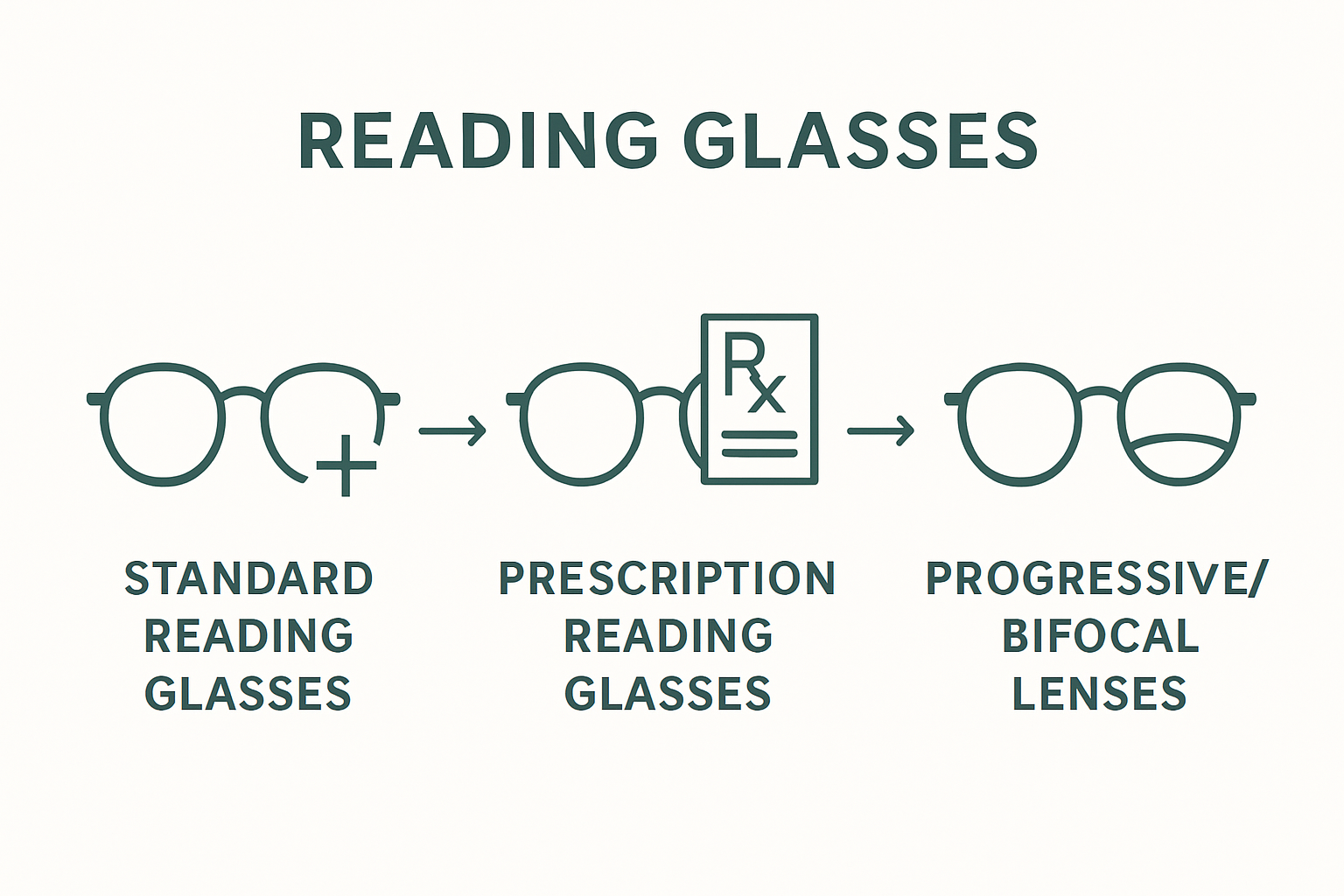
Advanced reading glasses offer sophisticated solutions for complex vision needs. Bifocal and progressive lenses represent innovative designs that accommodate multiple vision distances within a single pair of glasses. These specialised options provide seamless vision correction by integrating different focal lengths, allowing wearers to see clearly at various distances without changing eyewear.
To help readers easily compare the main options, the table below outlines the differences between over-the-counter, prescription, and specialised reading glasses.
| Type of Reading Glasses | Key Features | Best For |
|---|---|---|
| Over-the-Counter | Affordable, immediate purchase, basic magnification, standard strengths | Mild presbyopia, convenience seekers |
| Prescription | Custom-made, tailored magnification, addresses specific vision needs | Individuals needing precise correction |
| Specialised (Bifocal/Progressive) | Multiple focal lengths, seamless vision at various distances, advanced engineering | Those with complex or multiple vision needs |
How Prescriptions Affect Reading Glasses Choices
Reading glasses prescriptions are far more nuanced than simply selecting a standard magnification. They represent a detailed map of an individual’s unique visual requirements, incorporating multiple factors that influence vision correction. our reading glasses fit guide can help you understand these complex considerations.
Understanding Prescription Components
A comprehensive reading glasses prescription includes several critical elements that determine optimal vision correction. Diopter strength represents the primary measurement, indicating the lens’s magnification power needed to compensate for presbyopia. However, additional factors significantly impact prescription accuracy:
- Sphere (SPH): Measures the lens power required to correct near or distance vision
- Cylinder (CYL): Addresses astigmatism by measuring irregular corneal curvature
- Axis: Specifies the orientation of astigmatism correction
- Add Power: Indicates the additional magnification needed for close-up tasks
Individual Vision Complexity
Each person’s visual system is unique, with prescriptions reflecting subtle variations between eyes. Unequal prescriptions are common, where one eye might require different correction compared to the other. This complexity means that generic over-the-counter reading glasses often fail to provide comprehensive vision correction. Professional eye examinations become crucial in identifying these nuanced differences and recommending personalised solutions.
Prescription Considerations Beyond Magnification
Reading glasses prescriptions extend beyond simple magnification. They account for additional vision challenges such as astigmatism, eye muscle coordination, and potential underlying health conditions. Optometrists evaluate multiple factors including visual acuity, eye muscle balance, and potential vision changes. The goal is not just magnification but achieving optimal visual comfort and preventing potential eye strain or headaches associated with incorrect lens selection.
This table summarises the core components commonly found in a reading glasses prescription and their roles in optimising vision correction.
| Prescription Component | Description | Purpose |
|---|---|---|
| Diopter Strength | Indicates the magnification power needed for near vision tasks | Compensates for presbyopia |
| Sphere (SPH) | Measures lens power to correct near or distance vision | Addresses basic vision correction |
| Cylinder (CYL) | Measures correction for corneal curvature (astigmatism) | Adjusts for astigmatism |
| Axis | Specifies orientation for astigmatism correction | Ensures proper alignment of correction |
| Add Power | Additional magnification on top of basic correction | Supports focused near tasks |
The Role of Lens Technology in Reading Glasses
Lens technology has revolutionised reading glasses, transforming them from simple magnification tools into sophisticated vision correction solutions. Modern lens innovations address complex visual needs while enhancing comfort and functionality. the evolution of glasses highlights how technological advancements continue to reshape eyewear.
Advanced Lens Material Innovations
Contemporary reading glasses leverage cutting-edge materials designed to provide superior visual performance. Lightweight synthetic polymers have replaced traditional glass, offering significant advantages:
- Reduced weight for increased wearing comfort
- Enhanced durability and scratch resistance
- Improved impact protection
- Better UV radiation filtering
- Thinner lens profiles for aesthetic appeal
Intelligent Lens Design Strategies
Modern lens technologies go beyond basic magnification, incorporating sophisticated design principles that address multiple vision requirements. Progressive and multifocal lenses represent remarkable engineering achievements, enabling seamless visual transitions between near and distant focal ranges. These advanced designs eliminate the traditional visual boundaries, creating a more natural viewing experience that mimics the eye’s original focusing capabilities.
Precision Optical Engineering
Reading glasses now integrate complex optical engineering techniques that precisely calculate lens curvature, refraction angles, and light transmission. Manufacturers use computer-aided design and micro-precision manufacturing to create lenses with microscopic variations that correct vision more accurately than ever before. The result is a reading glass solution that provides sharper image clarity, reduces eye strain, and adapts more effectively to individual vision profiles.
Choosing the Right Type of Reading Glasses for You
Selecting the perfect reading glasses involves more than simply picking a random pair off the shelf. The right choice depends on individual vision needs, lifestyle requirements, and personal comfort. how to choose the right lens power can help you navigate this important decision.
Assessing Your Vision Needs
Understanding your specific vision requirements is the foundation of choosing appropriate reading glasses. Individual vision profiles vary significantly, influenced by factors such as age, existing vision conditions, and daily activities. Consider these critical evaluation points:
- Current reading and close-up work frequency
- Existing vision correction requirements
- Typical working distances for reading and digital devices
- Potential eye strain or discomfort symptoms
- Professional and leisure activities that demand detailed vision
Matching Glasses to Lifestyle
Reading glasses are not a one-size-fits-all solution. Lifestyle compatibility plays a crucial role in selecting the most suitable eyewear. Professionals who spend extensive time reading documents or working on computers might require different glasses compared to individuals who occasionally read magazines or use smartphones. Factors like frame durability, lens coating, and portability become essential considerations when matching glasses to daily activities.
Professional Consultation and Personal Comfort
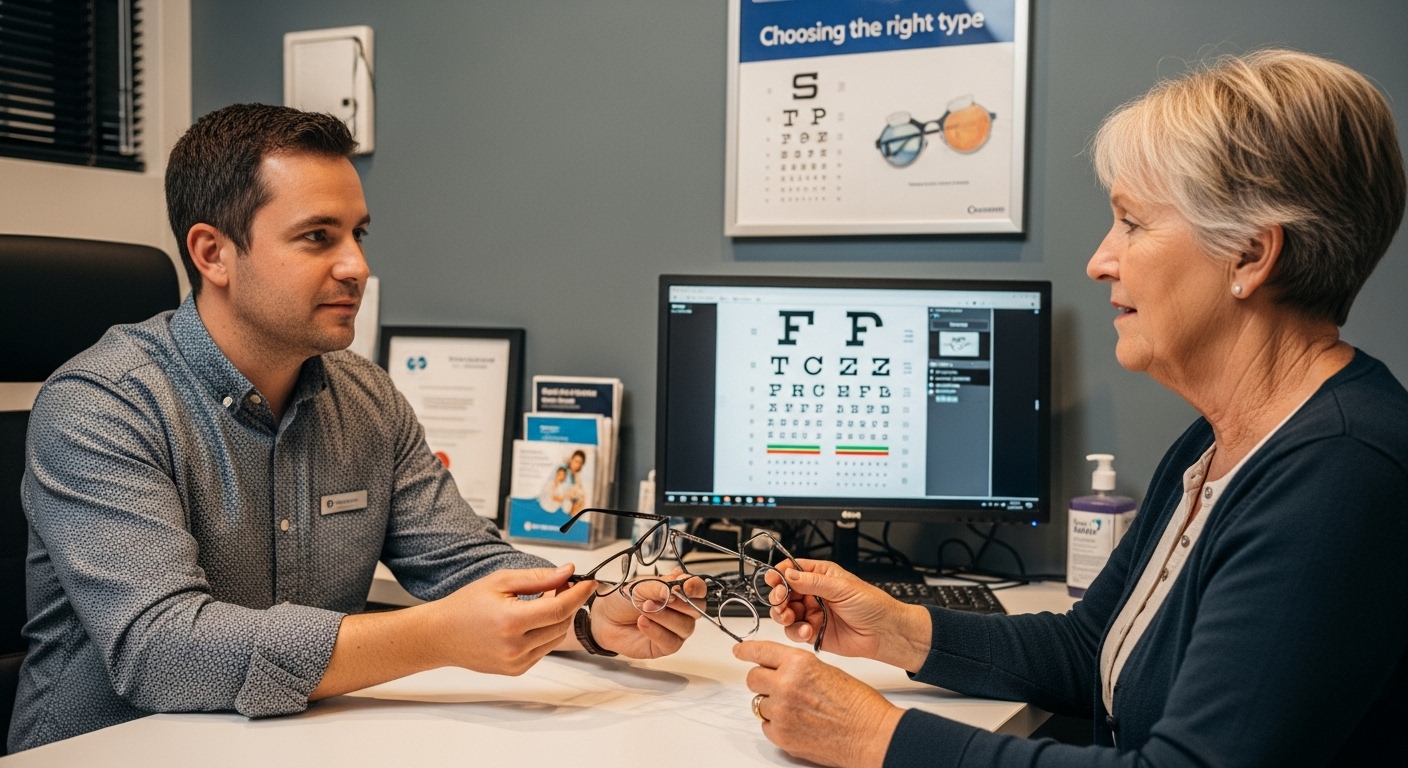
While over-the-counter reading glasses offer convenience, professional eye examinations provide the most accurate vision assessment. Optometrists can identify subtle vision nuances that generic glasses might miss. They evaluate not just magnification strength but also potential underlying vision conditions, ensuring that your reading glasses provide optimal comfort and visual clarity. The goal is finding glasses that feel like a natural extension of your vision, reducing eye strain and supporting your overall visual health.
Discover the Perfect Reading Glasses for Your Clear Vision Journey
Struggling with presbyopia or simply finding it tricky to focus on nearby details? You are not alone. Many Australians experience the frustration of blurred text, eye strain, and headaches when it comes to reading or working up-close. With so many types of reading glasses now available, choosing something stylish and functional for your needs can feel overwhelming. That is exactly where we step in. At Stylish Reading Glasses for Men and Women, you will find a thoughtfully curated range designed to match your personal style and deliver the clear vision you have read about in this guide.
Upgrade your reading experience right now. Whether you are after classic looks, trending frames, or specific shapes like Rectangular Reading Glasses, you will find high-quality options across our site. Shop with confidence at Ministry of Sight and discover how the right pair can bring both comfort and clarity to everyday life.
Frequently Asked Questions
What are reading glasses designed for?
Reading glasses are designed to help individuals who have difficulty focusing on close-up text and details, especially due to presbyopia, which commonly occurs as we age.
How do I choose the right strength of reading glasses?
To choose the right strength, start with a lower magnification and gradually increase it based on your comfort and visual needs. A simple reading glasses test or consultation with an eye care professional can help determine the appropriate strength for you.
What is the difference between over-the-counter and prescription reading glasses?
Over-the-counter reading glasses offer standardised magnification strengths and are readily available, while prescription reading glasses are customised to fit individual visual needs, providing a more precise and comfortable vision correction tailored by an optometrist.
Can reading glasses correct other vision problems?
Reading glasses primarily address presbyopia, but if other vision issues are present, such as astigmatism, a custom prescription may be necessary to accommodate those specific requirements alongside near vision correction.
Recommended
- Understanding the Role of Reading Glasses for Adults – ministry of sight
- Understanding the Reading Glasses Fit Guide for Better Vision – ministry of sight
- Understanding Reading Glasses and Migraines: A Clear Guide – ministry of sight
- “Do I Really Need Reading Glasses?” A Clear Look at a Common Question – ministry of sight


