

Over 60 percent of adults notice difficulty focusing on close objects once they reach their forties. This change in vision can make reading or working on a screen feel tiring and frustrating, yet most people do not realise just how much it affects their daily routines. Understanding reading glasses means you can spot the signs of near vision loss early and find a practical solution that keeps your eyes comfortable and your focus sharp.
Table of Contents
- Defining Reading Glasses And Their Purpose
- Types Of Reading Glasses Available Today
- How Reading Glasses Improve Vision Health
- Key Benefits For Daily Life And Productivity
- Common Mistakes When Choosing Reading Glasses
Key Takeaways
| Point | Details |
|---|---|
| Targeted Vision Aid | Reading glasses are specifically designed to address near vision challenges, particularly presbyopia, enhancing clarity for close-range tasks. |
| Variety of Styles | Available in multiple styles, including full frame, half-eye, and bifocal options, allowing users to choose based on personal needs and lifestyle. |
| Eye Health Benefits | Correct use of reading glasses can reduce eye strain, prevent headaches, and help maintain visual comfort as age-related changes occur. |
| Importance of Proper Selection | Choosing the right reading glasses requires careful consideration of magnification, comfort, and personal vision requirements; professional assessment is recommended. |
Defining Reading Glasses And Their Purpose
Reading glasses are specialised visual aids designed to help people overcome near vision challenges, particularly as they age. These single vision corrective lenses provide focused clarity for close-range tasks like reading books, viewing digital screens, and working on detailed projects. Unlike standard prescription glasses, reading glasses specifically target the ability to see objects within arm’s length with enhanced precision.
The primary purpose of reading glasses is addressing presbyopia, a natural age-related vision change that typically begins around age 40. As eye muscles gradually lose flexibility, focusing on nearby objects becomes increasingly difficult. Understanding what are reading glasses helps individuals recognize when they might need visual assistance. These glasses compensate for diminishing near-vision capabilities by providing magnification that enables comfortable and clear close-up viewing.
Reading glasses come in several distinctive styles to suit different preferences and needs:
- Full Frame Glasses: Traditional design covering entire lens area
- Half-Eye Glasses: Sit lower on nose, allowing over-the-top viewing
- Compact Folding Designs: Perfect for portable convenience
- No-Line Bifocal Styles: Seamless transition between viewing distances
While reading glasses might seem straightforward, they represent a sophisticated solution to maintaining visual comfort and productivity. They bridge the gap between natural vision changes and continued engagement with detailed, close-range activities. Whether you’re a professional needing to review documents, an avid reader, or someone who enjoys intricate hobbies, reading glasses offer a practical approach to maintaining clear, comfortable vision.
Types Of Reading Glasses Available Today
Reading glasses have evolved significantly, offering diverse options to suit individual vision needs and personal preferences. The most common types include full frame, half-eye, and frameless designs, each providing unique benefits for different lifestyles and visual requirements. Understanding these variations helps consumers make informed choices about their eye health and visual comfort.
The traditional full frame reading glasses provide complete lens coverage, offering comprehensive near-vision correction for those who spend extended periods reading or working on close-range tasks. Understanding the types of reading glasses reveals the nuanced differences between these styles. Half-eye glasses, in contrast, sit lower on the nose, allowing users to glance over the top for distance vision while maintaining close-up clarity. This design proves particularly useful for professionals who frequently switch between reading documents and observing their surroundings.
Modern reading glasses also include several innovative variations:
- Compact Folding Glasses: Designed for portability and convenience
- No-Line Bifocal Styles: Seamless transition between near and far vision
- Progressive Lens Designs: Gradual magnification without visible lines
- Blue Light Blocking Readers: Specifically designed for digital screen use
The choice of reading glasses depends on individual preferences, lifestyle demands, and specific vision challenges. Some individuals might prefer lightweight, minimalist designs, while others require more robust frames with additional features like anti-reflective coatings or adjustable nose pads. The key is finding a pair that not only corrects vision effectively but also complements personal style and comfort requirements.
How Reading Glasses Improve Vision Health
Reading glasses play a critical role in maintaining and protecting overall vision health, particularly for individuals experiencing age-related vision changes. By providing targeted magnification for close-range tasks, these specialized lenses help prevent eye strain, reduce visual fatigue, and support the natural transition of eye function as we age. The ability to focus clearly on nearby objects becomes increasingly challenging with time, making reading glasses an essential tool for maintaining visual comfort and productivity.
How reading glasses improve reading reveals the complex mechanisms by which these optical aids support eye health. By compensating for the stiffening of the eye’s natural lens, reading glasses help prevent presbyopia-related complications, such as persistent headaches, muscle tension, and prolonged eye strain. When eyes struggle to focus, they overcompensate by working harder, which can lead to long-term visual discomfort and potential degradation of eye muscle flexibility.
The vision health benefits of reading glasses extend beyond immediate comfort and include several key advantages:
- Reduced Eye Strain: Minimizes muscle tension and fatigue
- Prevention of Headaches: Alleviates tension caused by constant refocusing
- Improved Reading Accuracy: Enables clearer, more comfortable text perception
- Cognitive Support: Reduces mental fatigue associated with visual challenges
By providing precise magnification and supporting natural eye function, reading glasses are more than just a visual aid. They represent a proactive approach to maintaining eye health, allowing individuals to continue engaging in detailed close-range activities without compromising their visual well-being. Regular eye examinations and properly fitted reading glasses can significantly contribute to long-term vision preservation and overall quality of life.
Key Benefits For Daily Life And Productivity
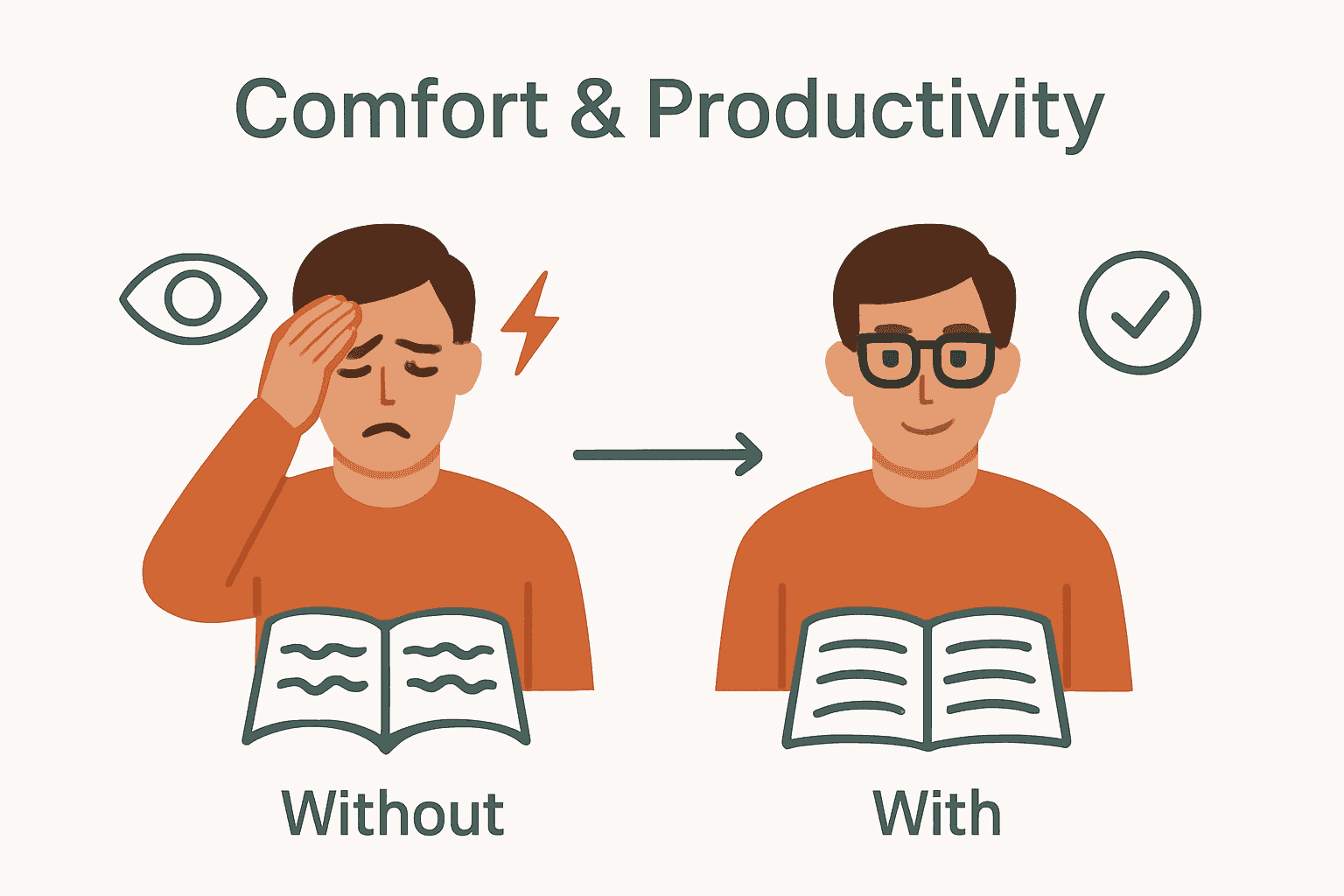
Reading glasses transform daily experiences by providing crystal-clear vision for near-range activities that form the core of personal and professional life. From reading intricate documents and crafting delicate projects to managing digital communication, these specialized lenses enable individuals to maintain peak performance and independence. The ability to focus effortlessly on close-range tasks eliminates the frustration and limitations imposed by age-related vision changes.
Understanding the role of reading glasses highlights how these optical tools significantly enhance productivity across multiple domains. Professionals can now seamlessly review reports, respond to emails, and engage with detailed work without straining their eyes. Hobbyists can continue enjoying intricate activities like needlework, model building, or reading, while maintaining visual comfort and precision. The psychological benefit of sustained independence cannot be overstated - reading glasses help individuals maintain their sense of capability and confidence.
The productivity and lifestyle benefits of reading glasses extend across various life sectors:
- Professional Performance: Enhanced document reading and digital screen interactions
- Personal Hobbies: Continued engagement in detailed craft and creative activities
- Social Connectivity: Improved ability to read messages, menus, and communications
- Learning Continuity: Sustained capacity for reading, studying, and skill acquisition
- Digital Interaction: Comfortable browsing, texting, and screen-based activities
Beyond functional advantages, reading glasses represent a proactive approach to aging. They empower individuals to maintain their lifestyle, cognitive engagement, and personal autonomy.
 By addressing vision challenges directly, these glasses ensure that age-related changes do not become barriers to personal growth, professional success, or recreational enjoyment. The right pair of reading glasses can truly be a gateway to continued active and fulfilling living.
Common Mistakes When Choosing Reading Glasses
Selecting the right reading glasses is more nuanced than many people realize. Incorrect magnification can lead to eye strain, headaches, and diminished visual comfort, making it crucial to approach the selection process with careful consideration. Many individuals make the mistake of choosing glasses based solely on appearance or grabbing a random pair off the shelf, without understanding their specific vision needs.
Reading Glasses Dos and Don’ts highlights the importance of professional guidance in selecting the right eyewear. One of the most common errors is selecting an incorrect magnification strength. People often choose readers that are too strong or too weak, which can cause unnecessary eye fatigue and potential long-term vision complications. Professional eye examinations are essential for determining the precise magnification needed for optimal visual performance.
Key mistakes to avoid when choosing reading glasses include:
- Ignoring Prescription Accuracy: Selecting arbitrary magnification without professional assessment
- Overlooking Frame Comfort: Choosing style over ergonomic fit and comfort
- Neglecting Lens Quality: Opting for cheap materials that distort vision
- Disregarding Personal Lifestyle: Failing to consider specific visual needs
- Avoiding Regular Eye Checks: Not updating prescriptions periodically
Beyond technical considerations, many people underestimate the importance of personal comfort and individual vision dynamics. Reading glasses are not a one-size-fits-all solution. They require thoughtful selection that takes into account personal vision changes, daily activities, and specific visual challenges. By avoiding these common mistakes and approaching the selection process with informed awareness, individuals can find reading glasses that truly enhance their visual experience and overall quality of life.
Discover Clearer Close-Up Vision With Style and Comfort
Struggling with blurry reading or eye strain as you get older is more common than you think. This article outlined how reading glasses give you the focused clarity needed to tackle daily close-up tasks without discomfort. Don’t let presbyopia slow you down or cause headaches. Now you can embrace better vision with a pair designed not only for effectiveness but also for your personal style.
Explore our range of Retro Reading Glasses and find the perfect fit that suits your look and lifestyle.
Take control of your visual health today with expertly crafted glasses from Ministry of Sight. Enjoy free shipping across Australia and special offers like buy-one-get-one deals so you can share the gift of clear vision. Visit Rectangular Reading Glasses or Super Cool Black Reading Glasses to find frames that combine comfort, quality and sophistication. Act now to maintain your productivity and visual comfort before eye strain takes hold.
Frequently Asked Questions
What are reading glasses and what is their primary purpose?
Reading glasses are specialized visual aids designed to help individuals with near vision challenges, especially as they age. They provide clarity for close-range tasks like reading, viewing digital screens, and engaging in detailed projects, targeting presbyopia, a common age-related vision change.
How do reading glasses improve vision health?
Reading glasses provide targeted magnification for close-range tasks, reducing eye strain, fatigue, and headaches. They help accommodate age-related vision changes, maintaining visual comfort and productivity while preventing complications associated with presbyopia.
What are the different types of reading glasses available?
There are several types of reading glasses, including full frame, half-eye, compact folding designs, no-line bifocals, and blue light blocking readers. Each type offers unique benefits depending on individual preferences and specific vision needs.
What common mistakes should I avoid when choosing reading glasses?
Some common mistakes include selecting an incorrect magnification strength, overlooking frame comfort, neglecting lens quality, and failing to consider personal lifestyle needs. It’s essential to consult a professional for accurate prescription and to regularly check vision needs.


