

Finding the perfect pair of reading glasses is a challenge that many Australian adults face as they experience changes in near vision. More than half of Australians over 40 need vision support for reading and daily tasks, making stylish and functional eyewear a top priority. This guide reveals what makes reading glasses work, the key types and frames available, plus tips on lens strength and features, so you can shop confidently and enjoy unbeatable online deals.
Table of Contents
- What Are Reading Glasses And How They Work
- Key Types Of Reading Glasses Explained
- Full-Frame, Half-Frame, And Specialty Styles
- Selecting Lens Strength And Features
- Costs, Common Mistakes, And Alternatives
Key Takeaways
| Point | Details |
|---|---|
| Understanding Reading Glasses | Reading glasses are designed to help with presbyopia by magnifying close-up objects for clear vision. They come in standard strengths typically ranging from +1.00 to +3.50 diopters. |
| Types of Lenses | Single-vision, bifocal, trifocal, and progressive lenses cater to various visual needs, from basic near vision to multiple focal points. Selecting the right type is crucial for managing age-related vision changes. |
| Frame Styles Matter | Full-frame, half-frame, and specialty styles enhance comfort and functionality. Choosing the right frame type is essential for your specific lifestyle and visual requirements. |
| Consultation is Key | It’s important to have a professional eye assessment to determine the appropriate lens strength and features, especially for those with complex vision needs. |
What Are Reading Glasses and How They Work
Reading glasses are specialised optical devices designed to help people overcome presbyopia, a natural age-related vision change that affects near vision. These corrective lenses work by compensating for the eye’s reduced ability to focus on close-up objects, enabling clear and comfortable reading at short distances.
At their core, reading glasses function by bending incoming light to ensure it focuses precisely on the retina. As our eyes naturally age, the lens becomes less flexible, making it challenging to read small text or perform detailed close-up tasks. Reading glasses provide a targeted solution by adding magnification that helps restore near vision clarity.
Typically, reading glasses come in standardised strengths ranging from +1.00 to +3.50 diopters. These strengths represent the lens’s magnifying power, with higher numbers indicating greater magnification. Most people can purchase these glasses over-the-counter, selecting a strength based on their specific near-vision needs. However, individuals with complex vision requirements should consult an optometrist for personalised prescription reading glasses.
Pro tip: When selecting reading glasses, test them at your typical reading distance to ensure comfortable and clear vision.
Key Types of Reading Glasses Explained
Reading glasses come in several distinct types, each designed to address different vision needs and understanding lens types can help you select the most appropriate option. The primary categories include single-vision, bifocals, trifocals, and progressive lenses, each offering unique benefits for managing age-related vision changes.
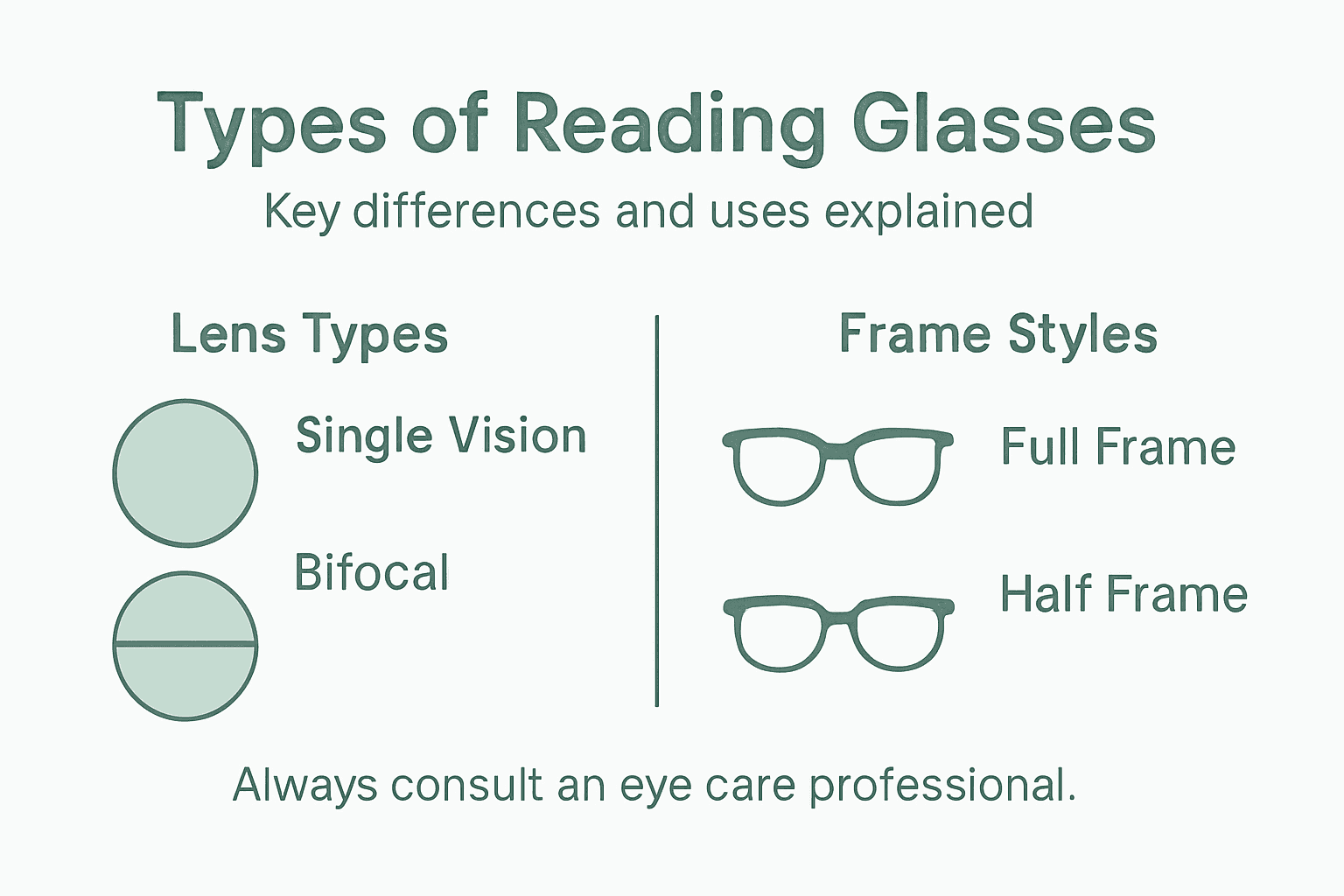
Single-vision reading glasses represent the most straightforward design, providing a consistent magnification across the entire lens. These are ideal for people who only need help with close-up tasks like reading, computer work, or detailed crafting. They typically come in standardised strengths ranging from +1.00 to +3.50 diopters, allowing users to choose a magnification that matches their specific near-vision requirements.
Multifocal reading glasses offer more complex vision correction. Bifocals feature two distinct lens areas: the top segment for distance vision and the bottom segment for near vision. Trifocals expand on this design by adding a middle segment for intermediate distances like computer screens. Progressive lenses represent the most advanced option, providing a seamless transition between near, intermediate, and distance vision without the visible lines found in traditional bifocals or trifocals.
Pro tip: Always have your vision professionally assessed before selecting reading glasses to ensure you choose the most appropriate lens type for your specific visual needs.
Here’s how the main types of reading glasses compare:
| Lens Type | Visual Support | Visible Lens Lines | Best For |
|---|---|---|---|
| Single-vision | Near tasks only | No | Reading or crafting |
| Bifocals | Near & distance | Yes | Frequent switching focus |
| Trifocals | Near, mid, distance | Yes | Multi-distance activities |
| Progressive | All distances | No | Seamless everyday vision needs |
Full-Frame, Half-Frame, and Specialty Styles
Reading glasses frame styles play a crucial role in comfort, functionality, and personal style. Understanding types of reading glasses reveals three primary frame designs: full-frame, half-frame, and specialty styles, each catering to different vision needs and personal preferences.
Full-frame reading glasses provide comprehensive lens coverage, encasing the entire lens within a sturdy frame. These glasses are ideal for individuals requiring consistent vision correction across all viewing angles. They offer maximum lens protection and work exceptionally well for those with higher prescription strengths or who need complete visual support during reading and close-up tasks.

Half-frame glasses, alternatively called half-eye glasses, feature a distinctive design with frames only along the upper portion of the lens. This style allows wearers to look down through the corrective lens for reading or detailed work while easily looking over the frames for distance vision. Half-frame glasses are particularly popular among professionals like teachers, accountants, and researchers who frequently switch between reading documents and observing wider environments.
Specialty styles extend beyond traditional frame designs, incorporating innovative features for enhanced user experience. These include foldable glasses for portability, blue-light blocking lenses for digital screen protection, and lightweight materials like titanium or flexible polymers. Some specialty reading glasses also offer UV protection, making them versatile accessories for both indoor and outdoor use.
Pro tip: When selecting reading glasses, try multiple frame styles to find the most comfortable and functionally suitable option for your specific lifestyle and vision requirements.
Selecting Lens Strength and Features
Choosing the right reading glasses involves carefully navigating lens strength and advanced features to match your specific vision requirements. Understanding lens strength is crucial in ensuring optimal visual comfort and correction for age-related vision changes.
Lens strength, measured in diopters, ranges typically from +0.75 to +4.00 in incremental steps of 0.25. This measurement indicates the lens’s magnification power, with higher numbers representing greater visual correction. Determining the appropriate strength involves considering factors like reading distance, screen time, and individual presbyopia progression. Most people can start with over-the-counter reading glasses, but those with complex vision needs or significant prescription variations between eyes should consult an optometrist for personalised recommendations.
Beyond basic magnification, modern reading glasses offer sophisticated additional features designed to enhance visual experience. Blue light filtering coatings help reduce digital eye strain for individuals spending considerable time on computers or smartphones. Impact-resistant materials like polycarbonate provide durability, while UV protective lenses offer extra protection during outdoor activities. Lightweight materials such as titanium and flexible polymers ensure comfort and longevity, making reading glasses both functional and aesthetically pleasing.
Pro tip: Test reading glasses at your typical reading distance and lighting conditions to ensure the most accurate and comfortable fit for your specific vision needs.
A summary of extra lens features and their advantages:
| Feature | Benefit | Suitable For |
|---|---|---|
| Blue-light filter | Reduces digital eye strain | Heavy computer or phone users |
| Impact-resistant material | Protects against drops or knocks | Active lifestyles, children |
| UV protection | Shields eyes from harmful sunlight | Outdoor reading or activities |
| Lightweight frame | Enhances long-term wearing comfort | Extended or daily use |
Costs, Common Mistakes, and Alternatives
Navigating the world of reading glasses involves understanding pricing structures, potential pitfalls, and alternative vision correction methods. Reading glasses for mature men demonstrate the complexity of choosing the right eyewear solution for individual needs.
Reading glasses pricing ranges dramatically, from budget-friendly over-the-counter options starting around $20 to custom prescription glasses costing upwards of $300. Common mistakes people make include selecting incorrect lens strength without professional guidance, ignoring eye health, and assuming all reading glasses are identical. Purchasing glasses without a proper eye examination can lead to unnecessary eye strain, headaches, and potential long-term vision complications. Most optometrists recommend a comprehensive eye check every two years to ensure accurate prescription and monitor overall eye health.
Alternative vision correction methods provide additional options for those seeking comprehensive solutions. Multifocal contact lenses offer seamless vision correction across different distances, while progressive glasses provide a smooth transition between near and far vision without visible lens lines. More permanent solutions like refractive surgeries such as LASIK can address presbyopia, though these involve higher upfront costs and potential surgical risks. Each alternative comes with unique advantages and considerations, making professional consultation crucial in determining the most suitable approach.
Pro tip: Always request and retain a copy of your eye prescription, which allows you to compare prices and explore multiple purchasing options for your reading glasses.
Discover the Perfect Reading Glasses That Match Your Vision Needs
Navigating the many types of reading glasses can be overwhelming, especially when you want to find lenses that truly suit your unique vision challenges. Whether you need single-vision clarity or progressive lenses for all distances, selecting the right frame and lens strength is essential for comfortable, strain-free reading. Our collection of Rectangular Reading Glasses offers a versatile style that complements most face shapes while providing excellent visual support.
Start enhancing your reading experience today with stylish and functional options from Ministry of Sight. Take advantage of our free shipping across Australia, satisfaction guarantee, and exclusive deals on Round Reading Glasses and Super Cool Black Reading Glasses. Find your perfect pair now and enjoy clear vision with confidence.
Frequently Asked Questions
What are the different types of reading glasses available?
There are several types of reading glasses, including single-vision, bifocals, trifocals, and progressive lenses. Each type is designed to address specific vision needs, from simple near vision correction to comprehensive solutions covering multiple distances.
How do I choose the right strength for my reading glasses?
Choosing the right strength for reading glasses involves understanding your specific near-vision needs, with standard strengths typically ranging from +1.00 to +3.50 diopters. It’s advisable to test different strengths at your usual reading distance to find the most comfortable option.
What are the benefits of single-vision reading glasses compared to bifocals?
Single-vision reading glasses provide consistent magnification across the entire lens, making them ideal for close-up tasks like reading. In contrast, bifocals offer two distinct lens areas for near and distance vision, which may be beneficial for individuals who frequently switch focus between distances.
Are there specialty styles of reading glasses that offer additional features?
Yes, specialty styles of reading glasses include features such as blue-light blocking lenses, foldable designs for easy portability, and lightweight materials for enhanced comfort. These styles cater to various lifestyle needs and preferences.


