

Nearly every Australian over 40 will experience presbyopia, a natural shift in near vision that makes reading the fine print unexpectedly challenging. Struggling to find a stylish solution for comfortable daily reading can be frustrating, especially when off-the-shelf options rarely cater to both fashion and function. This guide breaks down what looking over reading glasses means, helping you choose eyewear that fits your lifestyle without sacrificing style or comfort.
Table of Contents
- What Is Looking Over Reading Glasses?
- Types of Reading Glasses and Key Differences
- Why People Look Over Their Readers
- Choosing The Right Fit and Frame Style
- Common Mistakes with Reading Glasses Use
Key Takeaways
| Point | Details |
|---|---|
| Understanding Reading Glasses | Reading glasses are essential for managing presbyopia, aiding in near-vision clarity for tasks such as reading or using smartphones. |
| Types of Reading Glasses | Various styles, including full-frame, half-frame, and bifocal, cater to different needs, allowing for comfortable and effective vision correction. |
| Common Usage Mistakes | Using incorrect dioptre strengths and mispositioning glasses can lead to eye strain and discomfort; regular professional testing is crucial. |
| Visual Transition Technique | Looking over reading glasses is a natural adaptation to switch between near and distant vision, helping maintain clarity without changing eyewear. |
What Is Looking Over Reading Glasses?
Reading glasses are specialised eyewear designed to help people experiencing presbyopia - an age-related vision condition that affects near vision clarity. As we age, the eye’s natural lens becomes less flexible, making it challenging to focus on close-up tasks like reading, smartphone screens, or detailed craftwork. Understanding the types of reading glasses can help you navigate this visual transition more effectively.
The term “looking over reading glasses” refers to the common practice of peering above or around the reading glasses’ lenses when you need to switch between near and distance vision. This happens because reading glasses are specifically optimised for close-up tasks, magnifying text and detailed objects within arm’s reach. When you want to look at something further away - like checking a person’s expression or glancing across a room - you’ll naturally lift your gaze above the magnified lenses.
Understanding how reading glasses function is crucial for managing presbyopia. These glasses contain magnifying lenses with specific dioptre strengths that compensate for the eye’s reduced ability to focus. Typically, strengths range from +1.00 to +3.50, with each increment representing increased magnification. The right pair allows you to read comfortably without straining your eyes, while also providing the flexibility to look over the lenses when needed.
Pro tip: When selecting reading glasses, get your vision professionally tested to determine the precise magnification strength that matches your specific near-vision requirements.
Types of Reading Glasses and Key Differences
Reading glasses come in multiple configurations designed to address different vision needs, with each type offering unique advantages for people experiencing presbyopia. Understanding lens types for reading glasses can help you select the most appropriate option for your lifestyle and visual requirements.
The primary types of reading glasses include full-frame, half-frame, and frameless designs. Full-frame glasses provide complete lens coverage and are ideal for individuals requiring consistent magnification across their entire reading area. Half-frame glasses offer a lighter, more minimalist approach, with lenses partially supported by the frame’s structure. Frameless options provide the most lightweight and aesthetically subtle solution, perfect for those wanting a near-invisible reading aid.
Beyond frame styles, reading glasses also vary in lens technologies. Bifocal reading glasses feature two distinct magnification zones - typically with distance vision at the top and near vision at the bottom. Progressive lenses offer a more sophisticated approach, providing a smooth transition between near, intermediate, and distance vision without visible line segments. Some modern reading glasses also incorporate blue light blocking technology, which helps reduce digital eye strain from smartphone and computer screens.
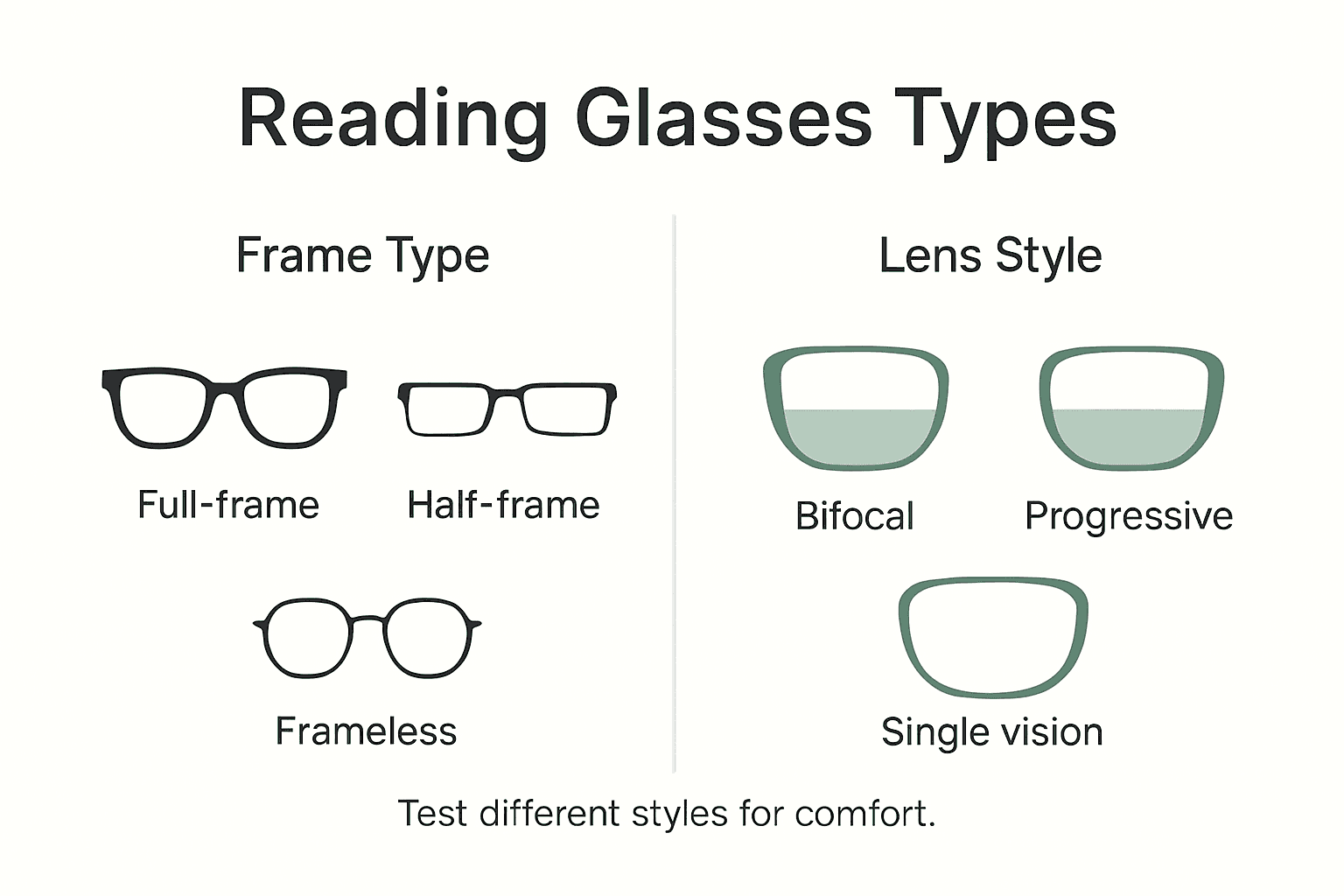
Here’s how key types of reading glasses differ by design and functionality:
| Type of Glasses | Lens Coverage | Visual Transition | Ideal For |
|---|---|---|---|
| Full-frame | Covers entire lens area | Quick switch to distance by looking over | Continuous reading or desk work |
| Half-frame | Lower portion only | Easy glance above for far vision | Occasional reading; frequent switching |
| Frameless | Minimal, lightweight | Subtle, unobtrusive transitions | Those preferring invisible aids |
| Bifocal | Two segments, top/distance bottom/near | Separate areas, visible line | Split activities (read + view far) |
| Progressive | Full lens, gradual shift | Smooth transition, no line | All-day wear for varied tasks |
Pro tip: Always test multiple reading glass styles and consult an optometrist to find the most comfortable and effective design for your specific vision needs.
Why People Look Over Their Readers
People naturally look over their reading glasses as a practical solution to navigate between near and distance vision, particularly when dealing with presbyopia. Understanding the role of reading glasses helps explain why this visual adaptation becomes essential as our eyes age and lose their natural focusing flexibility.
The primary reason for looking over reading glasses is the magnification design, which is specifically optimised for close-up tasks. These specialised lenses are calibrated to enhance near vision, making small text and detailed work clearer. However, this same magnification creates visual distortion when looking at objects in the distance, compelling users to lift their gaze above the lenses to see distant scenes with natural clarity. This technique allows for seamless visual transitions between reading a book, checking a smartphone, and observing something across the room.
Physiologically, looking over reading glasses is a natural compensation mechanism for age-related vision changes. As the eye’s lens becomes less flexible with age, the ability to quickly shift focus between near and far distances diminishes. Reading glasses with specific dioptre strengths help counteract this limitation, but they cannot completely replicate the eye’s original focusing capability. By looking over or around the lenses, users can effectively switch between magnified near vision and normal distance vision without constantly changing eyewear.
Pro tip: Consider getting progressive lenses that offer a smoother transition between near and distance vision, reducing the need to constantly look over your reading glasses.
Choosing The Right Fit and Frame Style
Selecting the perfect reading glasses involves more than just picking a magnification strength - it’s about finding a pair that complements your face shape, lifestyle, and personal style. Understanding reading glasses frame styles can help you make an informed decision that balances both functionality and fashion.
Frame fit is crucial for comfort and visual effectiveness. Nose pad design plays a significant role in ensuring your glasses stay securely in place, especially during activities like reading or working on a computer. Different frame materials such as lightweight metal, flexible plastic, or acetate offer varying levels of comfort and durability. The width of the frame should align with your face’s natural contours, preventing slipping or uncomfortable pressure points that can cause headaches or skin irritation.
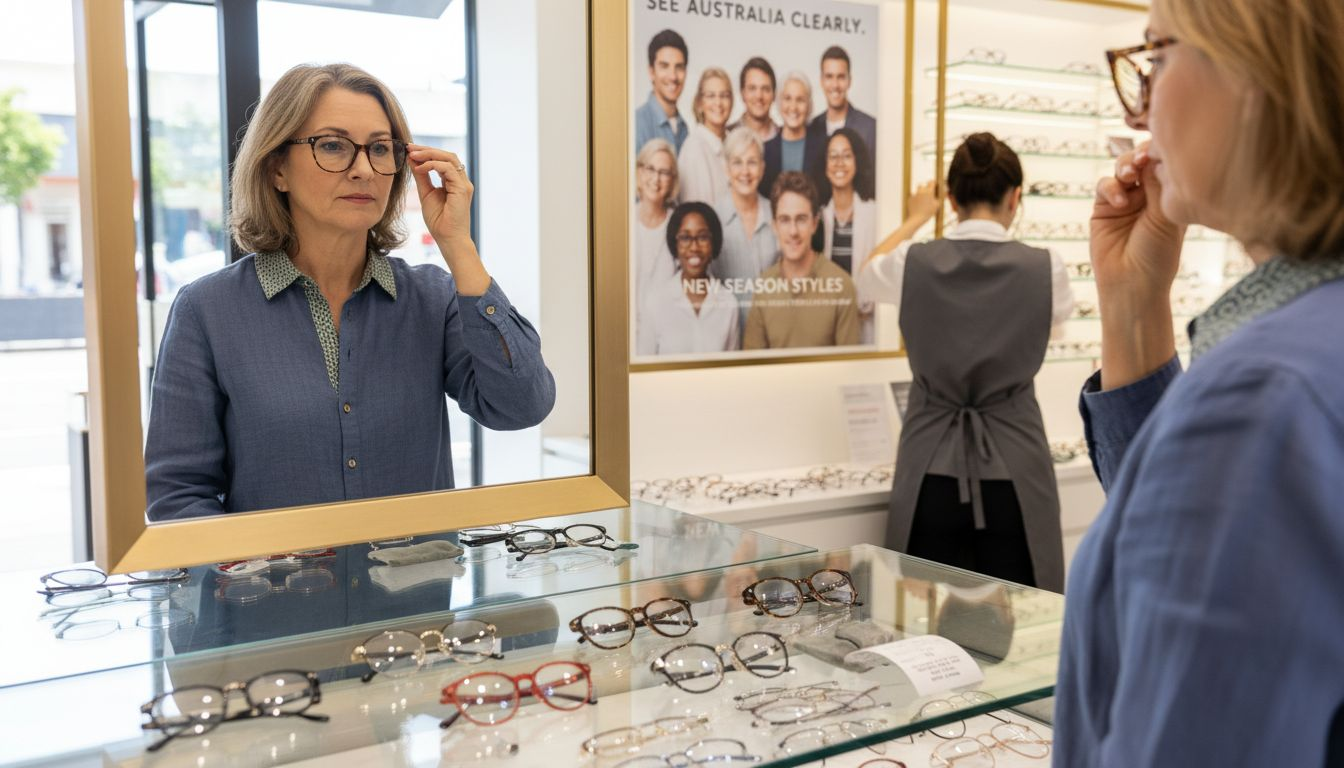
Style considerations extend beyond mere aesthetics. The shape of your reading glasses can dramatically impact your overall appearance and confidence. Round frames might soften angular facial features, while rectangular frames can add structure to rounder face shapes. Consider your personal style - whether you prefer classic, minimalist designs or bold, statement-making frames. Factors like your professional environment, personal wardrobe, and daily activities should influence your frame selection, ensuring your reading glasses feel like a natural extension of your personal image.
Pro tip: Try on multiple frame styles and ask trusted friends or family members for honest feedback about how the glasses complement your face and personal style.
Common Mistakes with Reading Glasses Use
When it comes to reading glasses, many people unknowingly make critical errors that can compromise their vision and comfort. Reading glasses dos and don’ts highlight the importance of understanding proper usage to maintain optimal visual health and prevent potential long-term eye strain.
One of the most prevalent mistakes is using an incorrect dioptre strength. Many individuals either choose glasses with magnification that’s too strong or too weak, leading to eye fatigue, persistent headaches, and blurred vision. This often happens when people rely on guesswork or over-the-counter selections without professional guidance. The human eye’s focusing ability changes subtly over time, making regular eye examinations crucial for accurately determining the right prescription strength for your current vision needs.
Another common error involves improper positioning and usage of reading glasses. Holding reading materials too close or too far from the lens, or wearing glasses at an incorrect angle, can create unnecessary visual strain. Additionally, many people forget that reading glasses are designed for specific tasks like reading, computer work, or detailed crafting. Using them for activities they’re not intended for - such as driving or watching television - can lead to distorted vision and potential safety risks. Lighting conditions also play a critical role; insufficient or harsh lighting can exacerbate vision challenges and reduce the effectiveness of your reading glasses.
Common reading glasses mistakes and ways to avoid them:
| Mistake | Impact on Vision | Solution |
|---|---|---|
| Wrong dioptre strength | Eye fatigue, headaches | Get regular professional testing |
| Improper positioning | Blurred or strained view | Adjust reading distance and angle |
| Using for wrong tasks | Safety risks, distortion | Use glasses only for intended tasks |
| Ignoring lighting needs | Reduced effectiveness | Ensure proper ambient lighting |
Pro tip: Get a professional eye examination annually and always test reading glasses in similar lighting conditions to those you’ll typically use them in.
Discover the Perfect Fit and Style for Your Reading Glasses Today
Struggling to find reading glasses that feel comfortable and look great while allowing you to effortlessly look over your lenses for distance vision is a common challenge. This article highlights the importance of choosing the right frame style and dioptre strength to reduce strain and improve your daily comfort. Whether you want a classic look or a subtle design that suits your personality, the right glasses can transform your reading experience and boost your confidence.
Explore our wide selection of stylish and functional options like Round Reading Glasses and Retro Reading Glasses that combine fashion with the practical needs of presbyopia. At Ministry of Sight, we offer free shipping across Australia and fantastic deals to help you find your ideal pair now. Visit us today and see how the right fit and style can make looking over your reading glasses a seamless, comfortable part of your daily life.
Frequently Asked Questions
What does it mean to look over reading glasses?
Looking over reading glasses refers to the practice of peering above or around the lenses to switch between near and distance vision, as reading glasses are optimised for close-up tasks and can cause visual distortion for distant objects.
How do I choose the right magnification strength for reading glasses?
It’s essential to have your vision professionally tested to determine the appropriate dioptre strength for your reading glasses, as this will match your specific near-vision requirements and help prevent eye strain.
What are the main types of reading glasses available?
The primary types of reading glasses include full-frame, half-frame, frameless, bifocal, and progressive lenses. Each type offers unique advantages based on your visual needs and lifestyle.
Why is frame style important when selecting reading glasses?
Frame style matters because it affects comfort, fit, and personal style. Choosing a frame that complements your face shape and suits your lifestyle ensures that your reading glasses are comfortable for extended wear and match your aesthetic preferences.


