

Over 60% of Australian adults experience reading difficulties as they age, yet a staggering 72% of midlife Australians have never even heard of presbyopia, the gradual loss of near-focus ability that makes reading glasses necessary in the first place. Most people assume that grabbing a pair off the chemist shelf will solve the problem instantly. But blurry vision, persistent headaches, and uncomfortable frames tell a different story. This guide unpacks the most common reading glasses problems Australians face every day, explains exactly why they happen, and gives you practical, straightforward fixes so you can get back to reading in comfort.
Table of Contents
- Why reading glasses cause problems for so many Australians
- Top five reading glasses problems (and how to spot them)
- Troubleshooting common reading glasses issues: causes and quick fixes
- Getting the right fit: vital for comfort and performance
- Caring for your reading glasses: cleaning, handling, and longevity
- Upgrade your experience: quality accessories and trusted advice
- Frequently asked questions
Key Takeaways
| Point | Details |
|---|---|
| Fit matters most | Ill-fitting reading glasses are a leading cause of discomfort, headaches, and blurred vision. |
| Correct strength is crucial | Testing at usual reading distance ensures your magnification matches your needs. |
| Special glasses for screens | Intermediate lenses or blue light filters help prevent eye strain at computer distance. |
| Professional advice pays off | Optometrists and quality retailers can fit you properly and explain nuanced needs like astigmatism. |
| Clean and care daily | Daily cleaning and proper storage keep your glasses clear, comfortable, and long-lasting. |
Why reading glasses cause problems for so many Australians
With so many people struggling, it pays to understand why these issues are so widespread. Presbyopia typically begins in your early to mid-forties and progresses gradually, which means many people are wearing glasses that no longer match their current vision needs. The prescription that worked two years ago may now be leaving you squinting at the fine print.
Beyond prescription changes, fit is a surprisingly overlooked factor. Ill-fitting reading glasses cause discomfort, headaches, and reduced visual performance, yet most people never think to question whether their frames actually suit their face. Frames that sit too low, pinch the nose, or press behind the ears create constant low-level discomfort that many people simply accept as normal.
Everyday scenarios make this worse. At work, you might switch between a screen and printed documents dozens of times an hour. At home, you might read in dim light or at awkward angles. These habits put extra strain on glasses that were never quite right to begin with.
| Common problem | Likely cause | How often reported |
|---|---|---|
| Headaches after reading | Wrong lens strength or poor fit | Very common |
| Blurry vision | Outdated prescription or dirty lenses | Very common |
| Discomfort behind ears | Temples too long or too short | Common |
| Eye strain on screens | Wrong focal distance for monitors | Common |
| Dizziness when moving | Lens strength too high | Occasional |
“Most people don’t realise their reading glasses are the source of their headaches. They blame tiredness or stress, when the real culprit is sitting on their nose.” This is one of the most consistent patterns seen among people who finally get a proper fitting.
Learning what glasses help eye strain is a great starting point if you suspect your current pair is working against you rather than for you.
Top five reading glasses problems (and how to spot them)
Understanding the broad causes sets us up to look at exactly what goes wrong with most readers. Here are the five issues that come up again and again.
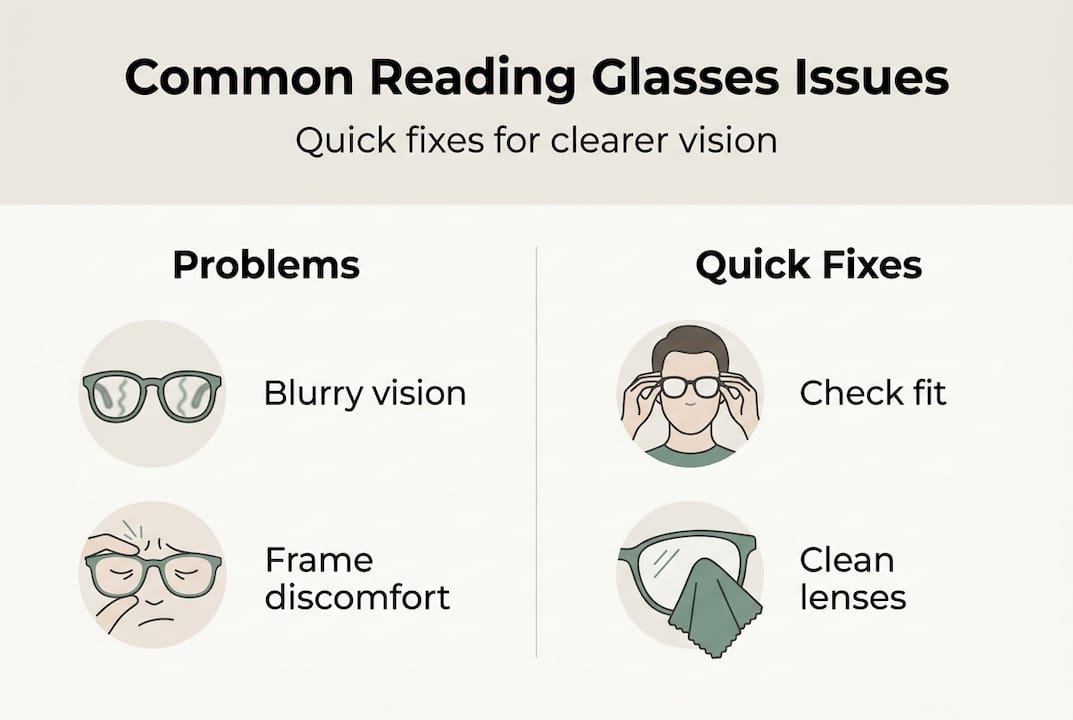
1. Blurry or distorted vision This is the most reported complaint. Blurry vision with glasses often comes down to the wrong distance, dirty or scratched lenses, or an outdated prescription. If your vision is clear at arm’s length but fuzzy up close, your strength is likely off.
2. Headaches and eye strain Your eyes work overtime to compensate for lenses that don’t quite match your needs. Common adaptation issues include mild headaches, eye strain, dizziness, and blurry vision, and while these can resolve within days to a week with a new pair, persistent symptoms signal a deeper problem.
3. Discomfort from poor frame fit Frames that are too wide slip down constantly. Frames that are too narrow pinch and leave red marks. Neither is acceptable for daily wear, yet many people put up with both.

4. Difficulty with screens Standard reading glasses are designed for roughly 40 centimetres, which is about the distance to a book. Your computer monitor sits further away, usually 50 to 75 centimetres. Using standard readers for screen work almost guarantees blurry vision and fatigue.
5. Dirty or scratched lenses A smudged lens scatters light and forces your eyes to work harder. Scratches create glare and distortion. Both are easy to prevent but surprisingly common.
When choosing a new pair, getting the right reading glasses strength is the single most important decision you can make. It also helps to spend time understanding lens strength before you shop, so you know what the numbers on the packaging actually mean.
Quick checklist: signs your reading glasses aren’t working
- You hold reading material further away or closer than usual
- You get headaches within 20 to 30 minutes of reading
- One eye feels more strained than the other
- You find yourself tilting your head to see clearly
- Vision is noticeably worse in low light
Troubleshooting common reading glasses issues: causes and quick fixes
Now let’s look at specific, actionable solutions for each problem.
- Check your lens strength first. Hold your reading material at your normal distance, roughly 40 centimetres. If text is blurry, your strength is wrong. Try a slightly higher or lower power and see which gives you the sharpest result without strain.
- Assess your frame fit. Sit in front of a mirror. The frames should align with your face width, the bridge should rest comfortably on your nose without pinching, and the temples should reach straight back to your ears without bending down too early.
- Clean your lenses properly. Use a microfibre cloth and a lens-safe spray. Never use paper towels, tissues, or your shirt, as these scratch the coating over time.
- Address screen-related strain separately. Eye strain from screens is a distinct issue. Blue light filters and anti-reflective coatings make a real difference, and over-the-counter readers are often unsuitable for complex presbyopia when screen use is involved.
- Know when to see a professional. If you’ve tried adjusting strength and fit and still have problems, a proper eye examination is the right next step. Some vision needs, particularly astigmatism, simply cannot be addressed with off-the-shelf glasses.
For anyone spending long hours at a desk, exploring reading glasses for computer tasks is worthwhile. You might also benefit from dedicated blue light glasses for computer use if screen glare is a persistent issue.
Pro Tip: The 20-20-20 rule is your friend. Every 20 minutes, look at something 20 metres away for 20 seconds. This relaxes the focusing muscles in your eyes and reduces cumulative strain, regardless of how well your glasses fit.
Getting the right fit: vital for comfort and performance
Fit and strength are so central to usability that this topic deserves its own focus. Many people underestimate how much a well-fitted frame changes the experience of wearing reading glasses.
Here’s how to judge whether your frames fit properly:
- Face width: The frame edges should align with the sides of your face, not extend beyond them or press inward.
- Bridge fit: The nose pads or bridge should rest evenly on both sides of your nose without leaving red marks or sliding down.
- Temple length: The arms should reach your ears comfortably and curve gently around them, not dig in or float above.
- Pupil alignment: Your pupils should sit roughly in the centre of each lens for optimal clarity.
Test your strength at your normal reading distance of about 40 centimetres. Start with a lower power such as +1.00 and work upward until text is sharp and comfortable. Professional fitting is always preferable to guessing, especially if you have astigmatism or other nuances in your prescription.
For those with more complex vision needs, OTC glasses suit only mild presbyopia. Anything more complex, including significant differences between eyes, requires a prescription from an optometrist.
Pro Tip: Look for frames with adjustable nose pads and spring hinges. Adjustable nose pads let you fine-tune the fit without visiting a store, and spring hinges flex outward slightly, reducing pressure on your temples during long reading sessions.
If you’re curious about stronger prescriptions, the guide on highest strength reading glasses explains what’s available and when you might need them. Understanding lens strength meaning also helps you make sense of the numbers before you buy.
Caring for your reading glasses: cleaning, handling, and longevity
Even well-chosen glasses can fail if they’re not cared for properly. A scratched lens or bent frame can undo all the work you put into finding the right pair.
Follow these steps to keep your glasses in top condition:
- Clean daily with a microfibre cloth. A quick wipe each morning removes oils, dust, and smudges before they build up and affect your vision.
- Use a lens-safe cleaning spray. Plain water works in a pinch, but a proper spray removes oils more effectively without damaging coatings.
- Store in a hard case. Leaving glasses on a bedside table or tossing them in a bag without protection is the fastest way to scratch lenses and bend frames.
- Handle with both hands. Putting glasses on and taking them off with one hand gradually bends the frame out of alignment.
- Keep materials at the right distance. Position reading material 40 to 45 centimetres away and use lightweight frames with spring hinges for extended comfort.
Pro Tip: Keep a spare microfibre cloth in your bag, at your desk, and on your bedside table. The easier it is to clean your lenses, the more often you’ll actually do it, and your vision will be noticeably clearer as a result.
Regular cleaning also helps you spot early signs of lens damage. If you notice scratches forming despite careful handling, it may be time to replace the lenses or invest in a more durable coating.
Upgrade your experience: quality accessories and trusted advice
With these solutions and maintenance strategies in hand, you’re well placed to get real comfort from your reading glasses. The right accessories make a genuine difference to how long your glasses last and how good they feel every day.

At Ministry of Sight, we stock a wide range of reading glasses accessories including hard cases, microfibre cloths, and cleaning kits designed to keep your lenses in perfect condition. If you want to keep your glasses close without hunting for them, our eyewear chains are a practical and stylish solution. We also offer free shipping across Australia, buy-one-get-one deals, and a satisfaction guarantee, so finding the right pair has never been easier or more affordable.
Frequently asked questions
Why do my reading glasses feel uncomfortable or cause headaches?
Ill-fitting reading glasses cause discomfort, headaches, and reduced visual performance. The most likely causes are poor frame fit, wrong lens strength, or needing time to adjust to a new pair, and professional fitting is often the best solution.
How can I avoid blurry vision when using my reading glasses on a computer?
Reading glasses are designed for roughly 40 centimetres, but computer screens sit at 50 to 75 centimetres, which causes blur with standard readers. Try intermediate lenses or a slightly lower strength for more comfortable screen use.
Are over-the-counter reading glasses safe for everyone?
OTC glasses suit mild presbyopia but are not appropriate for complex prescriptions or conditions such as astigmatism, where a professional prescription is essential.
How should I clean and store my reading glasses to keep them in good condition?
Clean daily with a microfibre cloth and store your glasses in a hard case when not in use to prevent scratches, smudges, and frame damage.


