

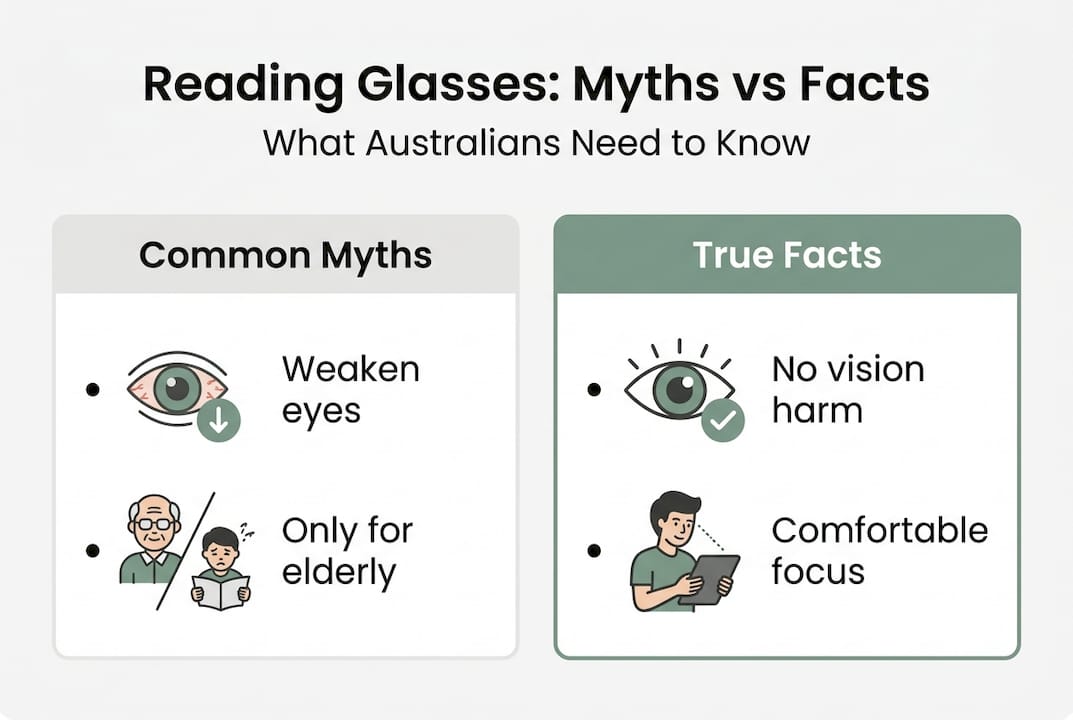
If you’ve ever been told that wearing reading glasses will make your eyes lazy or dependent, you’re not alone. Millions of Australians hold onto this belief, and it stops many from getting the help they actually need. The good news? Reading glasses don’t weaken eyes or alter eye anatomy in any way. They simply correct the focus problems caused by presbyopia, a completely normal part of ageing. This article unpacks the most persistent myths about reading glasses, backed by evidence, so you can make confident, informed choices about your eyesight.
Table of Contents
- Common myths about reading glasses
- Why reading glasses do not harm your vision
- Prescription vs off-the-shelf readers: What Australians should know
- Ageing eyes: Presbyopia and Australian consumers
- Safety and adaptation: Special considerations for multifocal lenses
- Enhance your reading experience: Ministry of Sight solutions
- Frequently asked questions
Key Takeaways
| Point | Details |
|---|---|
| Reading glasses don’t weaken eyes | Using reading glasses does not harm vision but relieves strain caused by presbyopia. |
| Prescription beats off-the-shelf | Tailored glasses address individual needs and help avoid headaches or discomfort from poorly fitted OTC readers. |
| Presbyopia affects most adults | Nearly all Australians over 40 experience presbyopia, making reading glasses a common and helpful tool. |
| Multifocal lens safety tips | Older Australians should adapt slowly to multifocal lenses to minimise falls risk. |
| Regular eye checks are vital | Seeing an optometrist every two years helps detect and manage vision changes early. |
Common myths about reading glasses
Australians hear a lot of conflicting advice about reading glasses. Some of it comes from well-meaning friends, some from outdated ideas passed down through generations. The result is a cloud of confusion that makes a simple, helpful tool seem risky.
Here are the myths you’re most likely to encounter:
- Wearing reading glasses weakens your eyes over time.
- Once you start using them, your eyes become dependent and stop working on their own.
- Ready-made glasses from the chemist are perfectly fine for everyone.
- Needing reading glasses means something is medically wrong with you.
- Delaying glasses use will train your eyes to stay stronger for longer.
None of these are true. Presbyopia affects nearly all Australians over 40, and reading glasses simply compensate for the natural stiffening of the eye’s lens. They don’t cause or speed up that process.
“Reading glasses are a tool, not a crutch. Using them is no different to wearing shoes to protect your feet. They support a function your body needs help with at a certain stage of life.”
If you’re unsure whether you’re experiencing early symptoms, check out the signs you need reading glasses and learn more about the role of reading glasses in everyday vision care.
Why reading glasses do not harm your vision
Let’s get straight to the science. Your eye’s natural lens stiffens as you age, making it harder to focus on close objects. Reading glasses add the focusing power your lens can no longer provide on its own. That’s it. They don’t change the shape of your eye, alter your retina, or affect your optic nerve.
No empirical data shows glasses weaken eyes. Vision changes are driven by age and genetics, full stop. What actually causes harm is not wearing glasses when you need them, because squinting and straining your eyes leads to headaches, fatigue, and discomfort.
| Wearing reading glasses | Not wearing reading glasses |
|---|---|
| Corrects focus comfortably | Forces eyes to strain constantly |
| No change to eye anatomy | Can cause headaches and fatigue |
| Supports natural ageing process | Does not slow presbyopia |
| Improves reading comfort | Reduces reading accuracy |
Understanding how reading glasses work makes it clear that they’re a passive optical tool, not a medical intervention that rewires your vision. And knowing why reading glasses matter helps you see them as a practical solution rather than a sign of decline.
Pro Tip: Book an eye check every two years. Regular visits to your optometrist catch changes early and ensure your lens strength stays accurate as your vision evolves.
Prescription vs off-the-shelf readers: What Australians should know
Walking into a chemist and grabbing a pair of readers off the rack is tempting. They’re cheap, convenient, and come in fun colours. But they’re not right for everyone.
Off-the-shelf readers ignore individual differences like astigmatism or unequal eye strengths, which can lead to strain and discomfort. They’re designed with the same lens power in both eyes and assume your pupils are a standard distance apart. For many people, that’s simply not the case.
Wrong-strength OTC glasses cause eye strain and headaches, and a professional exam is the best way to find the right fit.
Here’s how to tell if off-the-shelf readers aren’t working for you:
- You get headaches after reading for 20 minutes or more.
- Text looks clear in one eye but blurry in the other.
- You feel dizzy or disoriented when wearing them.
- You’ve tried multiple strengths and none feel quite right.
- You have a diagnosed astigmatism.
| Feature | OTC readers | Prescription glasses |
|---|---|---|
| Cost | Lower upfront | Higher upfront |
| Customisation | None | Full |
| Suits astigmatism | No | Yes |
| Pupillary distance | Standard only | Measured individually |
| Recommended for | Mild, equal vision loss | Any vision difference |
For a deeper look at what to consider before buying, the reading glasses checklist is a great starting point. You can also explore best eye glass lens choices to understand which lens type suits your lifestyle.
Ageing eyes: Presbyopia and Australian consumers
Presbyopia is not a disease. It’s a universal, age-driven process where the eye’s natural lens gradually loses its flexibility. Think of it like a rubber band that’s been stretched too many times. It stops snapping back.
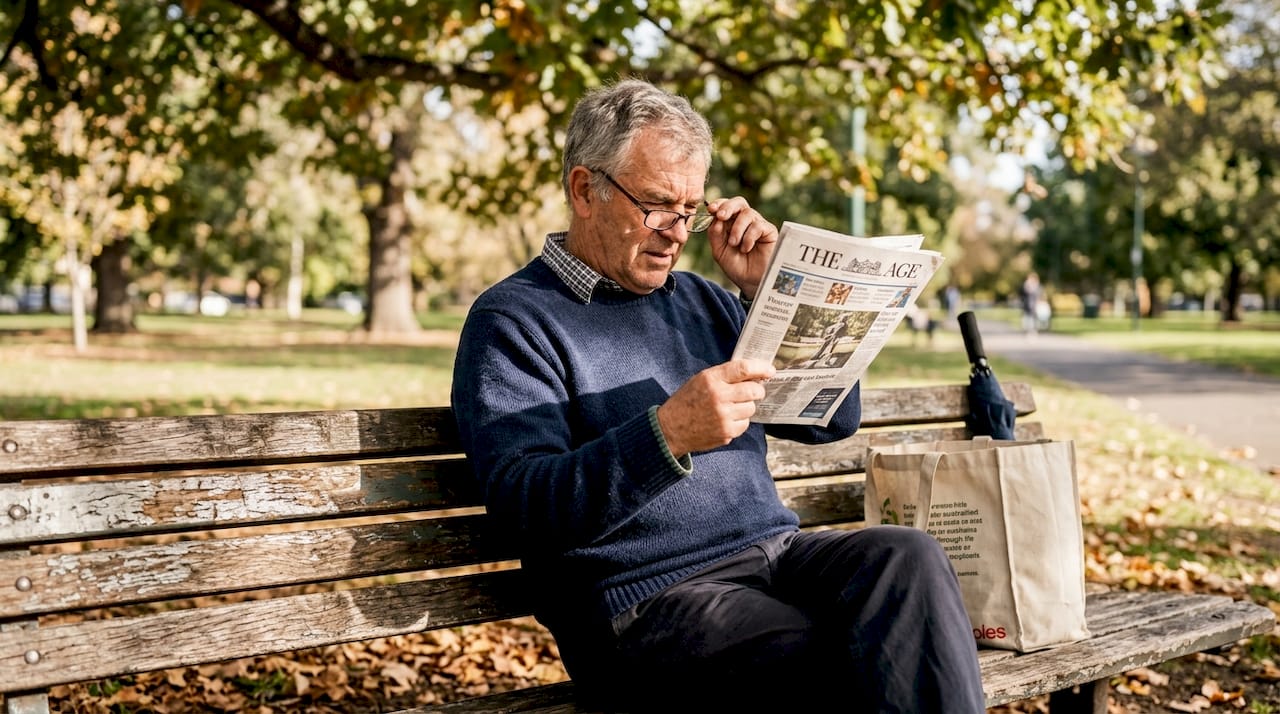
Presbyopia affects nearly all Australians over 40, with symptoms typically beginning around that age and progressing slowly through your 50s and 60s.
Stat callout: Over 90% of Australians will experience presbyopia by the time they reach their mid-40s.
Here’s how to spot the early signs:
- You hold your phone or book further away to read it clearly.
- You need brighter light to read comfortably at night.
- Your eyes feel tired after short periods of close work.
- You get headaches after reading, sewing, or using a screen.
- Small print that used to be easy now looks blurry.
Reading glasses are the most straightforward solution for presbyopia. They restore comfortable near vision without any side effects. For more on how glasses address these changes, visit presbyopic glasses clarity older eyes. And if cost is a concern, there are genuinely affordable reading glasses in Australia that don’t compromise on quality.
Safety and adaptation: Special considerations for multifocal lenses
Basic reading glasses handle near vision. But some Australians need multifocal or progressive lenses, which correct both near and distance vision in a single lens. These are incredibly useful, but they do come with a learning curve.
Progressive lenses may increase falls risk in elderly users if not adapted to properly, due to peripheral distortion in the lower portion of the lens. This is especially relevant for seniors who are already managing balance issues.
Here are practical steps to adapt to multifocal lenses safely:
- Start slow. Wear your new multifocals for a few hours each day and gradually increase the time over one to two weeks.
- Move your head, not just your eyes. Multifocals require you to point your nose at what you’re looking at, rather than glancing sideways.
- Practise on stairs at home before navigating unfamiliar environments.
- Avoid driving until you feel fully comfortable with the lens zones.
- Tell your optometrist if distortion persists beyond two weeks, as adjustments may be needed.
Pro Tip: If you’re a carer for an elderly family member who has just received multifocal lenses, supervise their first few days of wear, particularly on stairs and uneven surfaces.
For a broader look at how glasses support your wellbeing, explore the reading glasses health benefits and use the complete reading glasses checklist to make sure you’ve covered all the bases.
Enhance your reading experience: Ministry of Sight solutions
Now that you’ve separated fact from fiction, it’s time to put that knowledge to work. Whether you’re buying your first pair of readers or upgrading to something more comfortable and stylish, having the right support makes all the difference.
At Ministry of Sight, we stock a wide range of reading glasses designed for real Australian life, from lightweight frames for everyday use to stylish options you’ll actually want to wear. Browse our reading glasses accessories to find cases, chains, and cleaning kits that keep your eyewear in top shape. And if you’re looking to get more value from your purchase, check out our current offers for buy-one-get-one deals, free shipping across Australia, and more. Quality eyewear doesn’t have to cost a fortune.
Frequently asked questions
Do reading glasses really make my eyes weaker over time?
No. Reading glasses don’t weaken eyes or alter eye anatomy. Vision changes are caused by age and genetics, not by wearing corrective lenses.
How can I tell if I need prescription reading glasses instead of ready-made ones?
If you have astigmatism, unequal eye strengths, or frequent headaches with OTC readers, visit an optometrist for a professional exam and tailored prescription.
Is presbyopia the only reason Australians need reading glasses?
Presbyopia is the primary cause for most people over 40, but other conditions like astigmatism may also require readers. Presbyopia affects nearly all Australians over 40 and is the most common driver of reading glasses use.
Are multifocal reading glasses safe for older Australians?
Yes, with proper adaptation. However, progressive lenses may increase falls risk in elderly users if worn before fully adjusting to the peripheral distortion zones.
How often should Australians get their eyes checked for reading glasses?
Every two years is the standard recommendation. Regular checks ensure your lens strength is accurate and allow early detection of any changes to your eye health.


