

TL;DR:
- Most Australian men overlook the importance of UV and protection features in eyewear, risking long-term damage.
- Certified sunglasses with UV400 protection and proper fit are essential for effective eye health in high-UV environments.
- Regular eye exams and proper lens care habits are crucial for maintaining long-term vision health.
Over 13 million Australians live with at least one chronic eye condition, yet most men only think about their eyes when something goes wrong. Australian conditions are particularly harsh on vision. Intense UV radiation, long hours outdoors, and screen-heavy work lives create a perfect storm for eye damage that builds slowly and silently. The good news is that most of it is avoidable. This guide cuts through the noise to help you choose eyewear that actually protects your vision, without sacrificing the style you want.
Table of Contents
- Understanding the risks: Why vision protection matters for men
- How to choose eyewear that truly protects: Features that matter
- Shopping smart: Finding fashionable and functional eyewear in Australia
- Daily habits and eye care routines for long-term vision health
- Our take: What most men miss about eye protection
- Next steps: Equip yourself with the right vision protection
- Frequently asked questions
Key Takeaways
| Point | Details |
|---|---|
| Certify for protection | Choose eyewear that’s AS/NZS certified with UV400 lenses to block damaging rays. |
| Fashion meets safety | You don’t need to compromise on style to keep your eyes healthy and protected. |
| Regular eye exams | Get checked every 2 years or yearly if you’re at higher risk to catch problems early. |
| Smart daily habits | Healthy routines and proper care can protect your eyesight for years to come. |
Understanding the risks: Why vision protection matters for men
Men in Australia face a unique combination of environmental and lifestyle factors that put their eyes under constant stress. Long days on construction sites, weekend cricket matches, fishing trips, and hours in front of screens all add up. The problem is that most men don’t connect these everyday activities to long-term vision damage until it’s too late.
The scale of the issue is significant. Over 13 million Australians have one or more chronic eye conditions, and the numbers are growing. What makes this particularly confronting is that 90% of blindness is preventable with early detection. That means the vast majority of serious vision loss could be avoided with smarter habits and regular check-ups.
Here are the most common risk factors Australian men face:
- UV exposure: Australia has some of the highest UV radiation levels in the world, increasing the risk of cataracts and macular degeneration.
- Blue light from screens: Prolonged exposure contributes to digital eye strain, disrupted sleep, and potential long-term retinal stress.
- Workplace hazards: Trades, construction, mining, and manufacturing all carry risks of eye injuries from debris, chemicals, and machinery.
- Sports and outdoor activities: Cricket, cycling, and water sports expose eyes to UV, wind, and physical impact.
- Skipping eye exams: Most men avoid the optometrist until symptoms appear, missing early warning signs.
“The eyes are one of the few parts of the body where damage accumulates invisibly for years before symptoms appear. By the time you notice a problem, significant harm may already be done.”
Men under 40 with no known risk factors should have an eye exam at least every two years. If you have diabetes, a family history of glaucoma, or work in a high-risk environment, annual checks are essential. It’s also worth reading up on reading glasses tips as your vision needs shift with age. For a broader look at protective styles, best men’s sunglasses guides can help you identify what actually works in Australian conditions.
How to choose eyewear that truly protects: Features that matter
Not all sunglasses are created equal, and the price tag is not a reliable indicator of protection. A $20 pair from a service station might look similar to a $300 pair from an optometrist, but the difference in what they actually do for your eyes can be enormous.
The most misunderstood distinction in eyewear is between polarisation and UV protection. Polarised lenses reduce glare from reflective surfaces like water and roads, making them excellent for driving and fishing. But they do not block UV radiation on their own. UV protection is a separate coating or property of the lens material, and it’s the one that actually prevents long-term eye damage.
Here’s a quick comparison to clear things up:
| Feature | What it does | Is it enough alone? |
|---|---|---|
| Polarisation | Reduces glare from reflective surfaces | No |
| UV400 protection | Blocks 99%+ of UVA and UVB rays | Yes, for UV damage |
| AS/NZS 1067 certification | Australian standard for lens quality | Yes, confirms full protection |
| Wraparound fit | Blocks peripheral UV and debris | Improves overall coverage |
| Category 2 to 3 lenses | Medium to high sun glare reduction | Recommended for Australian conditions |
The AS/NZS 1067 standard is the benchmark you should look for on any sunglasses sold in Australia. It confirms the lenses meet minimum UV and optical quality requirements. Category 2 lenses suit overcast days and driving, while Category 3 is ideal for bright outdoor conditions. For very high UV environments like snow or open water, Category 4 lenses exist but are not suitable for driving.
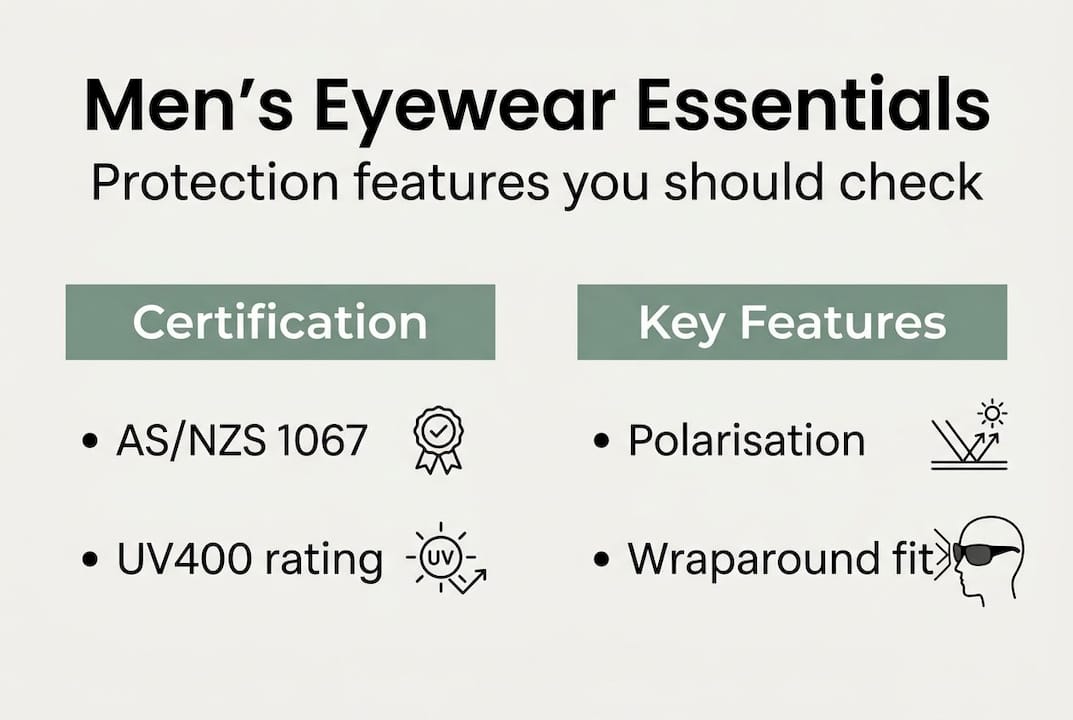
Men with light-coloured eyes, particularly blue or grey, have less natural pigment to filter UV radiation and face a higher risk of UV-related eye conditions. If that’s you, wraparound frames and UV400 lenses are non-negotiable.
Prescription wearers often overlook this entirely. Your everyday glasses need UV-protective coating too, not just your sunglasses. Understanding your eye glass lens choices can make a real difference here. And if you want protection that doesn’t compromise your look, there are plenty of stylish eyewear options that tick both boxes. For more detail on what sunglasses actually protect against, sunglasses protection facts from Bupa are worth a read.
Pro Tip: Ask your optometrist to test your current sunglasses with a UV light meter. Many people are surprised to find their favourite pair offers little to no real UV protection.
Shopping smart: Finding fashionable and functional eyewear in Australia
Once you know what features to look for, the next challenge is navigating the market without getting overwhelmed or misled by clever marketing. The eyewear industry is full of brands that prioritise aesthetics over protection, and it takes a bit of know-how to separate genuine quality from good-looking packaging.
Here’s a practical approach to buying eyewear that works:
- Check for AS/NZS 1067 certification first. This is non-negotiable. If the label or product description doesn’t mention it, move on.
- Confirm UV400 rating. This tells you the lenses block light wavelengths up to 400 nanometres, covering virtually all harmful UV rays.
- Try the fit before you commit. Lenses that sit away from your face let UV in from the sides. Wraparound styles or close-fitting frames offer much better coverage.
- Research the brand. Established names like Oakley and Ray-Ban consistently meet certification standards, but there are also excellent local Australian labels worth exploring.
- Buy from reputable retailers. Optometrists, specialist eyewear stores, and online retailers with clear returns policies are your safest options.
“Spending more on eyewear is only worth it if the product carries the right certifications. A cheaper pair with AS/NZS 1067 and UV400 will always outperform an expensive pair without them.”
Browsing men’s glasses styles can help you identify what’s current without losing sight of function. If you’re after guidance on putting a look together, tips on how to choose stylish glasses are a solid starting point. For those who wear readers, checking out reading glasses brands in Australia will help you find options that combine comfort with real optical quality.
Also, prioritise sunglasses with AS/NZS 1067 certification and UV400 rating from reputable brands, especially if you spend significant time outdoors.
Pro Tip: When shopping online, look for product pages that explicitly state the lens category and certification number. If that information is missing, contact the retailer before purchasing.
Daily habits and eye care routines for long-term vision health
Owning the right eyewear is only half the battle. How you care for your lenses, your eyes, and your overall health determines whether that investment actually pays off over time.
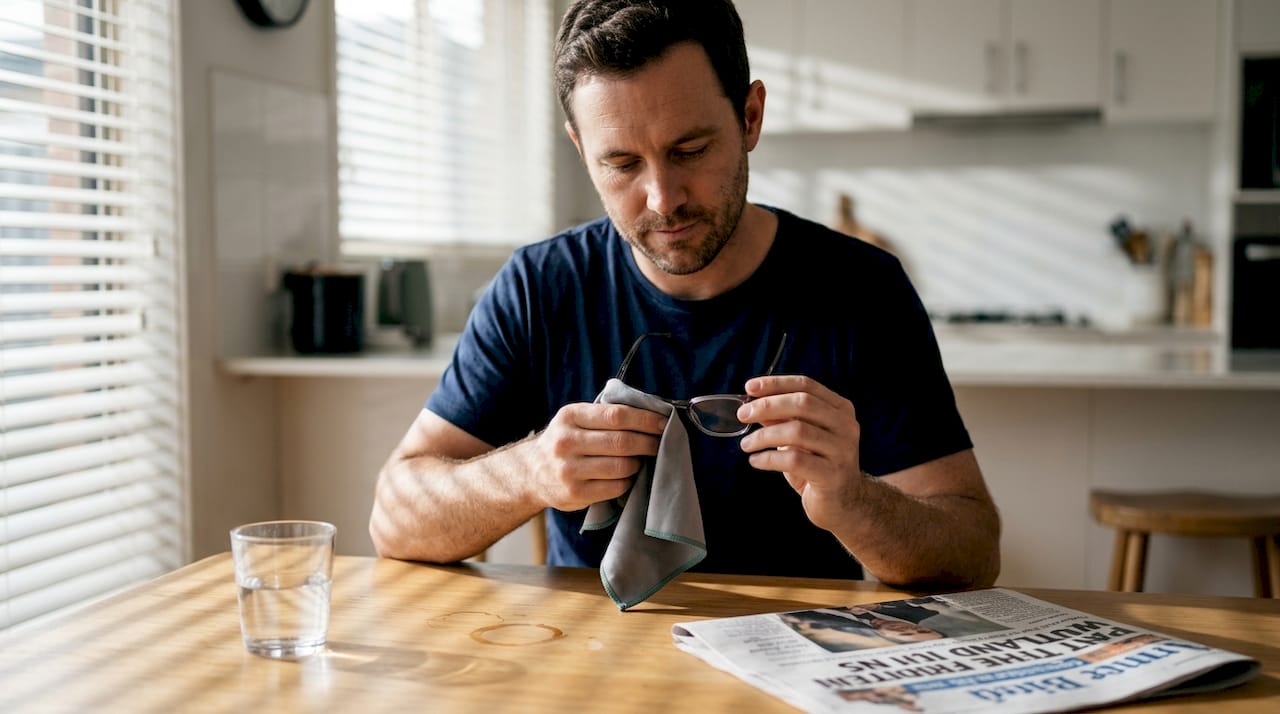
Regular eye exams detect problems early, and high-risk men, including those with diabetes or a family history of eye disease, need annual checks. For everyone else, a two-year cycle is the minimum. Don’t wait for blurry vision or discomfort to prompt a visit.
Here’s a recommended exam schedule based on age and risk:
| Age group | Recommended frequency | Notes |
|---|---|---|
| Under 40, low risk | Every 2 years | Baseline exam recommended at 25 |
| 40 to 60 | Every 1 to 2 years | Watch for presbyopia and early macular changes |
| Over 60 | Annually | Higher risk of glaucoma, cataracts, AMD |
| Any age, high risk | Annually | Diabetes, family history, light eye colour |
Beyond exams, daily habits matter more than most men realise:
- Clean lenses properly. Use a microfibre cloth and lens-safe solution. Paper towels and clothing fibres scratch coatings over time.
- Store glasses in a hard case. Leaving them face-down on a bench is one of the fastest ways to ruin lenses.
- Follow the 20-20-20 rule for screens. Every 20 minutes, look at something 20 metres away for 20 seconds. It genuinely reduces eye strain.
- Eat for your eyes. Foods rich in lutein, zeaxanthin, and omega-3s, such as leafy greens, eggs, and oily fish, support long-term retinal health.
- Wear sunglasses even on cloudy days. UV penetrates cloud cover. Most Australians underestimate this.
- Act on symptoms early. Floaters, flashes of light, or sudden blurry patches are warning signs that need prompt attention.
Men with prescriptions should also ensure their lenses have UV coating applied. It’s often an optional add-on that many skip to save money, but it’s one of the most cost-effective protective measures available. For guidance on making choices that are good for both your eyes and the planet, ethical eyewear choices is worth exploring.
Our take: What most men miss about eye protection
Here’s something we’ve noticed over years of working in eyewear: most men approach eye protection the same way they approach car insurance. They know it matters, they buy the minimum, and they don’t think about it again until something goes wrong.
The biggest mistake isn’t buying cheap glasses. It’s buying glasses without checking the actual specifications. A stylish pair from a premium brand with no UV400 rating is worse than a basic certified pair, because it gives you a false sense of security. Your pupils dilate behind dark lenses, letting in more UV if the lens doesn’t actually block it.
Polarisation is another area where men get misled. Glare reduction feels like protection because your eyes feel more comfortable. But comfort and protection are not the same thing. Understanding your lens material options helps you make decisions based on facts rather than marketing language.
The small details, things like lens fit, wraparound coverage, and regular professional testing, genuinely make the biggest difference. Treat eye care as a lifestyle habit, not a one-off purchase, and your vision will thank you for decades.
Next steps: Equip yourself with the right vision protection
You now have a solid foundation for making smarter eyewear decisions. The next step is putting that knowledge into practice with gear that’s actually built for Australian conditions.
At Ministry of Sight, you’ll find eyewear and accessories designed to support both your vision health and your personal style. Whether you’re after a practical everyday pair or something to handle serious outdoor conditions, the range covers it. Keep your glasses secure and protected with a quality glasses leash, and explore the full selection of eyewear accessories to complete your kit. Free shipping across Australia makes it easy to get started today.
Frequently asked questions
What does UV400 mean on sunglasses?
UV400 means the lenses block at least 99% of UVA and UVB rays, providing essential eye protection in Australia’s high-UV environment.
How often should men have their eyes checked?
Under 40, get an exam every two years; annual checks are recommended if you have diabetes or a family history of eye disease.
Are polarised lenses enough for eye protection in Australia?
No. Polarised lenses cut glare effectively, but you also need UV400 protection to block the harmful rays that cause long-term eye damage.
Do prescription glasses need UV protection too?
Yes. Prescription lenses should have a UV-protective coating applied, or you can use clip-on UV lenses to shield your eyes when outdoors.
Recommended
- Reading glasses safety tips for clear, comfortable vision – MINISTRY OF SIGHT
- Essential reading glasses maintenance checklist for longevity – MINISTRY OF SIGHT
- 7 essential eyewear accessories for style and function – MINISTRY OF SIGHT
- Powerhouse Foods for Healthy Eyes – MINISTRY OF SIGHT
- Offres élégance des yeux – CXL by Christian Lacroix Maison


