

Australians purchase over 10 million spectacle frames each year, yet most end up in landfill because of recycling challenges. As awareness grows around sustainable fashion and accessories, eyewear remains an overlooked category despite its significant environmental footprint. This guide will help you identify genuinely ethical eyewear options, understand what makes frames sustainable, and navigate the buying process with confidence so your next pair aligns with your values.
Table of Contents
- What makes eyewear ‘ethical’?
- The impact of eyewear on Australia’s environment
- How to identify sustainable and ethical eyewear brands
- Australian success stories in ethical eyewear
- Practical tips for making ethical eyewear choices
- Explore ethical eyewear with Ministry of Sight
- Frequently asked questions
Key Takeaways
| Point | Details |
|---|---|
| Choose the right material | Recycled or plant-based materials significantly reduce eyewear’s environmental footprint. |
| Check certifications | B Corp, Good On You, and similar certifications show a brand’s true ethical commitments. |
| Recycle old frames | Use programs like Spexcycle to keep your old eyewear out of landfill. |
| Support Australian innovation | Local brands are leading with closed-loop solutions and responsible production. |
| Ask questions | Don’t hesitate to ask retailers about sourcing, materials, and recycling to make ethical choices. |
What makes eyewear ‘ethical’?
Now that you know the scale of the problem, let’s clarify what makes eyewear genuinely ethical. Ethical eyewear combines three core elements: sustainable materials, fair labour practices, and transparent supply chains. When brands use plant-based acetates, recycled plastics, or repurposed metals instead of virgin materials, they dramatically reduce environmental impact. Fair labour means workers receive living wages and safe conditions throughout production. Transparency requires brands to openly share where and how they manufacture products.
Material sourcing matters enormously. Bioplastics derived from castor beans or cotton offer renewable alternatives to petroleum-based frames. Recycled plastic frames achieve 70-75% CO2 reduction compared to virgin plastic production. Recycled metals eliminate mining impacts whilst maintaining durability. These material choices directly translate to measurable environmental benefits.
Certifications provide independent verification of ethical claims. B Corp certification requires companies to meet rigorous social and environmental standards, whilst Good On You ratings evaluate fashion brands across people, planet, and animal welfare. Good Citizens, an Australian eyewear brand, holds a ‘Good’ rating on Good On You, demonstrating commitment beyond marketing claims.
Key ethical eyewear criteria:
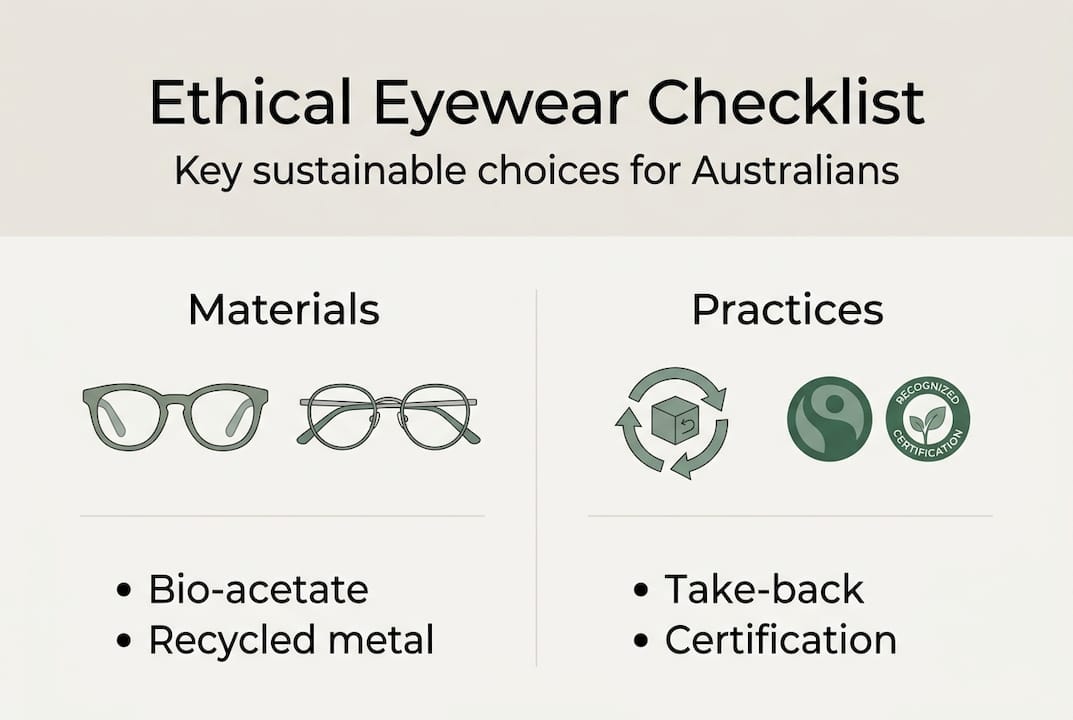
- Sustainable materials (recycled, plant-based, or responsibly sourced)
- Fair labour certification or transparent factory audits
- Published environmental impact reports
- Take-back or recycling programmes
- Third-party certifications (B Corp, Good On You)
Pro Tip: Don’t assume expensive equals ethical. Some premium brands lack transparency, whilst smaller companies with clear values often deliver better environmental and social outcomes at competitive prices. Always check for specific certifications rather than relying on price as a quality indicator.
When evaluating stylish ethical eyewear options, look beyond surface-level green marketing. Genuine ethical brands provide detailed information about materials, manufacturing locations, and measurable impact metrics.
The impact of eyewear on Australia’s environment
With the definition of ethical eyewear in mind, it’s important to see the real impact of our eyewear choices on the environment. Australia’s eyewear industry represents a $5.0 billion market with 3,435 businesses, yet the sector faces significant waste challenges. Most frames contain mixed materials like metal hinges, plastic lenses, and acetate fronts, making separation and recycling extremely difficult.
Traditional recycling systems cannot process eyewear effectively. Frames often contain multiple material types fused together, requiring specialised separation techniques unavailable in standard facilities. This complexity means even environmentally conscious consumers struggle to dispose of old glasses responsibly. The result? Millions of perfectly functional frames discarded annually.
Spexcycle represents Australia’s first closed-loop eyewear recycling programme, addressing this gap by collecting old frames and breaking them down into reusable materials. This initiative demonstrates how industry-specific solutions can tackle recycling challenges that general waste systems cannot handle.
Environmental impact comparison:
| Frame type | CO2 emissions | Recyclability | Lifespan |
|---|---|---|---|
| Virgin plastic | High (100% baseline) | Poor | 2-3 years |
| Recycled plastic | Low (25-30% of baseline) | Moderate | 2-3 years |
| Bio-acetate | Medium (40-50% of baseline) | Poor | 3-5 years |
| Recycled metal | Low (20-25% of baseline) | Excellent | 5+ years |
“Eyewear recycling requires specialised processes because frames combine materials that standard facilities cannot separate. Closed-loop programmes like Spexcycle finally give consumers a responsible disposal option.” — Optical Dispensers Australia
Choosing brands with take-back programmes multiplies environmental benefits. You reduce waste from your old frames whilst supporting companies investing in circular solutions. When shopping for new eyewear, consider both the lens material choices and frame material options to minimise your environmental footprint.
How to identify sustainable and ethical eyewear brands
Understanding the impact pushes us to make better choices, but how can you actually spot ethical eyewear brands in the real world? Start by checking for recognised certifications. B Corp certification requires an 80+ score on their impact assessment, whilst the average company scores just 50.9. This rigorous standard ensures brands meet verified social and environmental performance criteria.

Transparent supply chain information separates genuine ethical brands from greenwashing. Look for companies that publish factory locations, material sources, and worker welfare policies. Brands committed to ethics willingly share this information because they’re proud of their practices. Vague claims about sustainability without supporting details should raise red flags.
Published environmental and social impact reports demonstrate accountability. These documents quantify carbon emissions, waste reduction, worker benefits, and community investments. Annual reporting shows ongoing commitment rather than one-off initiatives. When brands measure and share their impact, they create accountability that drives continuous improvement.
Questions to ask before buying:
- What materials are used in frames and lenses?
- Where are products manufactured and under what labour conditions?
- Does the brand offer a recycling or take-back programme?
- What certifications or third-party ratings does the company hold?
- Can the brand provide specific data on carbon footprint or waste reduction?
- How long do frames typically last with proper care?
Certification comparison:
| Certification | Focus area | Minimum standard | Verification |
|---|---|---|---|
| B Corp | Overall impact | 80+ score | Annual audit |
| Good On You | Fashion ethics | Rated scale | Independent research |
| Fair Trade | Labour practices | Living wages | Third-party inspection |
| Carbon Neutral | Climate impact | Offset verification | Annual certification |
Pro Tip: Email brands directly with your questions. Ethical companies respond enthusiastically with detailed answers because they value informed customers. Poor or evasive responses indicate the brand may not prioritise transparency.
When comparing options, use resources like reading glasses brand comparisons and guides on buying eyewear online to make informed decisions that align with your values.
Australian success stories in ethical eyewear
Now that you know what to look for when evaluating brands, let’s look at inspiring Australian examples leading the way in ethical eyewear. Spexcycle’s closed-loop recycling programme launched as Australia’s first comprehensive solution for eyewear waste. Partnering with optical retailers nationwide, the programme collects old frames and breaks them down into raw materials for new products, creating a true circular economy.
Good Citizens stands out with their ‘Good’ rating from Good On You, achieved through transparent manufacturing, sustainable materials, and fair labour practices. The brand publishes detailed information about their supply chain and actively works to reduce environmental impact across all operations. Their success proves Australian consumers will support brands that genuinely prioritise ethics.
Notable Australian ethical eyewear initiatives:
- Dresden Vision uses recycled ocean plastics in frame production
- Otis Eyewear manufactures mineral glass lenses with lower environmental impact
- Pared Eyewear focuses on timeless designs that discourage disposable fashion
- Local optical retailers increasingly stock certified sustainable brands
- Industry partnerships developing Australian-made sustainable frame options
“Australian consumers increasingly demand transparency and sustainability from eyewear brands. Companies responding with genuine ethical practices are seeing strong market growth and customer loyalty.”
These success stories demonstrate that ethical eyewear isn’t a niche market but a growing movement. Australian brands prove you don’t need to compromise style, quality, or affordability to make responsible choices. Supporting these pioneers encourages more companies to adopt sustainable practices.
Explore Australian brand eyewear to discover local options that combine fashion with environmental responsibility.
Practical tips for making ethical eyewear choices
Learning from success stories is powerful—here’s how you can put all this information into everyday practice.
1. Prioritise sustainable materials
Choose frames made from recycled plastics, bio-acetates, or reclaimed metals. These materials deliver 70-75% CO2 reduction compared to virgin alternatives whilst maintaining durability and style. Ask retailers about material composition before purchasing.
2. Use recycling programmes
Don’t bin old glasses. Participate in take-back programmes like Spexcycle available at participating optical stores. Even damaged frames contain valuable materials that can be recovered and reused.
3. Support certified brands
Prioritise companies with B Corp certification or high Good On You ratings. These third-party verifications ensure your money supports genuinely ethical practices rather than marketing claims.
4. Extend eyewear lifespan
Proper care dramatically reduces waste. Clean lenses regularly with appropriate solutions, store glasses in protective cases, and get professional adjustments rather than replacing bent frames. Quality ethical eyewear often lasts longer than fast-fashion alternatives.
5. Ask questions
Don’t hesitate to quiz opticians about ethical options. Request information about materials, manufacturing locations, and recycling programmes. Your questions signal consumer demand for sustainable choices, encouraging retailers to stock more ethical brands.
6. Consider total impact
Evaluate the complete lifecycle, including packaging, shipping methods, and company values. Brands using recycled packaging, carbon-neutral shipping, and supporting social causes deliver greater overall impact.
Pro Tip: Invest in versatile, timeless styles rather than trendy designs you’ll replace quickly. Classic frames reduce consumption whilst ensuring your eyewear remains stylish for years. Quality over quantity always wins for both your wallet and the environment.
Learn more about preventing eye strain and shopping for eyewear responsibly to make informed decisions that protect both your vision and the planet.
Explore ethical eyewear with Ministry of Sight
You’re now ready to make better choices—here’s how Ministry of Sight can support your ethical journey. We carefully curate our eyewear selection to align with sustainable values whilst delivering the style and quality Australian consumers expect. Our commitment extends beyond products to encompass transparent practices and genuine environmental responsibility.
Our range includes reading glasses and accessories designed for longevity, reducing the disposable mindset that plagues the eyewear industry. We believe ethical choices shouldn’t require sacrificing style or affordability. Every product we stock reflects our dedication to responsible sourcing and customer satisfaction.
Discover more about our ethical sourcing practices and explore our collection of reading accessories designed to complement your sustainable lifestyle. Check out our Lumière Sun Readers for stylish, functional eyewear that aligns with your values. We’re here to help you see clearly whilst making choices that benefit people and planet.
Frequently asked questions
What are the most eco-friendly materials for eyewear frames?
Plant-based acetates, recycled plastics, and repurposed metals are considered the most sustainable eyewear materials. Recycled plastic frames achieve 70-75% CO2 reduction compared to virgin plastic production.
How can I recycle my old glasses in Australia?
You can recycle old frames through programmes like Spexcycle’s closed-loop system, now available at many optical stores nationwide. This specialised service handles mixed materials that standard recycling cannot process.
How do I know if an eyewear brand is truly ethical?
Look for independent certifications like B Corp requiring 80+ scores or high Good On You ratings. Ask brands about supply chain transparency and published impact reports to verify genuine commitment.
What is the environmental impact of eyewear in Australia?
Over 10 million pairs are sold each year, with most frames ending up in landfill due to mixed materials that hinder recycling. Specialised programmes are emerging to address this waste challenge.
Do ethical eyewear options cost more than conventional frames?
Not necessarily. Whilst some premium ethical brands charge higher prices, many sustainable options compete directly with conventional eyewear. Focus on certifications and transparency rather than price as indicators of genuine ethical practices.


