

TL;DR:
- Luxury reading glasses require delicate care to prevent damage from neglect and environmental hazards.
- Proper daily habits, storage, and professional maintenance significantly prolong the lifespan of premium frames.
- Using the right accessories and consulting experts helps preserve style and function over years.
Luxury reading glasses are an investment in both vision and personal style, yet a surprising number of owners treat them like a pair of cheap readers from the chemist. The assumption that a premium price tag means minimal upkeep is one of the most common and costly mistakes in eyewear ownership. In reality, the exotic materials, intricate hinges, and specialised lens coatings that make luxury frames so appealing also make them more sensitive to neglect. With the right daily habits and a little know-how, you can keep your frames looking and performing like new for years to come.
Table of Contents
- Why luxury reading glasses demand special care
- The essentials of daily maintenance
- Storage and environmental hazards to avoid
- Professional maintenance and when to seek help
- What most luxury eyewear owners overlook
- Enhance your eyewear experience with quality accessories
- Frequently asked questions
Key Takeaways
| Point | Details |
|---|---|
| Consistent care is key | Regular gentle cleaning and mindful habits drastically reduce wear on luxury frames. |
| Store glasses safely | A hard case and avoiding environmental hazards are essential for preventing costly damage. |
| Know when to get help | Quickly address loose parts or lens issues with professional service to protect your investment. |
| Use specialist products | Lens sprays, microfibre cloths, and sturdy eyewear chains elevate both appearance and longevity. |
Why luxury reading glasses demand special care
Luxury reading glasses are built from materials that standard eyewear simply cannot match. Think acetate enriched with hand-polished layers, titanium temples, gold-plated hardware, and anti-reflective lens coatings applied in multiple ultra-thin layers. Each of these elements performs beautifully when cared for properly, but they each have specific vulnerabilities that cheaper materials do not share.
The most common issues luxury owners encounter are out-of-alignment hinges, surface scratches on premium lenses, and worn or flaking plating on metal components. These problems rarely appear overnight. They develop gradually through small, repeated habits like placing glasses face-down on a desk, cleaning lenses with a shirt hem, or leaving frames on a car dashboard.
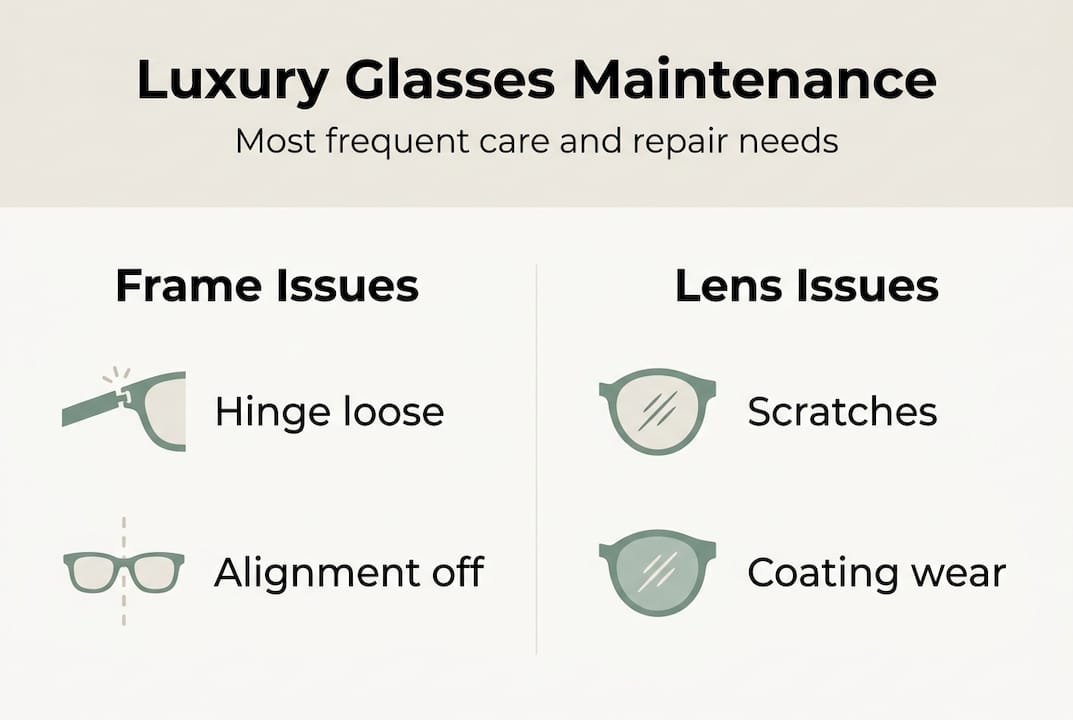
| Issue | Luxury frames | Standard frames |
|---|---|---|
| Hinge misalignment | Common without regular adjustment | Less sensitive |
| Lens coating damage | High risk from wrong cleaners | Moderate risk |
| Plating wear | Occurs with chemical exposure | Not applicable |
| Frame warping | Sensitive to heat | More tolerant |
According to FrameTrends data, 60% of luxury frame owners require some form of maintenance within the first two years of ownership, with hinge issues and coating problems being the leading causes. Proper care, however, significantly reduces the likelihood of these repairs becoming necessary.
The financial logic is straightforward. A professional hinge realignment costs a fraction of replacing a luxury frame. Consistent small habits, reviewed against a solid maintenance checklist for longevity, protect far more value than they require in effort.
Pro Tip: Never rest your glasses on top of your head. The temples stretch outward under pressure, causing a loose fit that is difficult and sometimes impossible to fully correct without professional help.
Now that you understand the necessity, let’s look at the basics that most owners overlook.
The essentials of daily maintenance
Daily habits are where most luxury eyewear damage begins or is prevented. The difference between frames that look pristine after five years and frames that look tired after one often comes down to a handful of small, repeatable actions.
Temperature is a silent enemy. Leaving glasses in a hot car, near a heater, or in direct sunlight can warp acetate frames and degrade lens coatings within minutes. Cold extremes are less damaging but can make frames brittle and prone to snapping under pressure.
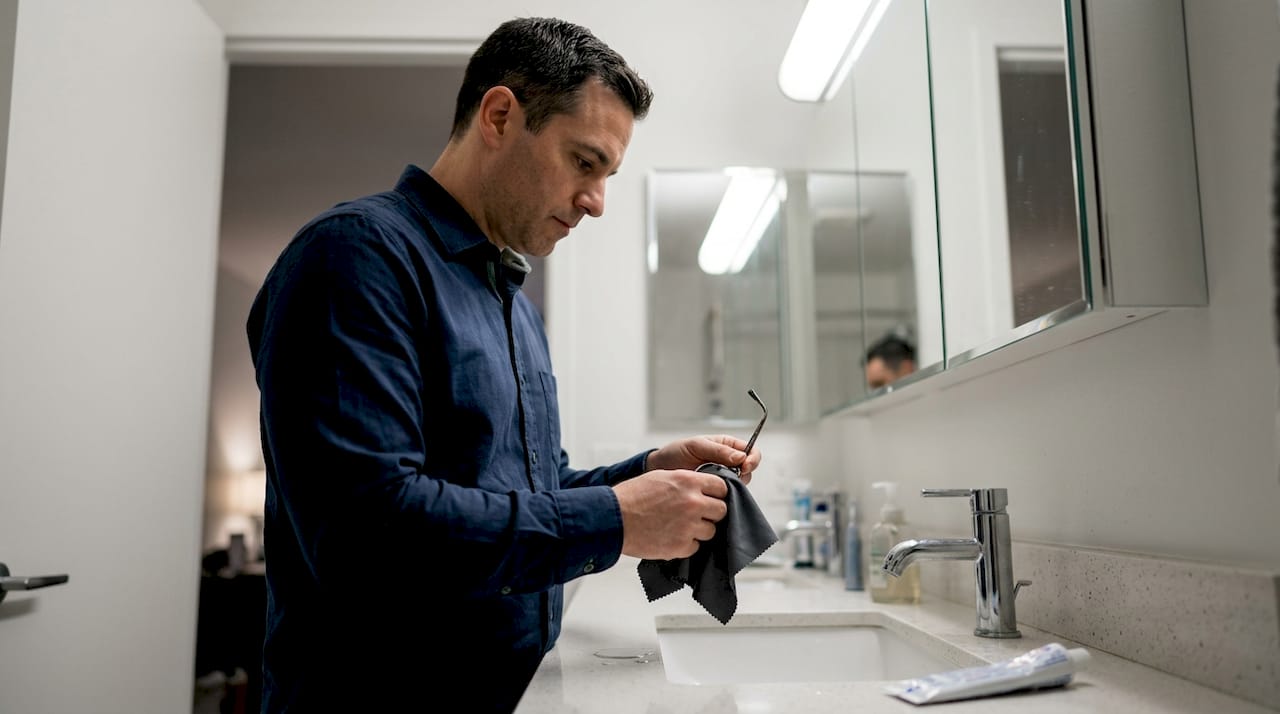
Lens cloths are not optional. A microfibre cloth is the only safe tool for wiping lenses. Tissues, paper towels, and clothing fibres all carry microscopic particles that act like sandpaper on premium coatings. Over time, this creates a haze that no amount of professional cleaning can reverse.
Here is a quick list of daily habits to protect your investment:
- Always use a microfibre cloth before and after wear
- Rinse lenses with lukewarm water before wiping to remove grit
- Handle frames with both hands to avoid twisting the bridge
- Never place glasses face-down on any surface
- Keep them away from perfume, hairspray, and cleaning products
For a full breakdown of safe technique, the glasses lens care steps guide walks through each stage clearly. You can also use a cleaning checklist to build a reliable routine.
As noted earlier, 60% of luxury owners face preventable repair needs within two years. The good news is that most of these issues trace back to avoidable daily habits.
Pro Tip: Wipe your lenses with a dry microfibre cloth every single morning before use. Even overnight dust and skin oils can act as mild abrasives if you put glasses on without wiping first.
Getting daily basics right reduces most risk, but smart storage is equally critical.
Storage and environmental hazards to avoid
Where you keep your glasses when you are not wearing them matters just as much as how you handle them. The right storage system protects frames from physical impact, environmental damage, and the kind of slow deterioration that only becomes visible months later.
Hard cases are the gold standard. A rigid case with a soft interior lining keeps frames in shape, protects lenses from contact with other surfaces, and shields against the knocks that happen in handbags, desk drawers, and overnight bags. Soft pouches offer minimal protection against impact and do nothing to prevent warping. Open desk stands look stylish but expose lenses to dust and accidental contact.
| Storage method | Impact protection | Dust protection | Heat protection | Overall risk |
|---|---|---|---|---|
| Hard case | Excellent | Excellent | Good | Low |
| Soft pouch | Poor | Moderate | Poor | High |
| Desk stand | None | Poor | None | Very high |
| Pocket or bag | None | None | Poor | Extreme |
Environmental hazards extend beyond temperature. Perfume and hairspray contain alcohol and chemical compounds that dissolve lens coatings and dull metal plating over repeated exposure. Bathroom shelves expose frames to steam, which weakens adhesives and causes acetate to swell. Car interiors can reach temperatures well above 60 degrees Celsius on a summer day in Australia, which is enough to permanently warp even robust frames.
As Ministry of Sight recommends, always store glasses in a hard protective case with lenses facing up, away from heat, cold, direct sunlight, and chemicals. This single habit addresses the majority of preventable storage damage.
For more detail on setting up a reliable system at home, the guide on proper storage for longevity is worth bookmarking. You will also find practical room-by-room advice in best home storage tips.
Besides everyday habits and safe storage, specialist care rounds out long-term luxury eyewear maintenance.
Professional maintenance and when to seek help
Even the most diligent home care routine has limits. There are moments when only a trained optician or eyewear specialist can restore your frames to their best condition, and recognising those moments early saves both money and frustration.
Warning signs that professional help is needed include hinges that feel loose or grind when opening and closing, lenses that have developed persistent cloudiness despite correct cleaning, visible flaking or bubbling in lens coatings, nose pads that have shifted or discoloured, and any visible crack or stress mark near the frame bridge.
Before choosing a repair service, work through these steps:
- Check whether your frames are still under manufacturer warranty, as some brands cover hinge and coating issues.
- Research specialists who have experience with your specific frame material, whether acetate, titanium, or mixed construction.
- Ask for a written quote before any work begins to avoid unexpected costs.
- Confirm whether the repair will affect any existing warranty on the frame or lenses.
- Request a post-repair inspection to verify the work meets the original specification.
Periodic professional cleaning is also valuable even when nothing appears wrong. Ultrasonic cleaning machines remove debris from hinge joints and nose pad crevices that microfibre cloths cannot reach, improving both hygiene and mechanical performance.
As eyewear specialists often note, a single professional tune-up can double the lifespan of quality frames. This is not an exaggeration. Catching a slightly loose hinge screw before it falls out entirely, for example, prevents the frame misalignment that follows and the more complex repair it requires.
Attempting DIY fixes on luxury frames carries real risk. Tightening screws with the wrong tool, bending temples by hand, or using household adhesives on broken joints can cause permanent damage and void manufacturer warranties. The fix common reading glasses problems guide outlines what is safe to do at home and what is not. For a broader overview, the maintenance guide for longevity covers the full spectrum of care from daily to annual.
Maintaining style and clarity is a balanced effort between routine and expert help. But what does real luxury eyewear longevity look like?
What most luxury eyewear owners overlook
Here is something most care guides will not tell you directly: the price of a frame has almost no bearing on how forgiving it is. In fact, the opposite is often true. The more intricate and premium the construction, the more attentive the care needs to be.
What separates owners whose frames still look exceptional after a decade from those who are replacing them every two years is not occasional deep cleaning. It is consistency. A thirty-second wipe with a microfibre cloth each morning, a hard case used without exception, and glasses removed before applying any spray product. These small rituals, done daily, outperform any amount of sporadic effort.
There is also a mindset shift worth making. If you treat your luxury reading glasses the way you treat fine jewellery, not as a tool you set down anywhere, the behaviour follows naturally. You would not leave a gold bracelet on a car dashboard or spray perfume directly onto a watch. The same instinct should apply here.
One final caution: be very wary of home hack videos that promise quick fixes for luxury frames. Many techniques that work on inexpensive glasses cause irreversible damage to premium coatings and exotic materials. When in doubt, consult a professional or check a reliable deep-dive checklist before attempting anything at home.
Enhance your eyewear experience with quality accessories
Knowing how to care for your luxury reading glasses is only part of the equation. Having the right tools makes it effortless.

At Ministry of Sight, we have curated a range of luxury glasses accessories designed specifically for eyewear enthusiasts who refuse to compromise. From hard protective cases and professional-grade microfibre cloths to beautifully crafted eyewear chains that keep your frames safe and stylish throughout the day, every product is chosen with longevity in mind. If you are ready to give your glasses the care they deserve, explore our curated collection and find everything you need in one place.
Frequently asked questions
What is the safest way to clean luxury reading glasses daily?
Use a microfibre cloth and specialist lens spray, never tissues or regular household cleaners that can scratch or strip coatings. As Ministry of Sight advises, keeping lenses away from chemicals is essential for preserving their finish.
How often should luxury glasses undergo professional maintenance?
Annually is a reliable baseline, or sooner at the first sign of loose hinges, lens clouding, or coating wear. FrameTrends research shows that 60% of luxury frame owners need some form of maintenance within two years, making proactive servicing a sound investment.
Are there storage locations I should always avoid for luxury glasses?
Avoid hot cars, bathroom shelves, and anywhere near direct sunlight or chemical products, as these environments warp frames and dull lenses. Proper storage in a hard case with lenses facing up is the safest approach in any setting.
Is it safe to adjust hinges and nose pads at home?
Minor adjustments are best left to professionals, as incorrect handling risks permanent frame damage or voids the manufacturer warranty. If something feels loose or uncomfortable, book a quick check with a qualified optician rather than attempting a fix yourself.


