

TL;DR:
- Men should choose frames based on face shape, fit, and personal style rather than stereotypes. Bold geometric silhouettes, proportional width, and grounding colors create a masculine look. Comfort and proper measurements are crucial for confident, authentic eyewear choices.
Standing in front of a wall of frames at an eyewear store, or scrolling through hundreds of options online, most men feel the same thing: overwhelmed. There are too many shapes, too many materials, and too many opinions about what looks “masculine.” The truth is, selecting frames that suit your face, your lifestyle, and your identity is actually a structured process, not a guessing game. This article walks you through three practical steps, from identifying the right silhouette to nailing the fit and choosing materials that reflect who you are, so you can shop with clarity and confidence.
Table of Contents
- What makes a frame design masculine?
- Step 1: Match frame shape to your face proportions
- Step 2: Assess frame size, width and bridge fit
- Step 3: Choose materials and colours that reflect your identity
- Why masculine eyewear isn’t just about bold lines
- Find masculine frame designs and accessories
- Frequently asked questions
Key Takeaways
| Point | Details |
|---|---|
| Contrast shapes with features | Choose frame shapes that counterbalance your natural facial structure for a masculine look. |
| Prioritise perfect fit | Always check the bridge and temple width for comfort, regardless of marketing labels. |
| Material and colour matter | Select frame materials and colours that fit your lifestyle and express your identity. |
| Ignore stereotypes | Masculine frames aren’t just thick and dark—clear or metallic can be just as stylish. |
What makes a frame design masculine?
Masculine frame design is not a fixed concept. Culture, fashion cycles, and marketing all influence what gets labelled as “men’s eyewear” in any given season. That said, there are consistent design traits that most people associate with masculine frames: bold, clean lines; darker or neutral colour palettes; structural shapes like rectangles, squares, and navigators; and thicker acetate or solid metal builds.
But here is where many men go wrong. They assume the label on the shelf does the work for them. Gendered frame design advice is partly cultural and marketing-driven, so treat “men’s” versus “women’s” as starting points, not rules. A frame labelled unisex may actually deliver more of the proportional balance and structural presence you are after.
What truly creates a masculine look is contrast and proportion. A broader frame on a strong jaw creates visual cohesion. A slim metal frame on a larger face can look undersized and actually weaken the effect you want. The frame should complement your natural features, not fight them.
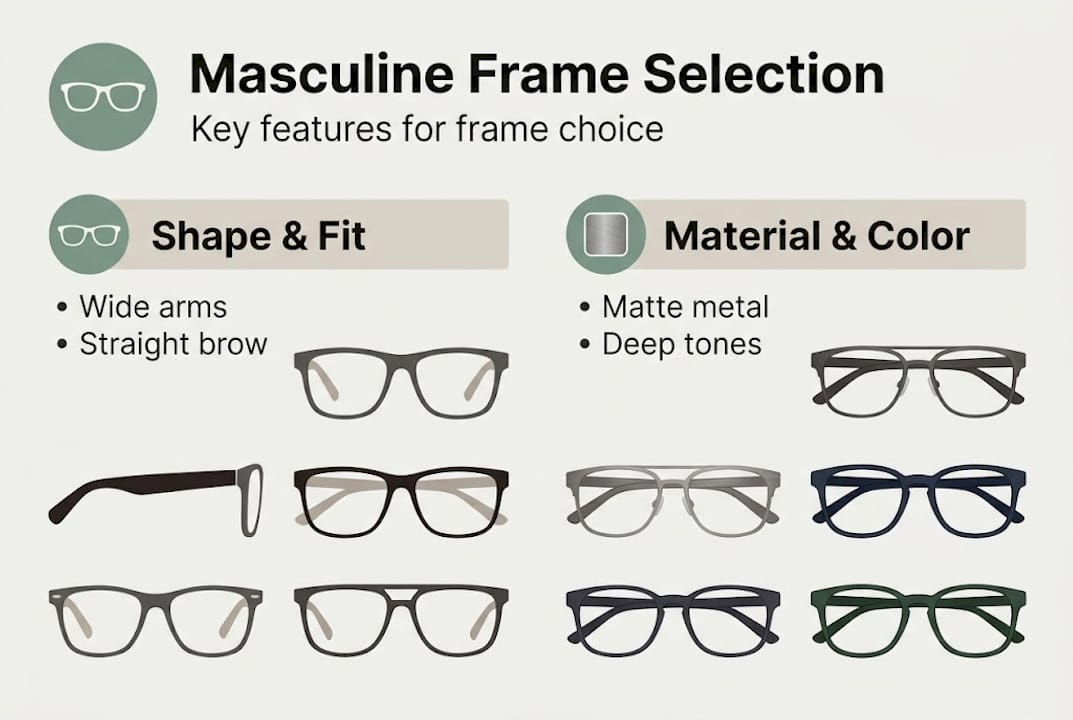
Here is a quick comparison of genuinely masculine frame traits versus common marketing assumptions:
| Design trait | Masculine in practice | Just a marketing label |
|---|---|---|
| Bold silhouette | Frames with clear geometric lines | Anything labelled “men’s” |
| Colour palette | Navy, tortoise, matte black, gunmetal | Dark colour alone |
| Frame weight | Proportional to face size | Thick always equals masculine |
| Shape | Rectangle, square, navigator, browline | Rectangular regardless of face shape |
Frame traits worth prioritising:
- Structural silhouette: Look for defined edges and a shape that mirrors or contrasts your face shape intentionally
- Proportional width: Frames should not extend past your temples or sit narrower than your cheekbones
- Colour that grounds the face: Tortoiseshell, dark metals, and matte finishes tend to feel anchored and confident
- Material that holds shape: Acetate and titanium retain structure over time, which matters for daily wear
Pro Tip: Visit our men’s frame selection tips guide before shopping. It helps you identify what proportional fit looks like in practice, so you are not relying solely on in-store mirrors or product descriptions.
Step 1: Match frame shape to your face proportions
The single most reliable filter when choosing masculine frames is understanding your own face shape. This is not about following rigid rules, but about understanding contrast. When a frame shape provides something your face shape lacks, the result looks balanced and intentional.

Here is how to determine your face shape in three minutes. Stand in front of a mirror in good light. Look at the widest part of your face (forehead, cheeks, or jaw) and assess whether your overall face is more long, wide, or evenly proportioned.
The rule of contrast in frame selection is straightforward: angular features benefit from softer, rounder frames, while rounder faces are complemented by structured, angular silhouettes.
Face shape matching process:
- Identify your face shape: Oval, square, round, oblong, diamond, or heart. Use the widest point as your reference.
- Note your dominant features: Strong jaw, wide forehead, prominent cheekbones, or a narrow chin all influence which frame shape creates balance.
- Apply the contrast rule: Round face needs angular frames. Square jaw needs a slightly softened edge, such as a square frame with subtle rounding.
- Shortlist two silhouettes: Narrow your choices to two shapes before considering colour or material. This keeps the decision manageable.
- Try both in person or use a virtual try-on tool: Confirm balance visually before committing.
“Fit overrides rigid shape advice. Comfort always wins. A frame that looks correct on paper but feels wrong on your face is the wrong frame.”
Oval faces have the most flexibility, as most silhouettes work proportionally. If you have an oval face, experimenting with on-trend frame shapes is genuinely worth doing since you have room to take style risks. Square and oblong faces need more care in matching. For those with longer faces, a deeper frame (taller lens height) reduces the visual length and adds presence. For broader faces, a frame that extends just to the temples, no further, creates clean definition without looking stretched.
If you are newer to this process, the trendy masculine glasses roundup for Australia in 2026 gives a practical visual reference for how different face shapes are being styled right now.
Step 2: Assess frame size, width and bridge fit
Choosing the right shape is only half the job. The other half is confirming that the frame physically fits your face. This is where most men make their biggest mistake, ordering by shape or style alone without verifying the actual measurements.
Three numbers matter most on any frame:
- Lens width: Usually between 48mm and 58mm for men’s frames. Wider lens widths suit broader faces.
- Bridge width: The distance between the lenses, typically 16mm to 22mm. This determines how the frame sits on your nose.
- Temple length: The arm of the frame, usually between 135mm and 145mm. Too short and they pinch; too long and they slide.
Fit checks include whether frames sit comfortably at temples and bridge and do not look oversized or undersized for your face. A well-fitted frame should rest without pressure on your temples and sit evenly across the bridge of your nose without sliding down.
| Measurement | Ideal range (men) | Poor fit indicator |
|---|---|---|
| Lens width | 48mm to 58mm | Extends past temples |
| Bridge width | 16mm to 22mm | Red marks on nose bridge |
| Temple length | 135mm to 145mm | Gaps behind ears |
| Frame height | 30mm to 40mm | Cuts across pupil line |
Signs your frame size or fit is off:
- Frames slip down your nose within minutes of wearing them
- Noticeable pressure or redness at your temples after an hour
- The frame extends visibly past the side of your face
- Your eyes sit too high or too low in the lens, not at the optical centre
- The bridge pinches or sits unevenly on your nose
Ensuring frames are not too large or too small and aligns with your temples is a basic fit principle that is easy to overlook when you are drawn to a style. Our glass frame fitting tips cover how to read frame measurements on product pages, which is particularly useful when shopping online. And if you are over 40, the guide on masculine fit tips addresses how face shape and skin tone can shift the fit equation as you get older.
Step 3: Choose materials and colours that reflect your identity
Once you have the shape and fit sorted, the final layer is choosing materials and colours. This is where your frame stops being a functional object and starts being an extension of your personal style.
Choosing material and colour to match your wardrobe and daily needs is the practical finishing step that ties everything together. Think of your frames the way you think about a watch or a belt. They should be consistent with the overall aesthetic you present.
Frame materials and their strengths:
- Acetate: Thick, rich-looking, and available in hundreds of colour options including tortoiseshell and solid tones. Great for casual to smart-casual wear. Durable over time but heavier than metal.
- Metal (stainless steel or alloy): Slim profile, lightweight, and versatile. Works well in professional environments. Less bold than acetate but highly refined.
- Titanium: The premium choice. Extremely lightweight, hypoallergenic, and very durable. Ideal for daily wear across Australian conditions, particularly for active men or those with sensitive skin.
Colour and lifestyle match:
- Office and professional settings: Matte black, gunmetal, dark navy, or tortoiseshell are authoritative without being loud
- Casual and outdoor lifestyle: Earthy tones, olive, warm browns, or clear frames with subtle tint work in relaxed contexts
- Creative or expressive identity: Bold acetate in rich colours, or two-tone frames that pair a neutral front with a contrasting inner
- Minimalist wardrobe: Titanium or thin metal in silver or brushed gold keeps the look clean and uncluttered
Pro Tip: Do not default to thick and dark simply because it feels safe. Modern masculine frames include clear acetate, matte finishes, and slim metals. Check out both designer frame materials and clear frame options to see how much range sits under the masculine umbrella in 2026.
Why masculine eyewear isn’t just about bold lines
Here is the uncomfortable truth: the “thick, dark, and bold” formula for masculine frames is as much a hangover from 1990s advertising as it is practical advice. We have seen it firsthand in how Australian men are choosing frames right now. The men who look most confident in their eyewear are not always the ones in the heaviest acetate rectangles. They are the ones wearing frames that fit their face correctly and feel natural to their identity.
Unisex designs, clear acetate, slim titanium and even lightly tinted frames are increasingly the go-to choices for men aged 25 to 45 who want to look considered without looking like they tried too hard. The definition of masculine in eyewear has genuinely broadened, and that is a good thing. It means more room to find something that is authentically yours.
Personalising your glasses style is ultimately about knowing what works for your face, your lifestyle, and your wardrobe, and ignoring the rest. That is more masculine than any specific frame shape.
Find masculine frame designs and accessories
Ready to put the process into practice? At Ministry of Sight, we stock a curated range of frames suited to Australian men who want style and function without compromise.
Beyond the frames themselves, the details matter too. Explore our full range of glasses accessories to complete your look, including our eyewear leash chains that add a functional and stylish edge to daily wear. If you need reading glasses as part of your routine, the Australian reading glasses collection covers masculine styles with the same attention to fit and proportion. Free shipping across Australia means there is no barrier to trying multiple options.
Frequently asked questions
What frame shape is most masculine for oval faces?
Angular frames add structure and are often considered the most masculine choice for oval faces, but the final decision should always reflect your comfort and personal style. As the face-shape contrast rule confirms, picking shapes that provide missing balance is the practical guide.
Are clear glasses frames masculine?
Clear frames are increasingly popular with Australian men and can absolutely be masculine when paired with strong silhouettes or a complementary wardrobe. Masculine frames can be clear, matte or metallic, and thick and dark is no longer the only option.
How important is comfort compared to style?
Comfort is essential and should always override style preference. Poorly fitted frames undermine both your appearance and your ability to wear them daily without discomfort. Fit comfort and frame sit can and should override shape-only advice.
What materials last longest for masculine frames?
Titanium and quality acetate are the most durable choices for masculine frames in everyday Australian conditions. Matching material to daily needs ensures your frames hold up through commutes, outdoor weekends, and everything in between.
Recommended
- Find your perfect on-trend frame shapes for style – MINISTRY OF SIGHT
- Tortoiseshell frames: find your signature style and fit – MINISTRY OF SIGHT
- Choose mens designer eye frames: style and comfort 2026 – MINISTRY OF SIGHT
- 6 Tips for Choosing Stylish Men’s Glasses Frames Easily – MINISTRY OF SIGHT
Our Best Reading Glasses Australia guide covers frame quality, lenses, fit and the features worth considering before you buy.


