

TL;DR:
- Frequent micro-scratches from routine handling gradually degrade lens clarity over time.
- Using proper cleaning tools and storage methods significantly reduces scratch risk.
- No lens coating is fully scratch-proof; good habits are essential for longevity.
Scratched lenses are one of the most common frustrations for glasses wearers, and the worst part is they often happen despite your best efforts. A quick wipe on your shirt, tossing your glasses into a bag, or even a dusty cloth can leave marks that slowly blur your vision and make your frames look worn before their time. Preventing scratches isn’t complicated, but it does require knowing exactly what to avoid and what to do instead. This guide walks you through the real causes, the right tools, and a practical routine that keeps your lenses clear for longer.
Table of Contents
- What causes glasses scratches?
- Essential tools and best products for scratch prevention
- Step-by-step cleaning and handling made easy
- How to store and carry glasses to avoid scratches
- The truth about scratch-proof glasses claims
- Accessories and support for scratch prevention
- Frequently asked questions
Key Takeaways
| Point | Details |
|---|---|
| Prevention is simple | Small habits like using the right cloth and proper storage reduce scratches dramatically. |
| Clean lenses carefully | Always rinse, use gentle products, and avoid rough fabrics to protect your glasses. |
| Store glasses safely | A hard case or quality pouch is the best defence against scratches on the go or at home. |
| Coatings help, but aren’t enough | Anti-scratch coatings add protection but can’t replace safe cleaning and storage practices. |
What causes glasses scratches?
Understanding how scratches happen is the first step to stopping them. Most people assume their lenses get scratched through obvious accidents, but the truth is that everyday habits are usually to blame. Even careful wearers can unknowingly damage their lenses through routine actions.
Here are the most common culprits:
- Dry wiping with clothing or tissues. Fabric fibres and paper products are rougher than they look. Dragging them across a dry lens traps particles and drags them across the surface.
- Cleaning without rinsing first. Fine dust or dirt particles easily create micro-scratches during cleaning when you skip the rinse step.
- Placing glasses face-down. Resting lenses directly on any surface, even a soft one, exposes them to abrasion.
- Loose storage in bags or pockets. Keys, coins, and other items bounce against unprotected lenses constantly.
- Using old or dirty cloths. A microfibre cloth that hasn’t been washed recently can hold trapped grit that scratches rather than cleans.
Modern scratch-resistant lenses do offer a layer of protection, and they are genuinely tougher than uncoated lenses. But no coating makes lenses invincible. Think of it like a car’s paint protection film: it reduces damage, but it doesn’t mean you stop washing the car.
Remember: Micro-scratches are cumulative. Each tiny mark reduces light transmission and contrast, making your vision progressively hazier over time. What looks like a minor blemish today becomes a real problem after months of build-up.
The biggest misconception is that scratches only happen during accidents. In reality, the slow accumulation of micro-damage from daily habits is what degrades most lenses. Recognising this changes how you approach every interaction with your glasses, from how you pick them up to where you set them down.
Essential tools and best products for scratch prevention
Knowing what causes scratches means you can choose the right tools and accessories to protect your glasses. Having the correct products on hand makes scratch prevention almost effortless once it becomes habit.
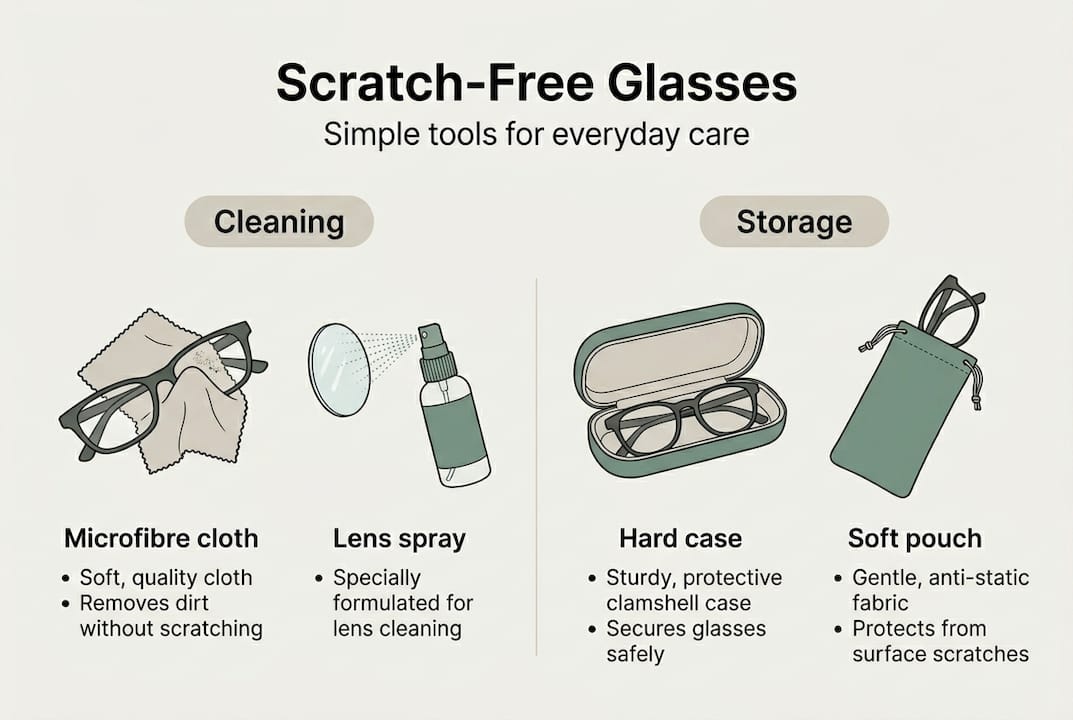
Here’s a comparison of the key tools every glasses wearer should own:
| Product | Strengths | Weaknesses |
|---|---|---|
| Microfibre cloth | Gentle, reusable, effective | Must be washed regularly |
| Hard case | Best physical protection | Bulkier to carry |
| Lens cleaning spray | Loosens oils and debris | Needs a cloth to work well |
| Anti-scratch coating | Reduces surface damage | Does not eliminate all risk |
Anti-scratch coatings and microfibre cloths together form the most effective combination for day-to-day protection. Neither works as well alone.
When choosing your tools, look for these features:
- Microfibre cloths: At least 200 GSM (grams per square metre) for softness. Wash them every week in warm water without fabric softener, as softener coats the fibres and reduces their effectiveness.
- Hard cases: A rigid shell with a soft interior lining. Avoid cases with rough inner seams that can scratch lenses when you close the lid.
- Lens sprays: Alcohol-free formulas designed specifically for coated lenses. General household sprays can strip coatings over time.
For a full rundown of what to keep in your cleaning kit, the cleaning products for lenses guide is a solid reference. And if you want to build a longer-term care routine, the maintenance guide covers everything from hinge care to lens replacement timing.
Pro Tip: Put together a small travel cleaning kit with a mini spray bottle and a fresh microfibre cloth in a zip-lock bag. Keep it in your everyday bag so you’re never tempted to use your shirt in a pinch.
Step-by-step cleaning and handling made easy
With the best tools at hand, it’s important to use the right routine every time you clean or handle your glasses. A consistent process removes the guesswork and protects your lenses from the most common sources of damage.
Follow these steps every time:
- Wash your hands first. Skin oils and fine particles transfer directly to lenses. Clean hands mean a cleaner result.
- Rinse lenses under lukewarm water. This loosens dust and grit so they don’t get dragged across the surface during wiping. Never use hot water, as it can damage lens coatings.
- Apply a small amount of lens cleaning spray. One or two sprays per lens is enough. If you don’t have spray, a tiny drop of mild dish soap works as a substitute.
- Wipe gently with a clean microfibre cloth. Use small circular motions from the centre outward. Don’t press hard.
- Shake off excess moisture and air dry briefly. If you wipe while still very wet, you may streak the lens.
- Store in a hard case immediately if you’re not wearing them.
Proper cleaning technique dramatically extends lens clarity and prevents scratches that accumulate from rushed or incorrect methods. Lenses cared for this way stay clearer for significantly longer than those cleaned carelessly.
For a printable version of this process, the glasses cleaning steps article is worth bookmarking. You can also pair it with the maintenance checklist to cover every aspect of glasses care in one place.
Pro Tip: Always wash your hands before touching your glasses, even if you’re just adjusting them on your face. The oils from your fingertips are surprisingly abrasive when combined with dust.
How to store and carry glasses to avoid scratches
Cleaning isn’t enough. How you store and carry your glasses makes a big difference in preventing scratches, particularly when you’re on the move.

Here’s how common storage methods compare:
| Storage method | Scratch protection | Portability | Best use |
|---|---|---|---|
| Hard case | Excellent | Moderate | Travel and everyday carry |
| Soft pouch | Moderate | High | Short trips, light use |
| Open tray | Low | Low | Home bedside storage |
| Eyewear leash | Low (keeps them on) | High | Active use, outdoors |
Using a hard case is the most reliable solution for preventing scratches during transport. It’s the one storage upgrade that makes an immediate, measurable difference.
For home storage, keep glasses on a dedicated tray or stand away from direct sunlight. Heat and UV exposure degrade coatings faster than most people realise. Avoid leaving glasses on the bathroom vanity where steam and cleaning products can cause coating breakdown over time.
Common mistakes to avoid:
- Leaving glasses in a hot car. Temperatures inside parked cars can exceed 60°C in Australian summers, which warps frames and damages coatings.
- Tossing glasses into a handbag without a case. Even a soft pouch is better than nothing, but a hard case is always the right call.
- Stacking glasses on top of each other. The frame of one pair will scratch the lenses of another.
- Hanging glasses from a shirt collar. This puts pressure on the frame and leaves lenses exposed.
Warning: Pockets and loose bags are where lenses take the most punishment. Coins, keys, and even receipts can scratch an unprotected lens within minutes of contact.
For more proper storage advice, including tips for different frame types, the full guide is worth reading. You’ll also find practical storage tips and ideas for storage organisation if you own multiple pairs. Interestingly, the same logic applies to other optical surfaces. A screen protector guide for devices follows nearly identical principles around surface protection and safe handling.
The truth about scratch-proof glasses claims
Here’s something the eyewear industry doesn’t always make clear: there is no such thing as a truly scratch-proof lens. The term gets used loosely in marketing, and it leads a lot of people to become complacent about how they handle their glasses.
We’ve seen it happen. Someone invests in quality coated lenses, assumes they’re now bulletproof, and six months later wonders why their vision looks foggy. The coating has been slowly worn down by dry wiping, rough handling, and storage without a case.
No coating can make lenses 100% scratch-proof and prevention still matters regardless of how premium your lenses are. The coating buys you tolerance for minor contact, not immunity from all damage.
The smarter way to think about it: a scratch-resistant coating is a safety net, not a substitute for good habits. The scratch-resistant lens facts are clear that coatings work best when combined with proper care. Treat your coated lenses with the same respect you’d give uncoated ones, and they’ll last significantly longer.
Accessories and support for scratch prevention
Putting these practical tips into action is much easier when you have the right accessories supporting your routine.

At Ministry of Sight, we stock a range of accessories for glasses designed to make scratch prevention straightforward, including microfibre cloths, hard cases, and cleaning sprays. If you’re active or outdoors, an eyewear leash keeps your glasses secure and reduces the chance of drops and accidental scratches. And if you want the peace of mind of a backup pair, browse our spare frames so a scratch on one pair never leaves you without clear vision. The right gear makes every tip in this guide easier to follow consistently.
Frequently asked questions
Can scratched glasses be repaired at home?
DIY scratch removal can cause more harm than good, as most home remedies abrade the coating further. Prevention is far more effective than any repair attempt.
How often should I clean my glasses to keep them scratch-free?
Clean your glasses daily using the right materials to remove dust and debris before it causes damage. Daily cleaning using the right materials prevents long-term lens degradation that builds up invisibly over time.
Is an anti-scratch coating enough to prevent all scratches?
Anti-scratch coatings reduce the chance of scratches but do not make lenses completely immune. Coatings help, but all glasses still need careful cleaning and consistent handling to stay clear.
What’s the safest way to carry glasses in a bag?
Always use a hard case inside your bag to protect lenses from contact with other items. A hard case offers the best protection while travelling and is the single most effective storage upgrade you can make.
Recommended
- Step by step glasses lens care for lasting clarity – MINISTRY OF SIGHT
- Benefits of scratch-resistant lenses for lasting eyewear – MINISTRY OF SIGHT
- Essential reading glasses maintenance checklist for longevity – MINISTRY OF SIGHT
- How to Store Glasses Properly for Long-Lasting Use – MINISTRY OF SIGHT


