

TL;DR:
- The Australian eyewear market is rapidly growing, driven by demographic shifts and technological advancements.
- Future reading glasses will feature autofocusing, AR overlays, lightweight materials, and personalized design.
- Privacy and data ownership will become critical considerations as smart glasses evolve into personal health ecosystems.
Reading glasses used to be simple. You squinted at a menu, grabbed a pair off the rack, and that was that. But in 2026, the humble pair of specs is undergoing a transformation so rapid that what’s coming in the next decade would be almost unrecognisable to your grandparents. The Australian eyewear market is expected to grow from USD 3.59 billion in 2025 to USD 5.85 billion by 2034, driven by ageing demographics, screen-heavy lifestyles, and a wave of genuinely exciting technology. This guide breaks down exactly what’s coming, what it means for you, and how to make smart choices now.
Table of Contents
- Why the market for reading glasses is changing
- Top technology trends reshaping reading glasses
- Design and lifestyle: The reading glasses of tomorrow
- What Australians should consider when choosing future-ready glasses
- The real future: Smart eyewear is just the beginning
- See the future for yourself with Ministry of Sight
- Frequently asked questions
Key Takeaways
| Point | Details |
|---|---|
| Smart technology on the rise | Reading glasses in Australia are rapidly integrating features like autofocusing lenses and advanced sensors. |
| Design and comfort evolve | Expect lighter, personalised, and more sustainable glasses reflecting both fashion and function. |
| Market growth fuels innovation | A booming eyewear market means Aussies will have unprecedented choices and new standards to consider. |
| Choose wisely | Future-ready glasses require careful assessment of features, value, and support so you get the best fit for your needs. |
Why the market for reading glasses is changing
Australia’s population is getting older. By 2030, more than one in five Australians will be over 65, and presbyopia (the gradual loss of near-focus ability that typically kicks in after 40) is essentially universal. That alone would be enough to drive demand. But there’s a second, younger force at play too.
Screen time is at record levels. Australians now spend an average of over six hours per day looking at digital devices, and eye strain is showing up earlier in life as a result. People in their 30s are reaching for reading glasses sooner than previous generations, and that’s reshaping who the typical buyer actually is.
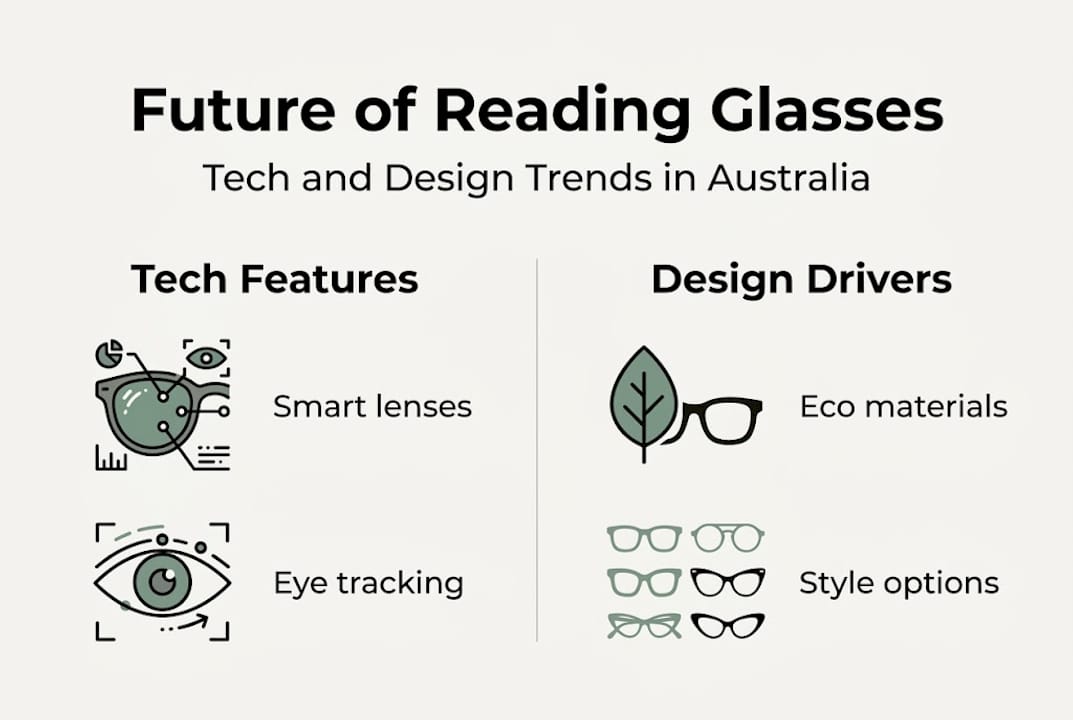
The market is responding to this with speed. The Australian eyewear market is projected to grow at a CAGR of approximately 6%, reaching USD 5.85 billion by 2034. That kind of growth signals serious investment in both technology and design.
Here’s a snapshot of the key forces reshaping the market:
| Driver | Impact on reading glasses |
|---|---|
| Ageing population | Higher demand across all price points |
| Increased screen time | Earlier need for vision correction |
| Blue light awareness | New lens technology becoming standard |
| Fashion consciousness | Frames as personal style statements |
| Sustainability concerns | Demand for eco-friendly materials |
Beyond demographics and health, personal style is now a genuine purchase driver. Eyewear is no longer just functional. Checking out glasses trends for men in 2026 shows just how much frames have become a fashion accessory in their own right.
Sustainability is also reshaping buyer behaviour. Australians are increasingly asking where their frames come from and what they’re made of. Understanding your ethical eyewear choices is becoming as important as picking the right lens strength. And knowing your consumer rights in eyewear ensures you’re protected as the market evolves.
The bottom line? Reading glasses are no longer a grudge purchase. They’re a product category being reinvented from the ground up.
Top technology trends reshaping reading glasses
So what does the technology pipeline actually look like? It’s more impressive than most people realise.
The biggest headline from the 2026 tech world came from a company called IXI. Their autofocusing glasses use infrared eye-tracking sensors and liquid crystal lenses that refocus in just 0.2 seconds. That means the glasses detect where your eyes are looking and adjust the focal point instantly, whether you’re reading a book, glancing at your phone, or looking across the room. No more swapping between pairs.
Here’s a comparison of traditional versus emerging reading glasses technology:
| Feature | Traditional glasses | Smart/future glasses |
|---|---|---|
| Focal adjustment | Fixed, single strength | Automatic, real-time |
| Lens material | Polycarbonate or glass | Liquid crystal adaptive |
| Frame weight | Varies widely | Ultra-lightweight alloys |
| AR capability | None | Navigation, text overlay |
| Health tracking | None | Eye strain and usage data |
Beyond autofocusing, here are the top technologies you’ll see becoming mainstream:
- Liquid crystal lenses that shift focal length based on eye position, eliminating the need for bifocals or multiple pairs.
- Eye-tracking sensors that personalise correction in real time, adapting to fatigue, lighting, and distance.
- Ultra-lightweight frame materials including titanium alloys and bio-based polymers, making all-day wear genuinely comfortable. Explore the benefits of lightweight glasses to understand why this matters for daily use.
- Augmented Reality (AR) overlays that project navigation prompts, translation text, or reading assistance directly into your field of view.
- Blue light filtering built into smart lenses, moving beyond coatings to integrated protection.
Pro Tip: Autofocusing smart glasses could replace two or three separate pairs with a single adaptive frame. If you’re currently juggling reading glasses, distance specs, and screen glasses, this technology is worth watching closely.
For a deeper look at where this is all heading, the world of smart reading glasses is evolving faster than most people expect. And when it comes to making lens decisions today, understanding your best lens choices helps you bridge the gap between current options and what’s coming.
Design and lifestyle: The reading glasses of tomorrow
Technology is only half the story. The other half is how reading glasses look and feel on your face every day.

Australian eyewear brands and designers are responding to rising demand for style and eco-friendly materials, and the results are starting to show in both independent boutiques and online retailers. Shape innovation is accelerating. Expect to see bolder geometric frames, softer rounded silhouettes, and a much wider range of colours moving beyond the classic tortoiseshell and black.
Comfort is getting serious attention too. Frames are being engineered with pressure-free nose bridges, flexible hinges, and featherlight materials that you genuinely forget you’re wearing. For anyone who’s ever avoided wearing their glasses because they get uncomfortable after an hour, this is a real quality-of-life improvement.
‘Australia’s eyewear market is being redefined by the fusion of health, style, and sustainability.’
Here’s what to look for in the next wave of reading glasses design:
- Eco-friendly acetate and recycled materials replacing petroleum-based plastics in frames
- Bio-based polymers derived from plant sources, reducing environmental footprint
- Custom 3D-printed frames allowing precise fit to your exact facial geometry
- Modular frame systems where temples, bridges, and front pieces can be swapped out
- Neutral and bold colour palettes reflecting broader fashion trends rather than medical aesthetics
Pro Tip: Look for modular frames that can evolve with your style and needs. Instead of replacing your entire pair when trends shift, you swap components. It’s better for your wallet and better for the planet.
For practical guidance on navigating these options, lightweight reading glasses are already available online and represent a good entry point into the comfort-first design movement. If you want frames that genuinely complement your lifestyle, stylish reading glasses that balance function and fashion are worth exploring. Women specifically will find value in comparing durable reading glasses for women as the market expands.
The key shift is this: reading glasses are becoming objects of personal expression, not just visual aids.
What Australians should consider when choosing future-ready glasses
With so much change happening, how do you make a smart purchase decision right now without ending up with something obsolete in two years?
As advanced features like blue light blocking and smart lenses become standard considerations, here’s a practical framework for evaluating any pair of reading glasses, especially those with tech built in.
Steps to evaluate future-ready glasses:
- Check for software and firmware update capability. Smart glasses that can’t receive updates will become outdated quickly. Ask the retailer directly.
- Confirm warranty terms and after-sales support. Tech-integrated eyewear is more complex than a standard frame. A minimum 12-month warranty is reasonable to expect.
- Assess price versus genuine value. A higher price tag isn’t always justified. Compare what specific features you’re actually paying for.
- Check insurance eligibility. Some private health funds in Australia cover prescription eyewear. Smart glasses with prescription lenses may qualify.
- Try before you buy. Whether in-store or through a virtual fitting tool, never commit to a frame you haven’t seen on your face.
Key features to prioritise when shopping:
- Blue light protection, either as a coating or integrated into the lens material
- Adjustable nose pads and flexible temples for a secure, comfortable fit
- UV400 protection for outdoor use, especially relevant in the Australian climate
- Compatibility with your existing devices if purchasing AR or smart glasses
- Clear returns and exchange policies from the retailer
For help navigating lens decisions specifically, choosing eyeglass lenses is a useful starting point before you commit to any purchase.
The smartest thing you can do right now is buy quality basics with proven technology, stay informed about what’s coming, and avoid locking yourself into expensive proprietary ecosystems that may not last.
The real future: Smart eyewear is just the beginning
Here’s an opinion you won’t hear often: the most important thing about tomorrow’s reading glasses isn’t the technology inside them. It’s the data they’ll generate about you.
We’re moving toward a world where your glasses track how long you’ve been reading, detect early signs of eye strain, and flag changes in your vision over time. That’s not science fiction. It’s the natural extension of where wearables are already headed. The question Australians should be asking isn’t “are these glasses smart enough?” It’s “who owns the data my glasses collect, and what happens to it?”
Privacy will become a real purchase consideration, not just a footnote in terms and conditions. The most valuable glasses of the next decade won’t just help you read a menu. They’ll be part of a personal health ecosystem, connecting to your GP, your optometrist, and potentially your health insurer. That’s genuinely exciting, and genuinely worth thinking carefully about.
The technology showcased in augmented vision technology gives a real sense of where this is heading. The brands that earn long-term trust will be the ones that treat your vision health data with the same care they put into the frames themselves.
See the future for yourself with Ministry of Sight
Ready to upgrade? Here’s how Ministry of Sight can help you step into tomorrow, today.
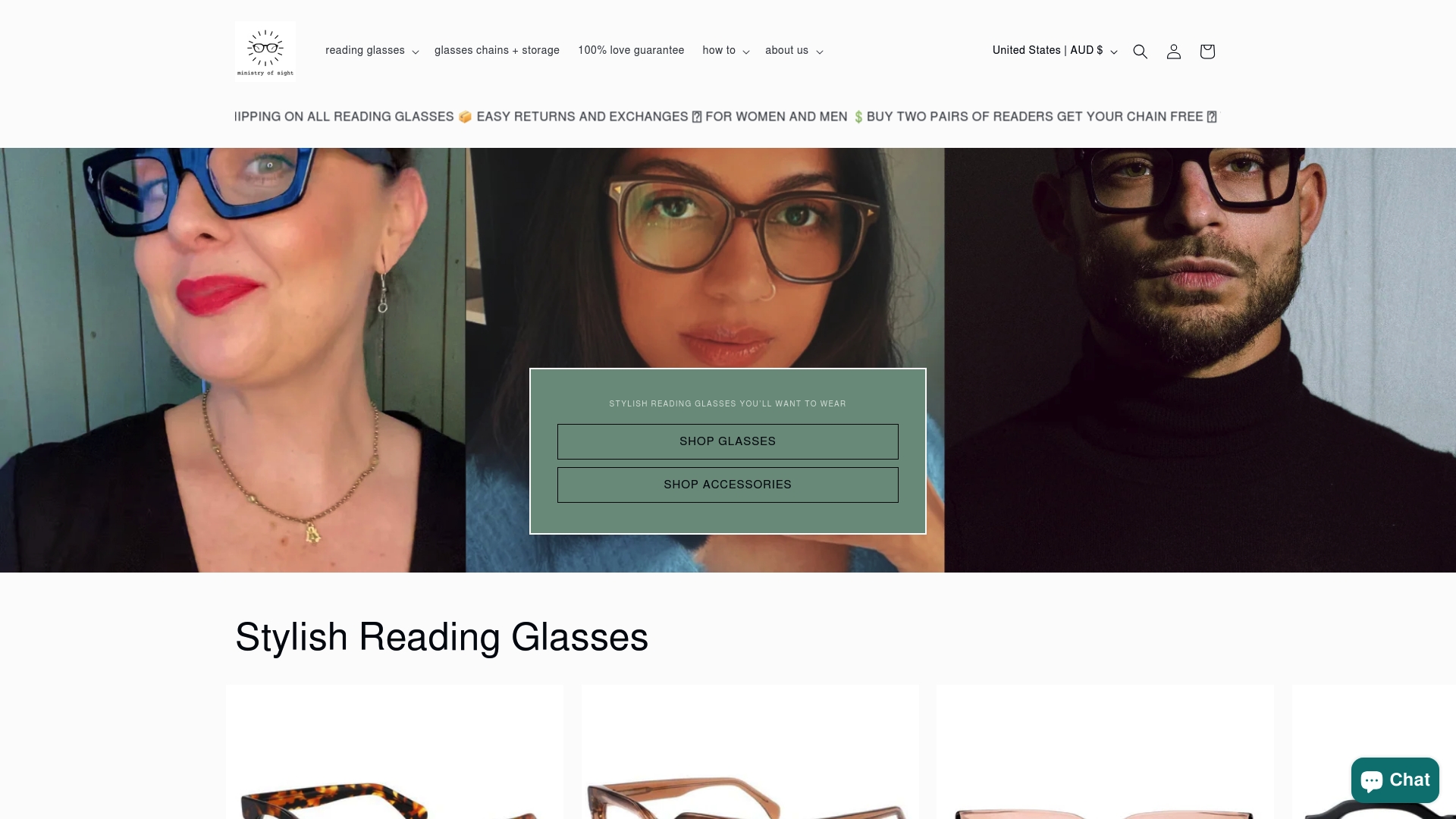
At Ministry of Sight, we stock a carefully curated range of reading glasses that reflect where the market is heading, not just where it’s been. From lightweight frames to blue light filtering options, our range is built for Australians who take their vision seriously. You’ll also find a full selection of reading glasses accessories designed to complement your eyewear and fit seamlessly into your daily routine. With free shipping across Australia, buy-one-get-one deals, and a satisfaction guarantee, exploring what’s new has never been easier or lower risk.
Frequently asked questions
What smart features can I expect in future reading glasses?
Autofocusing lenses, eye-tracking sensors, blue light protection, and AR overlays are all moving toward mainstream availability in the coming years.
Will reading glasses get more stylish and comfortable?
Absolutely. Australian brands are responding to demand for lighter, more fashionable, and eco-friendly frames, and this trend will only accelerate through the decade.
How big is the Australian reading glasses market expected to get?
The market is forecasted to grow from USD 3.59 billion in 2025 to USD 5.85 billion by 2034, driven by demographics and technology investment.
Are blue light and AR features worth paying extra for?
For anyone spending significant time on screens or needing versatile vision correction, blue light and AR features offer real, measurable benefits that justify the additional cost.
Recommended
- Smart reading glasses: AR features and advanced vision explained – MINISTRY OF SIGHT
- Stylish, functional reading glasses for your lifestyle – MINISTRY OF SIGHT
- Trendy glasses for men in Australia 2026: styles & deals – MINISTRY OF SIGHT
- Why Reading Glasses Should Be Affordable in Australia in 2026 – MINISTRY OF SIGHT
- Τάσεις Gadget 2026: Νέες Τεχνολογίες που Αλλάζουν Ζωές – Asknik


