

TL;DR:
- Proper fit, materials, and lens choice are crucial for comfortable and effective designer eyewear.
- Face shape and personal style help determine the most flattering and expressive frame options.
- Material selections like titanium offer durability and hypoallergenic benefits that enhance long-term wear.
Most people walk into an eyewear purchase thinking almost entirely about the brand name or the shape of the frame. What they rarely consider is that the wrong fit, the wrong material, or the wrong lens type can make even the most expensive designer frames uncomfortable, unflattering, and ultimately a waste of money. The truth is that great eyewear is where fashion meets function, and getting both right is what separates a confident, polished look from one that just doesn’t quite work. This guide is here to help you make that call with clarity.
Table of Contents
- What sets designer frames apart from regular eyewear?
- How to match designer frames to your face shape and personal style
- Material matters: Comparing titanium, acetate, and other popular designer frame options
- Ordering designer frames online: Fit, lens choices, and sizing tips
- Balancing fashion, comfort, and budget: Key factors for choosing designer frames
- Why true style is about more than just picking a famous designer label
- Explore exclusive offers on premium frames and accessories
- Frequently asked questions
Key Takeaways
| Point | Details |
|---|---|
| Designer frames offer real benefits | Superior materials, comfort, and fashion impact set designer frames apart from regular options. |
| Fit and materials are key | The right frame material and measurements ensure comfort, durability, and the best look for your face. |
| Online buyers need smart tips | Measure your current glasses and opt for frames and lenses that match your prescription and style. |
| Check for offers before buying | Savvy shoppers use promotional deals, bundle offers, and warranty features to maximise value. |
What sets designer frames apart from regular eyewear?
With the broad context set, let’s now focus on what truly differentiates designer frames from the rest.
Designer frames are not simply about paying more for a logo. The differences in quality, construction, and longevity are real and worth understanding before you spend. At the top of the list is material quality. Premium brands consistently use higher-grade materials like surgical-grade titanium, Italian acetate, and memory metals that simply hold up better over time. These materials are more precisely machined, which means hinges open and close smoothly for years rather than months.
Brand reputation also plays a practical role. Established designer names tend to offer better after-sales support, including adjustments, replacement parts, and warranties that budget frames rarely match. When your frames are an everyday essential, that kind of backing matters.
Understanding luxury frame materials is one of the best starting points for anyone serious about making a smart investment in eyewear. The right material affects everything from how the frame sits on your nose to how it interacts with your skin over a long day.
Here’s a quick comparison of designer versus standard frames:
| Feature | Designer frames | Standard frames |
|---|---|---|
| Material grade | Titanium, premium acetate | Basic plastic or low-grade metal |
| Durability | High, often multi-year | Moderate, may warp or snap |
| Hypoallergenic options | Common | Rare |
| After-sales support | Usually included | Varies widely |
| Style range | Broad, fashion-forward | Limited, generic |
| Prescription compatibility | Optimised for complex Rx | Basic only |
Key advantages of choosing designer frames include:
- Hypoallergenic materials for those with sensitive skin or metal allergies
- Stronger, more flexible frames suited to active lifestyles
- Fashion-forward design that expresses individuality and personal style
- Better lens compatibility, particularly for complex prescriptions
“High prescriptions need smaller frames and high-index lenses to minimise thickness. Active lifestyles favour flexible TR90, memory metal, or titanium. Sensitive skin prioritises hypoallergenic titanium over acetate or metal alloys.” This is the kind of practical knowledge that separates a confident purchase from a regretful one.
The bottom line: designer frames earn their price through real material and engineering differences, not just marketing.
How to match designer frames to your face shape and personal style
Understanding frame quality and uniqueness, it’s essential to consider how those frames will look and feel on you.
Face shape is one of the most reliable guides to finding frames that genuinely flatter. It’s not a rigid rule, but it gives you a useful starting point when you’re browsing hundreds of options online.
- Round faces benefit from angular or rectangular frames, which add definition and length to softer features. Think bold rectangular shapes or geometric designs.
- Oval faces are the most versatile and suit almost any frame shape. Wide frames, oversized styles, and aviators all work well.
- Square faces are complemented by rounder or oval frames that soften strong jawlines and broad foreheads.
- Heart-shaped faces (wider at the forehead, narrower at the chin) suit frames that are wider at the bottom, like round or oval shapes, to balance proportions.
Style expression is equally important. Your frames are one of the few accessories you wear every single day, so they should reflect who you are. Bold, oversized frames make a statement. Minimalist wire or rimless designs suit those who prefer understated elegance. Retro-inspired shapes like cat-eyes or round lenses add personality and a nod to fashion history. Futuristic shield-style frames signal confidence and edge.
Colour and finish are often underestimated. Warm tortoiseshell and brown tones suit warmer complexions and earthy wardrobes. Cool-toned silver, gunmetal, and clear frames complement cooler skin tones and modern, monochromatic outfits. Matte finishes feel contemporary and understated, while glossy finishes add a polished, classic look.
For a deeper look at what’s working in eyewear right now, exploring on-trend frame shapes is a great way to stay current without chasing every passing trend.
Men shopping for frames will find specific guidance useful too. Exploring masculine frame designs and mens frame fashion can help narrow down the options quickly and confidently.
Pro Tip: Don’t just shop for frames that look good on a model. Look at the frame dimensions listed online and compare them to a pair you already own and love. Fit is far more personal than face shape charts suggest, and your own comfort history is the best guide you have.
As prescription needs vary, so do ideal frame shapes. Strong prescriptions work better in smaller frames, which reduce lens thickness at the edges and keep the overall look clean.
Material matters: Comparing titanium, acetate, and other popular designer frame options
Having matched frames to your style, it’s time to understand why the material you choose can dramatically affect your comfort and look.

Frame material is one of the most consequential decisions you’ll make, yet it’s one most shoppers gloss over. Let’s break down the main contenders.
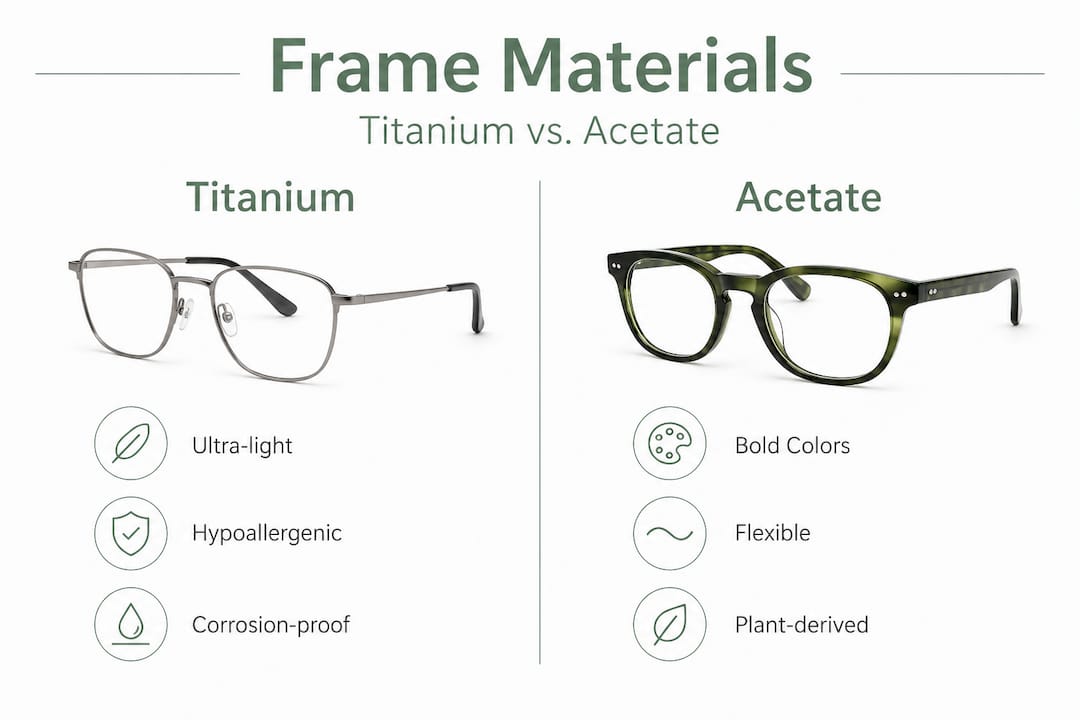
Titanium is widely regarded as the gold standard for premium eyewear. It is exceptionally lightweight, corrosion-resistant, and hypoallergenic. For anyone who spends long hours in their glasses or has experienced skin irritation from metal frames, titanium is genuinely transformative. It’s also incredibly strong, meaning frames hold their shape even with daily wear and the occasional rough handling.
Acetate is the classic choice for bold, colourful frames. It’s a plant-derived plastic that allows for rich colour saturation and intricate layering effects. Acetate frames have a warmth and depth that metal simply can’t replicate. The trade-off is that acetate can cause skin irritation for some people and may warp slightly in extreme heat. It’s heavier than titanium, which some wearers notice over a full day.
Memory metal and TR90 are modern materials built for flexibility and durability. Memory metal (often a nickel-titanium alloy) springs back to its original shape after bending, making it ideal for active lifestyles. TR90 is a thermoplastic that is extremely lightweight and resistant to impact. Both are excellent for sport or outdoor use.
| Material | Weight | Hypoallergenic | Durability | Best for |
|---|---|---|---|---|
| Titanium | Very light | Yes | Excellent | Sensitive skin, daily wear |
| Acetate | Moderate | Sometimes | Good | Bold style, classic looks |
| Memory metal | Light | Varies | Excellent | Active lifestyles |
| TR90 | Very light | Yes | Very good | Sport, outdoor use |
| Standard metal alloy | Moderate | No | Moderate | Budget-conscious buyers |
Key considerations when choosing your material:
- Skin sensitivity: Hypoallergenic titanium is the safest choice for reactive skin
- Activity level: TR90 and memory metal handle movement and impact far better than rigid acetate
- Style goals: Acetate delivers unmatched colour and pattern options
- Prescription strength: Heavier materials can amplify the weight of thick lenses
If you’re drawn to a clean, contemporary look, clear frame styles in acetate or TR90 are a particularly popular choice right now, offering a modern aesthetic without sacrificing comfort.
Pro Tip: If you have a strong prescription, pair it with titanium or TR90 frames in a smaller size. Lighter materials offset the added weight of high-index lenses, keeping your glasses comfortable from morning to night.
Exploring the full range of designer frame materials will help you understand which combinations of style and substance suit your needs best.
Ordering designer frames online: Fit, lens choices, and sizing tips
With material and style sorted, making the right choice from your screen is the next step for online shoppers.
Buying glasses online is now completely mainstream in Australia, and for good reason. The range is broader, the prices are more competitive, and the convenience is unmatched. But fit remains the biggest challenge when you can’t try frames on in person.
Here’s how to get it right:
- Measure your current glasses. Use a ruler to measure the lens width (the width of one lens), the bridge width (the distance between the lenses), and the temple length (the arm that runs behind your ear). These three numbers are usually printed inside the frame arm.
- Compare those numbers to the product specs online. Most quality eyewear retailers list all three measurements in the product description. A difference of 1 to 2mm is generally fine; more than that and you risk a poor fit.
- Check the total frame width. Add the two lens widths plus the bridge width together. This gives you the overall width, which should roughly match the width of your face at the temples.
- Consider your nose bridge. Low nose bridges need frames with a lower bridge measurement or adjustable nose pads to sit correctly without sliding down.
- Look at the temple length. Most adult frames use 140mm to 150mm temples. If your current glasses feel too tight or too loose behind the ears, adjust your search accordingly.
Measuring for fit before ordering online is the single most effective way to reduce the chance of returns and disappointment.
Lens choice is equally critical. High-index lenses are thinner and lighter than standard lenses, which makes a significant visual and physical difference for prescriptions above plus or minus 3.00. Anti-reflective coatings reduce glare from screens and headlights. Photochromic lenses darken outdoors and clear indoors, offering genuine versatility for Australian conditions.
Understanding eyewear fit essentials before you order will save you time, money, and the frustration of frames that look great on screen but feel wrong in real life.
Pro Tip: Screenshot the size specifications of a pair you already love and keep them on your phone. When browsing online, you can compare instantly without needing to re-measure every time.
Balancing fashion, comfort, and budget: Key factors for choosing designer frames
Having covered the specifics, let’s distil what savvy shoppers pay attention to when making their final designer frame selection.
The most stylish frame in the world becomes a liability if it’s uncomfortable after two hours. Comfort and fit affect how often you actually wear your glasses, how confident you feel in them, and how well they support your vision throughout the day. No brand name compensates for a frame that pinches your nose or slides constantly.
That said, well-chosen frames genuinely do enhance your personal style. Understanding eyewear’s fashion role helps you treat your frames as a deliberate style choice rather than a medical necessity you’re stuck with.
Key factors to weigh before committing to a purchase:
- Comfort over trend: A frame you wear every day must feel good, full stop
- Prescription compatibility: Smaller frames with high-index lenses are essential for strong prescriptions to avoid thick, heavy lenses
- Warranty and after-sales service: A quality retailer stands behind their product
- Current promotions and bundle deals: Buy-one-get-one offers, free accessories, and shipping deals can make premium frames far more accessible
- Retailer reliability: Choose retailers with clear return policies and Australian-based customer support
The complete fashion eyewear guide is a useful resource for anyone who wants to approach their next purchase with a clear framework rather than just browsing until something feels right.
Pro Tip: Before finalising any online purchase, check the retailer’s current offers page. Promotional bundles, free lens upgrades, and complimentary accessories are common and can add real value to an already smart purchase.
Balancing all of these factors is what separates a purchase you’ll love for years from one you’ll regret within weeks.
Why true style is about more than just picking a famous designer label
The lesson from all the above details and comparisons leads naturally to our core perspective, and it’s one we feel strongly about.
There is a tendency in eyewear, as in fashion generally, to equate spending more on a well-known label with getting the best result. But the most expensive frame in the room is not automatically the right frame for you. We’ve seen customers invest in prestigious names only to find the frames uncomfortable, ill-fitting, or incompatible with their prescription. The logo on the arm doesn’t change how the bridge sits on your nose.
What actually creates lasting confidence in your eyewear is the combination of fit, material, and lens choice working together. A titanium frame that sits perfectly, paired with high-index lenses suited to your prescription, worn in a shape that genuinely flatters your face, will outperform a logo-heavy acetate frame that’s slightly too wide every single time.
Understanding fashion’s role in eyewear is valuable, but fashion should inform your choice, not override the fundamentals. The real luxury is wearing glasses that you forget are there because they fit so well, look so right, and feel so natural. That’s the standard worth chasing.
Personal style developed through thoughtful eyewear choices is far more distinctive than anything a brand name alone can deliver. The people who consistently look great in their glasses are the ones who understand their own face, their own prescription needs, and their own aesthetic. They shop with intention, not just aspiration.
Explore exclusive offers on premium frames and accessories
With clarity on what matters in designer frames, here’s where to explore thoughtfully curated options and special deals.
At Ministry of Sight, we’ve brought together a carefully selected range of premium frames and accessories designed for Australians who want both style and substance. Whether you’re after a bold statement piece or a refined everyday frame, the options are there for you.
Right now, you can browse our frames only selection to find your ideal match, or check out the latest current offers for promotional bundles, buy-one-get-one deals, and complimentary extras that make upgrading your eyewear even more rewarding. Don’t forget to explore our range of eyewear accessories to complete your look. Free shipping across Australia means your next favourite frames are just a few clicks away.
Frequently asked questions
What’s the most important factor when choosing designer frames online?
Fit and comfort are vital. Always measure existing frames for lens width, bridge, and temple length, then compare those measurements against the product specs before ordering.
Are titanium designer frames worth the extra cost?
Yes, titanium frames are lightweight, hypoallergenic, and highly durable, making them ideal for sensitive skin or daily active use. Hypoallergenic titanium consistently outperforms standard metal alloys for long-term comfort.
What lens types are best for high prescriptions in designer frames?
High-index lenses paired with smaller frames keep thick prescriptions light and visually clean. Smaller frames with high-index lenses minimise edge thickness and reduce overall weight significantly.
How do I know if a designer frame will fit me when shopping online?
Compare the lens width, bridge, and temple measurements of your current pair with the new frame’s listed specs. Measuring for fit before purchasing online is the most reliable way to avoid a poor-fitting result.
Recommended
- Find your perfect on-trend frame shapes for style – MINISTRY OF SIGHT
- Tortoiseshell frames: find your signature style and fit – MINISTRY OF SIGHT
- Stylish glasses for mature women: find your perfect fit – MINISTRY OF SIGHT
- How to select masculine frame designs for your style – MINISTRY OF SIGHT
- Finding the Perfect Fit: Your Guide to Stylish Formal Attire - DressMeUpNY
Our Best Reading Glasses Australia guide covers frame quality, lenses, fit and the features worth considering before you buy.


