

Struggling to read fine print or catch details on your favourite Sydney café menu is a familiar challenge for many Australians living with nearsightedness. Clear vision up close often turns blurry at a distance, and once you hit your 40s, new vision hurdles like presbyopia can make everyday tasks even trickier. This guide unpacks how stylish reading glasses enhance comfort and clarity, offering smart online shopping tips for finding frames that suit your Australian lifestyle and budget.
Table of Contents
- What Is Nearsightedness and How It Works
- How Reading Glasses Help Nearsighted People
- Popular Types and Styles for Australians
- Choosing the Right Power and Fit Online
- Cost, Common Myths and Alternatives
Key Takeaways
| Point | Details |
|---|---|
| Understanding Myopia | Nearsightedness, or myopia, is a vision disorder where distant objects appear blurry due to improper light focus in the eye. It typically develops in childhood and is influenced by genetic and environmental factors. |
| Importance of Reading Glasses | For nearsighted individuals, reading glasses enhance clarity for close-up tasks and alleviate eye strain, especially as presbyopia develops with age. Consult an optometrist to find the right prescription. |
| Choosing the Right Glasses Online | When selecting reading glasses online, ensure accuracy in your prescription and pupillary distance. Use virtual try-on tools and check return policies to ensure satisfaction. |
| Cost Considerations | The price of reading glasses varies based on factors like prescription complexity and material. Understanding cost drivers helps consumers make informed decisions about their eyewear investments. |
What Is Nearsightedness and How It Works
Nearsightedness (medically known as myopia) is a common vision condition affecting millions of Australians, characterised by difficulty seeing distant objects clearly while maintaining sharp near vision. Essentially, this eye focusing disorder creates a unique visual experience where objects up close appear crisp and detailed, but anything further away becomes frustratingly blurry.
The underlying mechanism of nearsightedness involves how light enters and focuses within the eye. When you have myopia, your eye’s physical structure causes light rays to converge in front of the retina instead of precisely on it. This misalignment occurs due to two primary anatomical variations:
- An elongated eyeball shape
- An excessively curved cornea
These structural differences prevent light from focusing correctly, resulting in distant objects appearing out of focus. Imagine looking at a street sign from across the road - for someone with nearsightedness, that sign would appear fuzzy and indistinct.
When and How Myopia Develops
Myopia typically emerges during childhood and progresses through teenage years before stabilising in early adulthood. Genetic factors play a significant role, meaning if your parents wear glasses for distance vision, you’re more likely to develop nearsightedness. Environmental influences also contribute, particularly the increasing amount of time spent on close-range activities like reading, using digital devices, and studying.
The progression of myopia isn’t random. It follows a predictable pattern where vision gradually changes:
- Initial blurriness with distant objects
- Increasing difficulty seeing road signs or presentation screens
- Potential eye strain and headaches
- Need for corrective lenses to improve vision
Myopia isn’t just about blurry vision - it’s a complex interaction between genetic predisposition and environmental factors that shape how your eyes develop and function.
Symptoms and Warning Signs
Recognising nearsightedness early can help manage its progression. Key symptoms include:
- Squinting to see distant objects clearly
- Sitting unusually close to screens or television
- Frequent headaches
- Rubbing eyes frequently
- Holding reading materials very close
Pro tip: Regular eye examinations can help detect and manage myopia progression before it significantly impacts your daily life.
How Reading Glasses Help Nearsighted People
For individuals with nearsightedness, reading glasses serve a crucial role in managing vision challenges, particularly as people age and their visual needs become more complex. Unlike standard distance correction, reading glasses provide a targeted solution for close-up tasks, helping nearsighted individuals navigate detailed work with greater precision and comfort.
The primary function of reading glasses for nearsighted people involves addressing near vision challenges. While standard distance prescription glasses correct far-sightedness, reading glasses focus on enhancing clarity for activities requiring close-range focus, such as:
- Reading books and newspapers
- Working on digital devices
- Detailed craft or hobby work
- Studying and research
- Fine print reading
As nearsighted individuals age, their vision undergoes additional changes. Around age 40, most people experience presbyopia, a natural ageing process that further reduces near vision flexibility. Reading glasses can help manage this transition by providing customised magnification that complements existing distance correction.
Reading glasses aren’t just about seeing better - they’re about maintaining visual comfort and reducing eye strain during close-up tasks.
For nearsighted people, reading glasses offer several distinct advantages:
- Reduced eye fatigue
- Improved focus for detailed work
- Prevention of headaches caused by visual strain
- Enhanced reading and screen time comfort
- Flexible correction options
Interestingly, the strength of reading glasses depends on individual vision requirements. Mild nearsighted individuals might need lower magnification, while those with more significant vision changes could require stronger lenses. Consulting an optometrist helps determine the most appropriate reading glass prescription.

Pro tip: Have your vision checked annually to ensure your reading glasses continue to meet your changing visual needs.
Popular Types and Styles for Australians
Australian readers with nearsightedness have an exciting array of reading glasses styles that combine functionality with contemporary fashion. The modern eyewear market offers diverse options that cater to different personal aesthetics, face shapes, and vision correction needs, ensuring everyone can find a pair that feels both comfortable and stylish.
Currently, the most popular reading glass styles for Australians include:
- Classic rectangular frames for professional settings
- Rounded vintage-inspired designs for creative professionals
- Lightweight metal frames for minimalist looks
- Bold coloured frames for making a statement
- Rimless options for subtle, sophisticated appearances
Stylish eyewear trends for Australians over 40 demonstrate that reading glasses are no longer just a medical necessity, but a fashion accessory. Material choices have expanded significantly, moving beyond traditional options to include innovative lightweight metals, flexible polymers, and even sustainable materials that appeal to environmentally conscious consumers.
Reading glasses are a personal statement - they’re not just about seeing clearly, but expressing your individual style.
For those seeking versatility, several functional design features have become increasingly popular:
- Adjustable nose pads for custom comfort
- Anti-reflective coatings
- Blue light filtering capabilities
- Magnetic clip-on sunshades
- Folding compact designs for easy storage
Regional preferences play a significant role in frame selection. Australian consumers tend to prefer practical yet stylish designs that can transition seamlessly between professional and casual environments. Urban centres like Sydney and Melbourne particularly favour sleek, contemporary frames that complement professional attire while maintaining individual personality.
Pro tip: Select reading glasses that complement your face shape and personal style, ensuring both comfort and confidence.
Choosing the Right Power and Fit Online
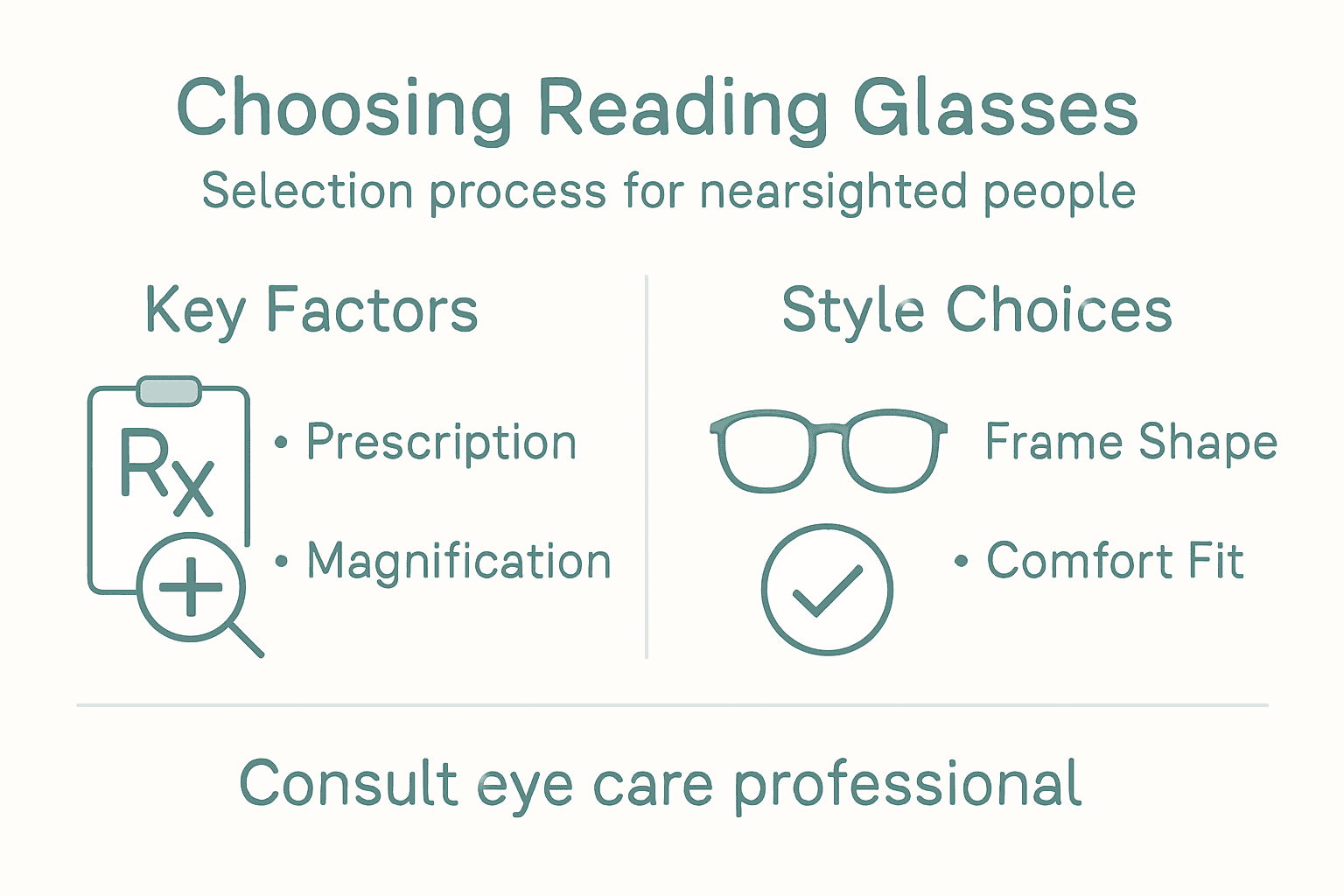
Selecting the perfect reading glasses online requires a strategic approach that balances personal vision needs with precise measurement techniques. For nearsighted Australians, understanding how to navigate online eyewear shopping can mean the difference between comfortable, effective glasses and a disappointing purchase that fails to meet your visual requirements.
Before making an online purchase, several critical factors must be considered:
- Current vision prescription accuracy
- Precise pupillary distance measurement
- Understanding your specific vision correction needs
- Frame size and shape compatibility
- Lens material and coating options
Online reading glasses guides recommend starting with a comprehensive eye examination to determine your exact prescription strength. Modern online platforms offer sophisticated tools to help you measure and select the right glasses, but professional guidance remains essential for accurate correction.
Precision matters: One millimetre of measurement can significantly impact your visual comfort and clarity.
The process of selecting reading glasses online involves several strategic steps:
- Get a recent eye examination
- Measure your pupillary distance carefully
- Understand your prescription details
- Use virtual try-on technologies
- Check return and adjustment policies
For nearsighted individuals, lens power selection is particularly nuanced. Different magnification levels address varying vision challenges, with options ranging from low-power (+1.00) to higher-strength (+3.00) reading glasses. Consulting an optometrist helps determine the most appropriate magnification for your specific vision needs.
Pro tip: Always keep your most recent prescription on hand and take multiple measurements to ensure online reading glasses accuracy.
Cost, Common Myths and Alternatives
Navigating the world of reading glasses involves understanding not just the visual benefits, but also the financial and practical considerations that impact Australians with nearsightedness. The landscape of vision correction is complex, with multiple options available to suit different budgets, lifestyle needs, and personal preferences.
The cost of reading glasses varies significantly, depending on several key factors:
- Prescription complexity
- Frame material and design
- Lens treatments and coatings
- Online versus in-store purchases
- Insurance coverage options
Online reading glasses guides suggest that prices can range from as low as $20 to over $300, with most Australians spending between $80-$250 for quality reading glasses. Understanding the pricing structure helps consumers make informed decisions about their eye health investments.
The following table summarises typical factors that affect the price and value of reading glasses in Australia:
| Factor | Impact on Cost | Potential Savings Tip |
|---|---|---|
| Frame material | High for designer | Choose practical materials |
| Lens coatings | Increases price | Select only essential coatings |
| Prescription strength | More complex, pricier | Accurate, up-to-date prescription |
| Where you buy | Online often cheaper | Compare online vs in-store offers |
| Insurance coverage | May reduce total | Check optical extras available |
Not all reading glasses are created equal - quality and precision matter more than price.
Several persistent myths about reading glasses need debunking:
- Wearing glasses weakens your eyesight (False)
- One-size-fits-all glasses work for everyone (False)
- Cheap glasses are just as good as expensive ones (Depends)
- You only need reading glasses after 40 (Not necessarily)
- Online glasses are less reliable than in-store options (Incorrect)
For those seeking alternatives to traditional reading glasses, several options exist. Contact lenses provide an invisible correction method, while laser eye surgery offers a more permanent solution for those with stable prescriptions. Specialised lens technologies like blue light filtering and progressive lenses also provide enhanced vision correction for nearsighted individuals.
Here’s a brief comparison of common vision correction options for nearsighted Australians:
| Correction Method | Visibility | Longevity | Key Consideration |
|---|---|---|---|
| Reading glasses | Visible accessory | Replace as needed | Customisable styles and strengths |
| Contact lenses | Invisible in use | Replace regularly | Requires hygiene and regular maintenance |
| Laser eye surgery | No external device | Long-term change | Higher upfront cost, surgical risks |
| Progressive lenses | Visible accessory | Replace as needed | Multiple prescriptions in one lens |
Pro tip: Invest in a comprehensive eye examination annually to ensure your vision correction strategy remains accurate and effective.
Discover Reading Glasses That Bring Style and Clarity Together
Nearsightedness often makes the world beyond arm’s length a blurry challenge. As your eyes adjust and presbyopia creeps in, finding the right reading glasses that balance comfort, clarity, and style becomes essential. If you struggle with eye fatigue or headaches during close-up tasks, it is time to explore eyewear designed specifically to meet your unique vision needs while complementing your personal look.
Elevate your reading experience today with our curated collection of Rectangular Reading Glasses and Round Reading Glasses that suit professional and creative styles alike. Shop now at Ministry of Sight and take advantage of free shipping across Australia plus exclusive deals to get the perfect pair that enhances your vision and expresses your personality. Don’t compromise on comfort or fashion – find your ideal glasses and read with confidence now.
Frequently Asked Questions
What are the main benefits of using reading glasses for nearsighted individuals?
Reading glasses enhance clarity for close-up tasks, reduce eye strain, improve focus for detailed work, and prevent headaches caused by visual fatigue.
How do I know if I need reading glasses?
Common signs include squinting to see distant objects clearly, needing to hold reading materials closer, frequent headaches, or experiencing eye strain during close-up tasks.
Can I wear reading glasses all the time if I am nearsighted?
Reading glasses are designed for close-up tasks and may not provide clear vision for distant objects, so they should be worn only when needed for specific activities rather than continuously.
What should I consider when choosing reading glasses online?
Consider your current vision prescription, pupillary distance, frame size and shape compatibility, and lens material options to ensure a comfortable and effective fit.


