

TL;DR:
- Presbyopia affects nearly all Australians over 40, causing near vision deterioration.
- Early use of reading glasses maintains independence and reduces risks of accidents and cognitive decline.
- Various options like prescription, bifocal, or over-the-counter glasses suit different vision needs.
Most Australians over 40 will experience presbyopia, yet many push through the blurriness, headaches, and squinting for years before seeking help. Presbyopia affects nearly all over 40, making it one of the most universal age-related changes there is. The good news is that reading glasses offer a simple, proven way to maintain independence, enjoy daily activities, and protect your overall wellbeing. This article explains why they matter so much, what your options are, and how to make the right choice for your eyes.
Table of Contents
- How ageing eyes change: Understanding presbyopia
- Why reading glasses are vital: Impacts on health, independence and quality of life
- Choosing the right reading glasses: Options and what works best
- Beyond glasses: Alternatives, edge cases, and when to seek help
- Why early action on reading glasses can transform ageing—what most miss
- Your next step: Find quality reading glasses and accessories
- Frequently asked questions
Key Takeaways
| Point | Details |
|---|---|
| Presbyopia is universal | Nearly all Australians over 40 experience near-vision loss and benefit from reading glasses. |
| Timely correction sustains independence | Early adoption of the right reading glasses prevents daily struggles and preserves quality of life for elders. |
| Consider prescription needs | Prescription glasses are essential for elders with astigmatism or unequal vision. |
| Regular eye checks are vital | Annual eye exams for those over 65 catch changes early and provide best outcomes. |
| Alternatives exist but glasses are first choice | New treatments are emerging, but glasses remain the safe and reliable solution for elders. |
How ageing eyes change: Understanding presbyopia
Now that you’re aware of how prevalent near vision changes are, let’s explore what drives the need for reading glasses.
Presbyopia is not a disease. It is a natural part of ageing that happens to virtually everyone. As we get older, the lens inside the eye gradually loses its flexibility. When you’re young, this lens changes shape easily to focus on objects at different distances. By your mid-forties, it has stiffened enough that close-up focus becomes a real struggle. Lens stiffening causes presbyopia in nearly all adults over 40, regardless of whether they’ve ever needed glasses before.
The symptoms tend to creep up slowly, which is part of why so many people dismiss them at first. Common signs include:
- Blurred vision when reading books, menus, or labels
- Eye strain after short periods of close-up work
- Headaches, especially in the afternoon or evening
- Holding your phone or newspaper further away to see clearly
- Needing brighter light than you used to
For older Australians, these changes can affect everything from reading the morning paper to managing medications safely. What many people don’t realise is that presbyopia also progresses over time. Your prescription at 45 will likely be different from what you need at 60 or 70. This is why regular eye checks and updating your lenses matter, not just getting any pair and sticking with them indefinitely.
Learning about presbyopic glasses can help you understand how modern lenses are specifically designed to address these age-related changes. Many Australians are surprised to discover that the right pair can make an enormous difference to their comfort and confidence almost immediately.
Pro Tip: If you find yourself holding reading material at arm’s length to see it clearly, that’s a reliable early sign that it’s time to look at reading glasses for over 40s.
Why reading glasses are vital: Impacts on health, independence and quality of life
Understanding the cause is key, but the real impact is seen in daily life. Here’s why timely correction matters most.
Leaving presbyopia uncorrected is not simply an inconvenience. Research shows that untreated presbyopia leads to avoidant behaviour, lower quality of life, and more frequent mistakes in daily tasks. Think about what that looks like in practice: misreading a medication label, missing a step on the stairs because you couldn’t judge the distance, or gradually withdrawing from hobbies like reading, knitting, or crosswords because they’ve become frustrating rather than enjoyable.
“Visual impairment is not just an eye problem. It affects how people move through the world, connect with others, and feel about themselves.”
The stakes are higher than most people expect. Studies show that visual impairment halves the odds of successful ageing and significantly reduces vision-related quality of life. That’s a striking finding. It means that something as accessible as a pair of reading glasses can genuinely shift the trajectory of how well you age.
Here are the everyday tasks most at risk when near vision goes uncorrected:
- Reading medication labels and dosage instructions accurately
- Cooking safely, including reading recipes and checking use-by dates
- Managing finances, including reading bills and writing cheques
- Staying socially connected through letters, messages, and books
- Enjoying hobbies that require close-up focus
For many elders, the reluctance to get reading glasses comes from pride or the misconception that needing glasses signals decline. In reality, wearing them is an act of self-care. Exploring affordable reading glasses shows that quality correction doesn’t have to come at a high cost, removing one more barrier to acting early.
Pro Tip: Keep a pair of reading glasses in every key spot in your home, the kitchen, bedside table, and lounge. It removes the excuse of not having them handy. You can find practical options in our guide to reading glasses for Australians.
Choosing the right reading glasses: Options and what works best
Knowing glasses are vital is one thing. Choosing your best option is the next step.
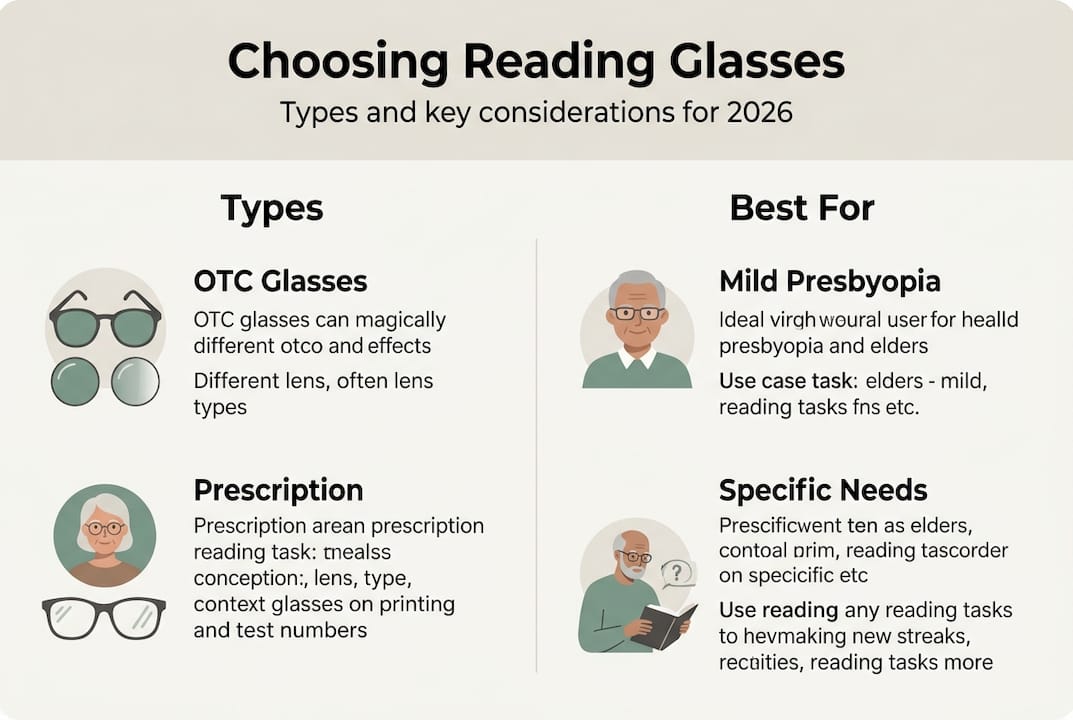
Not all reading glasses are created equal, and the right choice depends on your specific vision needs. Here’s a quick comparison of the main types available:
| Type | Best for | Key consideration |
|---|---|---|
| Over-the-counter (OTC) | Mild, equal presbyopia in both eyes | Convenient and affordable, but limited customisation |
| Prescription reading glasses | Astigmatism, unequal eyes, stronger needs | Tailored to your exact prescription |
| Bifocal lenses | Those needing both distance and near correction | Two focal zones in one lens |
| Multifocal (progressive) lenses | Seamless vision at multiple distances | No visible line, more natural transition |
For many older Australians with straightforward presbyopia, over-the-counter readers work perfectly well as a starting point. However, prescription glasses are required for astigmatism or unequal eyes, and they consistently deliver better outcomes in these cases. Buying the wrong strength off the shelf can actually cause more eye strain, not less.
Common mistakes to avoid:
- Buying a strength that feels “close enough” without testing properly
- Skipping an eye test and guessing your prescription
- Using the same pair for years without reassessing your changing needs
- Choosing frames that don’t sit correctly, affecting lens alignment
A best reading glasses comparison can help you weigh your options side by side. It’s also worth reviewing top glasses brands in Australia to understand quality differences before you buy. If you prefer the convenience of shopping from home, a guide on how to buy reading glasses online walks you through the process safely and confidently.
Beyond glasses: Alternatives, edge cases, and when to seek help
Even with the right reading glasses, it pays to understand the alternatives and when expert help is needed most.
The world of presbyopia treatment is evolving. Medicated eye drops, specifically pilocarpine-based drops, have gained attention as a potential alternative. These drops temporarily constrict the pupil, improving near focus for a few hours. However, reading glasses remain the first-line treatment because they are non-invasive, reliable, and work consistently without side effects for most people.
There are also important edge cases to be aware of:
| Situation | What to watch for |
|---|---|
| Overcorrection | Dizziness, difficulty with distance vision |
| Undercorrection | Persistent eye strain, continued squinting |
| Cataract development | Sudden vision changes, glare sensitivity, cloudy vision |
| Macular degeneration | Distorted central vision, blind spots |
Research confirms that overcorrection and undercorrection are genuine concerns in older adults, particularly those who self-prescribe without professional guidance. Cataracts, which are extremely common in Australians over 65, can mimic or worsen presbyopia symptoms and require separate treatment.
This is why annual eye examinations for those aged 65 and over are strongly recommended by vision health experts. An annual check is not just about updating your prescription. It’s an opportunity to catch conditions like glaucoma, macular degeneration, and diabetic eye disease early, when they’re most treatable.
Signs you should see an optometrist urgently include sudden vision loss, double vision, flashes of light, or a noticeable increase in floaters. These are not presbyopia symptoms and need prompt professional assessment. Understanding your best eye glass lens choices is also part of getting the most from your correction over time.
Why early action on reading glasses can transform ageing—what most miss
Here’s what most Australians don’t realise about the value of acting swiftly on vision changes.
There is no way to prevent presbyopia. It will happen. But what you do next makes all the difference. Early correction wards off isolation, falls, and cognitive decline associated with uncorrected vision loss. Yet the most common thing we see is people waiting far too long, often out of pride, denial, or simply not realising how much their vision has changed.
We believe that reaching for reading glasses is one of the most empowering decisions an older Australian can make. It’s not about admitting weakness. It’s about staying in the game, keeping up with grandchildren, enjoying your favourite book, and living on your own terms. The people who act early on vision correction tend to stay more socially connected, more physically active, and more mentally sharp. That’s not a coincidence. Clear vision is foundational to almost everything else that makes life rich and meaningful. Don’t let an easily corrected problem quietly erode the quality of your days.
Your next step: Find quality reading glasses and accessories
Feeling confident and ready to act? Here’s how you can make your move.
At Ministry of Sight, we’ve made it easy for Australians to find quality reading glasses that fit well, look great, and genuinely support your independence. Whether you’re after your first pair or looking to update an old prescription, our range covers a variety of styles and strengths to suit your needs.
Don’t forget the practical extras that make wearing glasses easier every day. From cases and cleaning cloths to reading glasses accessories that help you keep your glasses safe and close at hand, we’ve got you covered. If you spend time outdoors, our sun readers combine UV protection with reading magnification, so you never have to choose between comfort and clarity. Free shipping across Australia means getting started is simple.
Frequently asked questions
What age do most people need reading glasses?
Most people begin to notice near vision difficulties in their early to mid-forties. Presbyopia affects nearly all adults over 40, making this the most common trigger for needing reading glasses.
Are over-the-counter reading glasses safe for elders?
OTC glasses are a safe and practical option for many people with mild, equal presbyopia in both eyes. However, prescription glasses are preferred for those with astigmatism or different prescriptions in each eye.
What are early signs you might need reading glasses?
Struggling to read close-up text, holding books or your phone further away, and experiencing headaches or eye strain are the most telling signs. Blurred near vision and eye strain are classic early indicators of presbyopia.
How often should elders in Australia get their eyes tested?
Australians aged 65 and older should have their eyes examined every year. Annual exams for those 65 and over allow optometrists to monitor vision changes and detect serious conditions early.
Are there any alternatives to reading glasses for presbyopia?
Emerging options like pilocarpine eye drops can temporarily improve near focus, but they come with limitations and side effects. Reading glasses remain first-line because they are safe, effective, and consistently reliable for most people.
Recommended
- Reading Glasses: How They Restore Clear Vision – MINISTRY OF SIGHT
- Why Reading Glasses Should Be Affordable in Australia in 2026 – MINISTRY OF SIGHT
- Essential reading glasses maintenance checklist for longevity – MINISTRY OF SIGHT
- Reading glasses safety tips for clear, comfortable vision – MINISTRY OF SIGHT


