

TL;DR:
- Flexible frames are made from resilient materials like memory metal, offering better durability and comfort. They feature spring hinges that adapt to different head sizes and require less frequent adjustments. While great for daily active lifestyles, they may have style, prescription, and price limitations compared to traditional frames.
Most Australians assume flexible frames are designed for kids who sit on their glasses or athletes who need rugged gear. That assumption is costing a lot of people real comfort. Flexible frames have quietly become one of the most practical choices in eyewear, offering resilience and wearability that suits office workers, parents, travellers, and anyone who wants glasses that keep up with a busy life. With growing demand across Australia for eyewear that balances style with adaptability, it’s worth understanding exactly what flexible frames offer, where they fall short, and how to choose the right pair for your needs.
Table of Contents
- What are flexible frames?
- Benefits and drawbacks of flexible frames
- Flexible frames versus traditional frames: A comparison
- How to choose and buy flexible frames in Australia
- Why most Australians overlook flexible frames (and why that’s changing)
- Explore flexible frame accessories and solutions
- Frequently asked questions
Key Takeaways
| Point | Details |
|---|---|
| Flexible frames basics | Flexible frames use bendable materials and spring hinges to offer durability and comfort. |
| Pros and cons | Flexible frames suit active lifestyles but may have limited style options and are not unbreakable. |
| Comparison insight | Flexible frames need fewer adjustments than traditional frames, but rigid frames support high prescriptions better. |
| Buying advice | Check fit, style range, and warranty when shopping for flexible frames in Australia. |
| Rising popularity | Australians increasingly choose flexible frames for everyday comfort, not just sport or kids. |
What are flexible frames?
Flexible frames are eyewear frames constructed from materials that can bend and return to their original shape without snapping or warping. The most common material is memory metal, also called titanium alloy or Nitinol, which has a unique ability to spring back after being twisted or flexed. Some flexible frames use high-grade plastics or composite materials that offer similar resilience. The result is a frame that can take a knock, a squeeze, or an accidental sit-down and still hold its shape.
The technology behind flexible frames goes beyond just the material. Most designs incorporate spring hinges, which allow the arms of the glasses to flex outward beyond the standard 90-degree angle. This means the frames adapt to a wider range of head shapes without needing constant tightening or adjustment. Spring hinges reducing adjustments by 60% is a genuine advantage for anyone who has ever had to visit an optometrist just to get their glasses straightened.
Here are the key features that define flexible frames:
- Memory metal construction: Returns to shape after bending
- Spring hinges: Allow arms to flex outward for a better fit
- Lightweight build: Reduces pressure on the nose and ears
- Corrosion resistance: Suits humid or active environments
- Wide fit range: Accommodates different head sizes without adjustment
It’s worth understanding frame safety and style together, because flexible frames score well on both counts when chosen correctly. One common misconception is that flexible means unbreakable. These frames are far more forgiving than rigid alternatives, but they still have limits. Extreme force, sharp impacts, or repeated stress at the same point can cause damage. Treat them well and they’ll last for years. Neglect them and even the best memory metal will eventually give way.
If you’re considering whether to buy glasses online, flexible frames are an excellent starting point because their self-adjusting nature means minor fit variations matter less than they would with rigid frames. That makes online purchasing a more confident experience.
Benefits and drawbacks of flexible frames
Flexible frames have a lot going for them, but they’re not the right choice for every situation. Understanding both sides helps you make a decision you’ll be happy with long term.
The benefits are real and practical:
- Durability in daily use: Flexible frames handle the bumps and drops of everyday life far better than rigid acetate or standard plastic frames
- Fewer trips to the optometrist: Spring hinges mean less frequent adjustments, saving you time and money
- Comfort for extended wear: The lightweight nature of memory metal reduces fatigue during long days
- Family-friendly: Ideal for children and active adults who are harder on their eyewear
- Adaptable fit: Suits a wider range of face shapes without needing professional tweaking
The drawbacks are worth knowing:
- Not unbreakable: Despite their flexibility, sharp impacts or repeated stress can still cause damage
- Limited style range: Memory metal frames tend to come in sleeker, more minimal designs, which doesn’t suit everyone’s taste
- Prescription limitations: Best for active lifestyles but may lack rigidity for high prescriptions, meaning those with stronger lenses may find the frame flex affects lens stability
- Price point: Quality flexible frames can cost more upfront than basic rigid options
Flexible frames work best when you match the frame material to your actual lifestyle. A parent chasing toddlers needs something different from a graphic designer who wears glasses at a desk all day.
Pro Tip: Even though flexible frames are more resilient, store them in a hard case when not in use. The flexibility protects against accidental bending, but a hard case protects against crushing and scratching.
For a broader look at what works in Australian eyewear right now, the stylish eyewear guide covers current trends alongside practical advice. And if you’re weighing up frame style and value, flexible frames often deliver strong long-term value despite a higher entry price, simply because they last longer with less maintenance.
Flexible frames versus traditional frames: A comparison
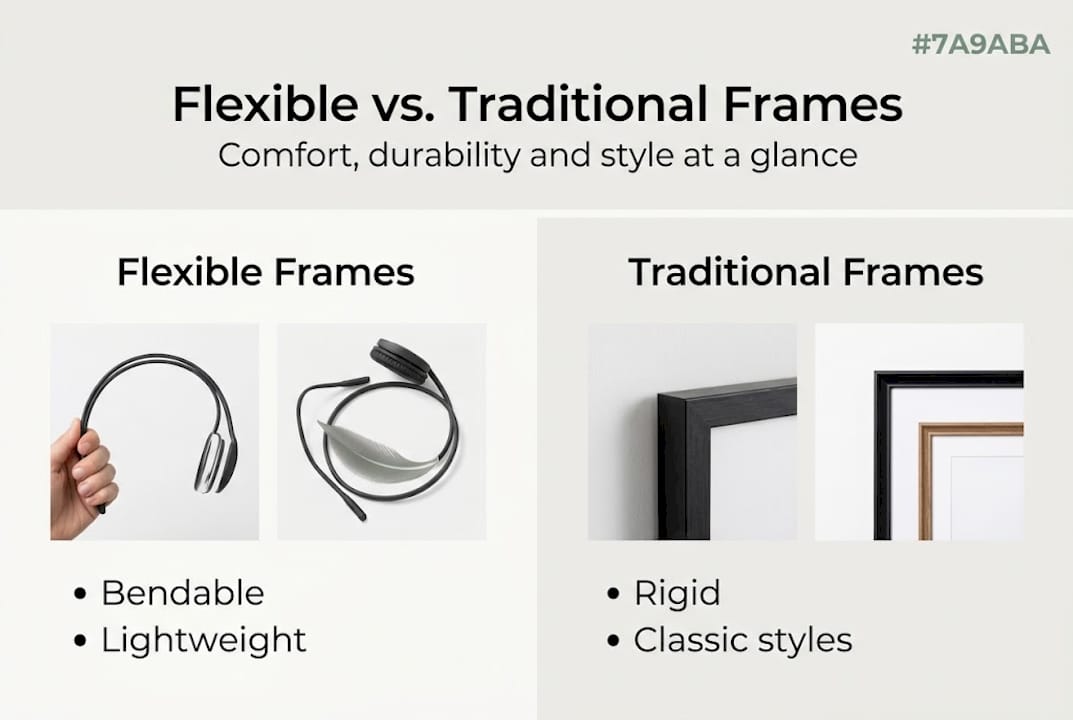
Choosing between flexible and traditional frames comes down to your lifestyle, prescription strength, and personal style preferences. Here’s a clear side-by-side look at how they stack up.
| Feature | Flexible frames | Traditional frames |
|---|---|---|
| Durability | High, spring back from bending | Moderate, can snap or warp |
| Style variety | Limited, mostly minimal designs | Wide range of shapes and colours |
| Prescription support | Best for low to moderate prescriptions | Suitable for all prescription strengths |
| Maintenance | Low, fewer adjustments needed | Higher, may need regular tightening |
| Weight | Very light | Varies, can be heavier |
| Price | Moderate to high | Budget to high |
| Fit adaptability | Excellent | Requires professional fitting |
Spring hinges reduce adjustments by 60% compared to traditional frames, which is a meaningful difference if you’ve ever had glasses that constantly slip or feel uneven. Traditional frames, however, give you far more choice in terms of shape, colour, and material, which matters if personal style is a priority.
Here’s a simple process for deciding which type suits you:
- Assess your lifestyle. Do you play sport, have young children, or work in a physically active environment? Flexible frames are likely the better fit.
- Check your prescription. If your prescription is strong, speak to your optometrist about whether flexible frames can support your lenses properly.
- Consider your style priorities. If you want bold colours, thick acetate, or dramatic shapes, traditional frames offer more options.
- Set your budget. Flexible frames often cost more upfront but can save money over time through reduced adjustments and replacements.
- Think about fit. If you’ve struggled to find frames that fit comfortably, flexible frames with spring hinges are worth trying.
If you’re ready to buy eyewear online, knowing which category suits you makes the process faster and less overwhelming. For men specifically, the glasses trends for men guide covers which flexible frame styles are gaining traction in 2026.
How to choose and buy flexible frames in Australia
Finding the right flexible frames in Australia is straightforward once you know what to look for. The market has grown significantly, with both online retailers and physical optometry practices now stocking a solid range of options.
Follow these steps to make a confident purchase:
- Confirm your prescription is current. Visit your optometrist for an up-to-date prescription before shopping.
- Measure your face. Note your pupillary distance and frame width to ensure a proper fit, especially when buying online.
- Research materials. Look for frames labelled as memory metal, Nitinol, or titanium alloy for genuine flexibility.
- Check the warranty. Reputable retailers offer at least a 12-month warranty on frames. This matters more with flexible frames, as manufacturing defects can sometimes cause metal fatigue.
- Compare comfort and returns policies. Online purchases should come with a trial period or easy returns.
Pro Tip: Ask specifically whether the flexible frames you’re considering have been tested for prescription lens compatibility. Some very flexible frames can cause lenses to shift slightly under load, which affects vision quality.
Here’s a quick reference for buying flexible frames in Australia:
| Retailer type | Typical price range (AUD) | Style options | Prescription support |
|---|---|---|---|
| Online specialists | $80 to $250 | Moderate | Yes, with uploaded script |
| Optical chains | $150 to $400 | Wide | Full in-store support |
| Independent optometrists | $200 to $500 | Curated | Full professional fitting |
| Department store optical | $100 to $300 | Limited | Basic fitting |
Flexible frames suit on-the-go lifestyles, though memory metal designs remain more limited in variety compared to traditional options. When you’re ready to shop glasses in Australia, filtering by material type is the fastest way to find genuine flexible options. It’s also worth reviewing your lens choices guide to ensure your lenses are compatible with the frame type you choose.
Why most Australians overlook flexible frames (and why that’s changing)
For years, flexible frames were associated with children’s eyewear or budget options that lacked style. That reputation stuck, even as the technology improved dramatically. We’ve seen this shift firsthand: more Australians across all age groups are now choosing flexible frames not because they have to, but because they genuinely prefer the comfort and convenience.
The old assumption was that stylish glasses had to be rigid. That’s simply no longer true. Flexible frames are increasingly sought after for everyday comfort, and designers have responded by expanding the range of available styles well beyond the plain wire-rimmed options of a decade ago.
What’s driving the change is a shift in how Australians think about eyewear. Glasses are no longer just a medical device. They’re an everyday accessory, and people want them to work as hard as they do. Flexible frames fit that expectation naturally. If you want to verify eyewear online before committing, the tools available today make it easier than ever to find a flexible frame that suits your face and your lifestyle.
Explore flexible frame accessories and solutions
Once you’ve chosen your flexible frames, the right accessories make a real difference to how long they last and how well they work for you.
At Ministry of Sight, we stock a range of eyewear accessories designed to complement flexible frames, from protective cases to cleaning kits that keep memory metal in top condition. Our Lens Lounge is a great starting point for exploring lens options that pair well with flexible frame styles. We also offer a popular eyewear chain that works beautifully with lightweight flexible frames, keeping your glasses secure and accessible throughout the day. With free shipping across Australia and a satisfaction guarantee, it’s easy to find the right combination for your lifestyle.
Frequently asked questions
Are flexible frames suitable for all prescriptions?
Flexible frames may lack the rigidity required for very high prescriptions, so traditional frames are often preferred for stronger lenses. Always confirm prescription compatibility with your optometrist before purchasing.
Do flexible frames offer many style options?
Memory metal frames typically have a limited range of designs, but newer models are expanding choices with bolder shapes and finishes.
How durable are flexible frames compared to regular frames?
Flexible frames are more resilient to bending and accidental drops, but they are not unbreakable and still require gentle handling to avoid metal fatigue over time.
Where can I buy flexible frames in Australia?
Flexible frames are available through online retailers and physical optometry centres across Australia; spring hinges reduce adjustments by 60%, making online purchases a more forgiving option than buying traditional frames remotely.
Recommended
- Glass Frames Australia: Fashion, Fit, and Safety – MINISTRY OF SIGHT
- Frame Australia Guide 2026: Save 40% with Stylish Eyewear – MINISTRY OF SIGHT
- 7 Examples of Stylish Eyewear for Over 40s in Australia – MINISTRY OF SIGHT
- Product Highlight: Our Must-Have Summer Frames for Australia 2025 ☀️ – MINISTRY OF SIGHT


