

Finding stylish glasses frames that suit your vision and personal aesthetic can feel overwhelming, especially when options online are endless. Australian shoppers want eyewear that blends fashion with comfort, while affordable prices and special deals make every purchase more tempting. With a focus on accurate eye prescription and pupillary distance, you can choose frames that enhance both your look and your lifestyle. This guide helps you make confident choices—so your new glasses fit perfectly and reflect your unique style.
Table of Contents
- Step 1: Assess Your Vision And Style Needs
- Step 2: Select Frame Shapes To Suit Your Face
- Step 3: Pick Colours And Materials For Your Look
- Step 4: Verify Fit And Comfort Before Buying
Quick Summary
| Key Takeaway | Explanation |
|---|---|
| 1. Know your eye prescription | Review your current eye prescription for vision needs and pupillary distance before choosing frames. |
| 2. Choose frames for face shape | Identify your face shape and select frames that contrast to create balance and enhance your features. |
| 3. Select colours and materials wisely | Match colours to your skin tone and consider frame materials for durability and style relevance. |
| 4. Ensure proper fit and comfort | Measure your face to ensure correct sizing and fit of frames to avoid discomfort and frequent adjustments. |
| 5. Test different styles and sizes | Try on various frame styles and sizes to discover what feels and looks best on you before making a purchase. |
Step 1: Assess your vision and style needs
Before you start shopping for frames, you need to understand what your eyes actually require and what look suits your personal style. These two factors work together to narrow down your options significantly.
Start by getting or reviewing your current eye prescription. Your optometrist will provide details about your vision correction needs, whether that’s nearsightedness, farsightedness, astigmatism, or a combination. You’ll also receive your pupillary distance (PD), which measures the distance between your pupils. This measurement is crucial for lens alignment and your visual comfort.
Your prescription tells you what you need; your lifestyle tells you what features matter. Consider these practical factors:
- Do you spend hours at a screen? Blue light filtering might reduce eye strain.
- Are you outdoors frequently? You may want frames that suit sunglasses or photochromic lenses.
- Do you play sports or have an active lifestyle? Durable, secure frames are non-negotiable.
- Do you need reading glasses, distance glasses, or both? Different frame styles suit different purposes.
Now think about your personal aesthetic. The way stylish glasses work with your face shape, skin tone, and overall wardrobe matters just as much as function. Are you drawn to classic, contemporary, or bold designs? Do you prefer understated frames or statement pieces?
Understanding your prescription and your lifestyle prevents you from buying frames that look great but feel uncomfortable or don’t suit your actual needs.
Take a moment to list your non-negotiables. Perhaps you need lightweight frames for comfort, or scratch-resistant lenses for durability. Maybe you want frames that match your professional image or reflect your creative personality. Knowing what you absolutely need versus what’s nice to have saves time and money.
Pro tip: Write down your prescription details, PD, and a list of lifestyle requirements before browsing frames—you’ll make smarter choices faster and avoid impulse purchases that don’t fit your real needs.
Step 2: Select frame shapes to suit your face
Frame shape is where style meets function. The right shape flatters your face, balances your features, and makes you feel confident wearing your glasses every day.

Start by identifying your face shape. Most faces fall into one of these categories: oval, round, square, heart, or oblong. Stand in front of a mirror and look at the overall outline of your face. Is it wider at the cheekbones, the forehead, or the jaw? This observation guides your frame selection more than you might think.
Once you know your face shape, apply this basic principle: contrast creates balance. If your face is round, angular frames add definition. If your face is angular or square, softer, rounder frames soften your appearance. Here’s what works for different shapes:
- Round faces benefit from rectangular or cat-eye frames that lengthen proportions
- Square faces suit rounded or oval frames that soften strong jawlines
- Oval faces can carry most frame styles, so personal preference takes priority
- Heart-shaped faces work well with frames wider at the bottom to balance a broader forehead
- Oblong faces need wider frames to add width and proportion
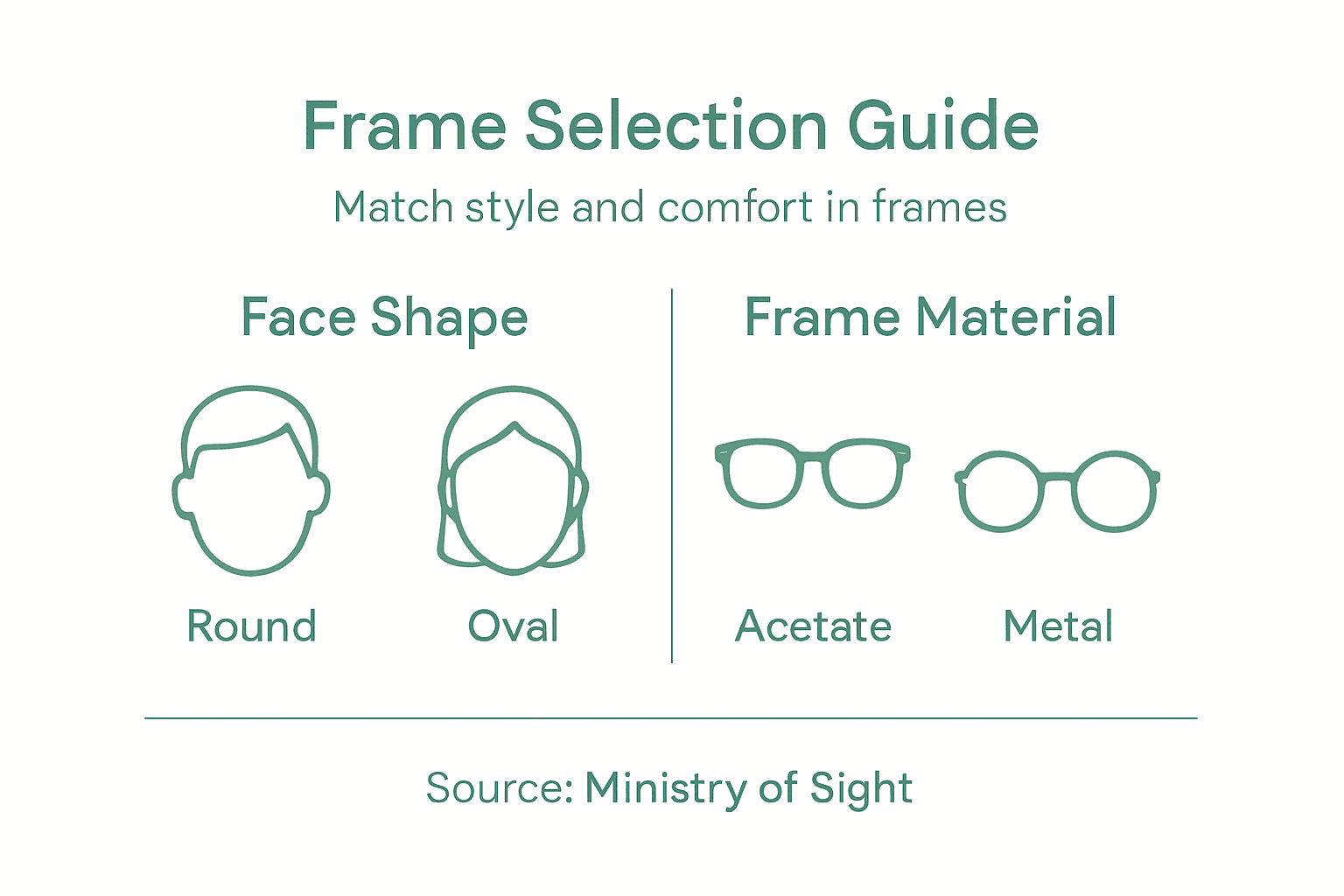
Colour and material also influence how frames sit on your face. Darker frames draw attention and can make features appear sharper, whilst lighter tones recede slightly. Metal frames often feel more delicate, whilst plastic or acetate frames look bolder and more structured.
Consider how frames interact with your colouring too. Warm skin tones typically suit gold, bronze, or warm-toned frames. Cool skin tones pair better with silver, black, or cool metallics. When in doubt, try multiple styles on to see what resonates with you.
To help match frames to your face shape, see this comparison:
| Face Shape | Ideal Frame Shape | Effect on Appearance |
|---|---|---|
| Round | Rectangular, cat-eye | Adds length, definition |
| Square | Oval, rounded | Softens strong jawline |
| Oval | Any shape | Allows style flexibility |
| Heart | Wide-bottom frames | Balances broad forehead |
| Oblong | Wide, horizontal | Adds width, proportionality |
The best frame shape is one that makes you feel like yourself—confident and comfortable enough to forget you’re wearing them.
Don’t get locked into rules either. Different glasses shapes work for various face types, but your personal style should always come first. If bold cat-eyes make you feel powerful, wear them regardless of what your face shape suggests.
Pro tip: Take photos of yourself wearing different frame shapes in natural light, then compare them side by side—what looks good in the mirror often looks better in photos, and it removes the awkwardness of trying on frames in-store.
Step 3: Pick colours and materials for your look
Colour and material transform glasses from a vision tool into a fashion statement. These choices affect how your frames look on your face and how they fit into your everyday wardrobe.
Start with colour strategy. Your choice depends partly on context. In professional settings, selecting colours that align with your role influences how you’re perceived. Executives typically benefit from classic colours like black or dark grey for authority and polish. Teachers and healthcare workers often suit warmer, softer tones that convey approachability. Creative professionals have more freedom to experiment with bold or vintage hues that express personality.
Beyond profession, consider your personal colouring. Warm skin tones pair beautifully with gold, bronze, tortoiseshell, and warm browns. Cool skin tones suit silver, black, gunmetal, and cool-toned frames. If you have a neutral undertone, you’re lucky—both warm and cool colours typically work well.
Think about your existing wardrobe too. Do you wear mostly neutrals? Coloured frames become a statement piece. Do you wear lots of colours? Neutral frames provide balance. Here are the main material options:
- Acetate frames offer durability, bold colour options, and a classic aesthetic
- Metal frames feel lightweight, sleek, and work across professional and casual settings
- Combination frames blend materials for visual interest and modern appeal
- Titanium frames are exceptionally durable and ideal for active lifestyles
Material quality matters for longevity. Acetate and metal are commonly chosen for their durability and style versatility, allowing you to express personal fashion whilst maintaining professional standards. Premium materials resist scratching and maintain their appearance over time, making them better long-term investments.
For quick reference, here’s a summary of frame materials and their benefits:
| Material | Durability | Style Impact | Best For |
|---|---|---|---|
| Acetate | High, resists wear | Bold, vibrant colours | Fashion-forward, longevity |
| Metal | Moderate to high | Sleek, understated | Professional, lightweight |
| Titanium | Exceptional | Modern, minimalist | Active lifestyles, allergy |
| Combination | Variable | Unique, visually rich | Experimental, trendy |
The best colour is one you’ll actually wear confidently—not the trend everyone’s chasing, but what makes you feel like yourself.
Don’t overthink it. If a bright red frame makes you smile every time you put it on, that’s your answer. Your glasses spend more time on your face than almost any other accessory.
Pro tip: Order frames in your top two colour choices if possible, then wear each for a few days before deciding—what looks perfect under shop lighting might feel different in your actual daily light and paired with your real wardrobe.
Step 4: Verify fit and comfort before buying
A gorgeous pair of frames means nothing if they slip down your nose or pinch your ears. Fit determines whether you’ll actually wear your glasses or leave them in a drawer.
Proper fit is determined by how well the frames rest on your nose, ears, and across your face width. Take accurate face measurements and compare them with frame dimensions before purchasing. The three critical measurements are bridge width, temple length, and overall frame width.
Understand what each measurement means for comfort. Your bridge is the part that rests on your nose—too narrow and you’ll feel pressure, too wide and they’ll slip. Your temples (the arms) should reach comfortably to your ears without pulling or leaving marks. Your frame width should align with your face width so glasses sit centred without tilting.
When trying frames, check these comfort points:
- The bridge sits snugly on your nose without pinching or slipping
- Temples rest gently on your ears with no pressure points
- Lenses align with your eyes so you look straight ahead naturally
- The entire frame feels balanced on your face
- You can move your head without glasses shifting
If you’re shopping online, measure your current glasses that fit well and use those as a reference. Most eyewear sites list detailed frame dimensions in millimetres. Don’t guess or assume a size will work—the measurements are there for a reason.
Glasses that slip or pinch won’t become comfortable with time—they’ll just become annoying.
Remember that different brands fit differently. A medium in one brand might be snug in another. Read customer reviews specifically mentioning fit, and check return policies before ordering. Many Australian retailers offer free returns if the fit isn’t right, so take advantage of that option.
Pro tip: If ordering online, purchase two sizes and try both on for at least an hour each—comfort reveals itself over time, not in the first five minutes when everything feels okay.
Find Glasses That Truly Match Your Style and Comfort Needs
Choosing glasses frames that fit your vision requirements and reflect your personal style can feel overwhelming. This article highlighted the importance of understanding your prescription, face shape, and comfort preferences to avoid common frustrations like slipping frames or poor visual alignment. If you want to confidently express yourself with frames that feel as good as they look, exploring curated styles made for diverse needs is essential.
Experience eyewear designed with Your lifestyle and style in mind at Ministry of Sight. Whether you’re drawn to sleek Super Cool Black Reading Glasses that offer timeless elegance or prefer expressive shapes found in our Geometric Reading Glasses, you’ll find high-quality frames crafted for both comfort and standout appeal.
Start your journey now with frames that balance your unique prescription, face shape, and fashion sense. Shop today at Ministry of Sight to enjoy free shipping across Australia and take advantage of offers designed to make your perfect glasses choice effortless.
Frequently Asked Questions
How do I assess my vision and style needs before choosing glasses frames?
Start by reviewing your current eye prescription, which includes details about vision correction and pupillary distance. Then, consider your lifestyle needs—like screen time or activity level—and your personal aesthetic preferences. Write down your must-haves so you can make informed choices as you shop.
What frame shapes suit different face shapes?
Identifying your face shape is key to selecting the right frame. For instance, round faces benefit from angular frames, while square faces suit rounded styles. Check a comparison chart of face shapes and frame styles to guide your selection.
How do colour and material impact my glasses?
Colour and material choices define both the style and practical use of your glasses. Acetate offers vibrant options, while metal frames typically provide a sleek look. Choose based on your personal style and wardrobe to ensure your glasses complement your overall appearance.
What should I check for fit and comfort before buying glasses?
Ensure the frames rest properly on your nose and ears without pinching or slipping. Also, check that the lenses align with your eyes so you look straight ahead comfortably. Measure your face and compare it to the frame dimensions, paying attention to bridge width, temple length, and overall width for a tailored fit.
How can I verify my glasses will be comfortable if I’m shopping online?
If ordering glasses online, measure your current pair that fit well as a reference. Purchase two sizes to compare fit at home, aiming to wear each for at least an hour to assess comfort. This way, you can find the best size without assumption or guessing.


